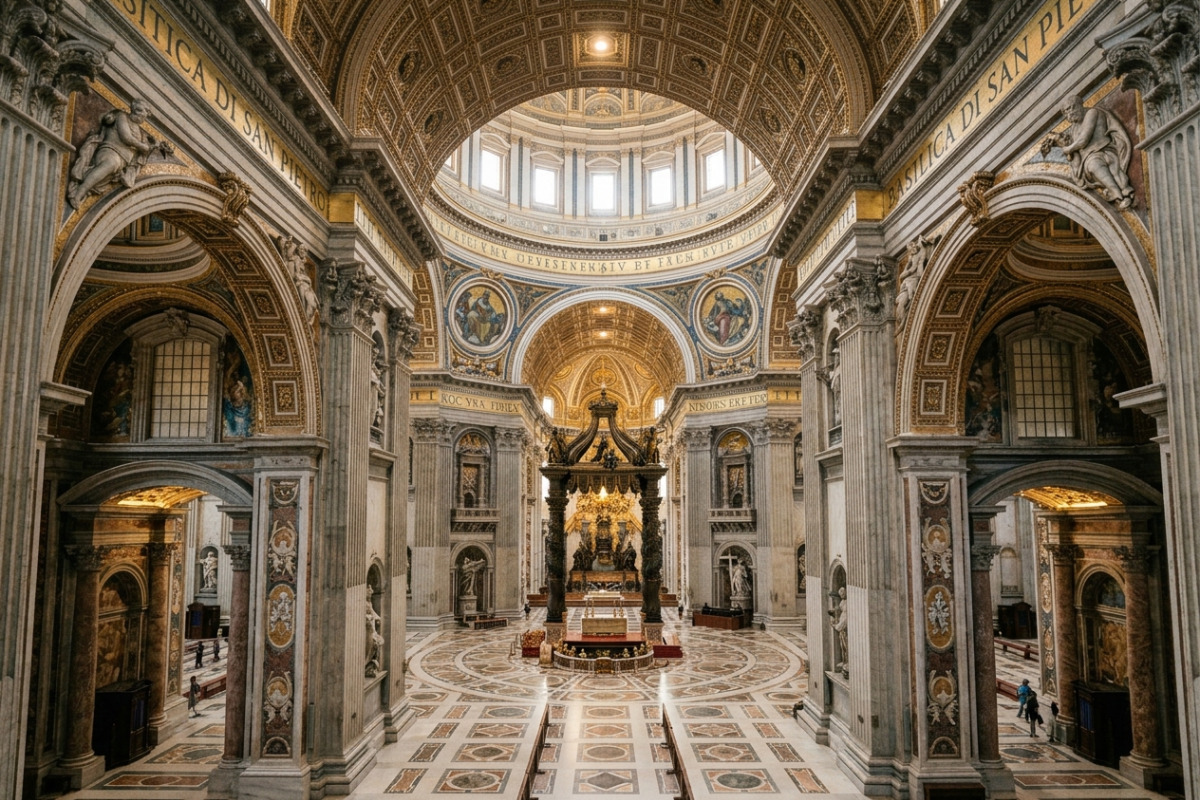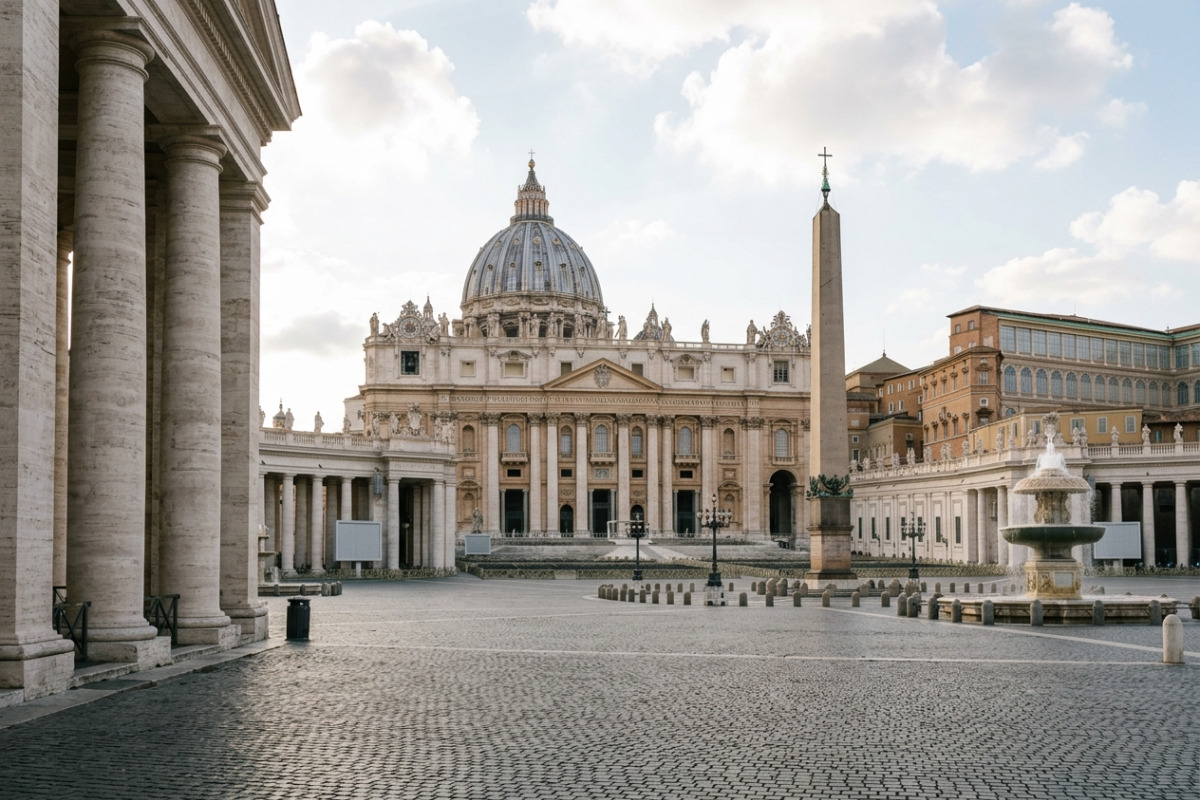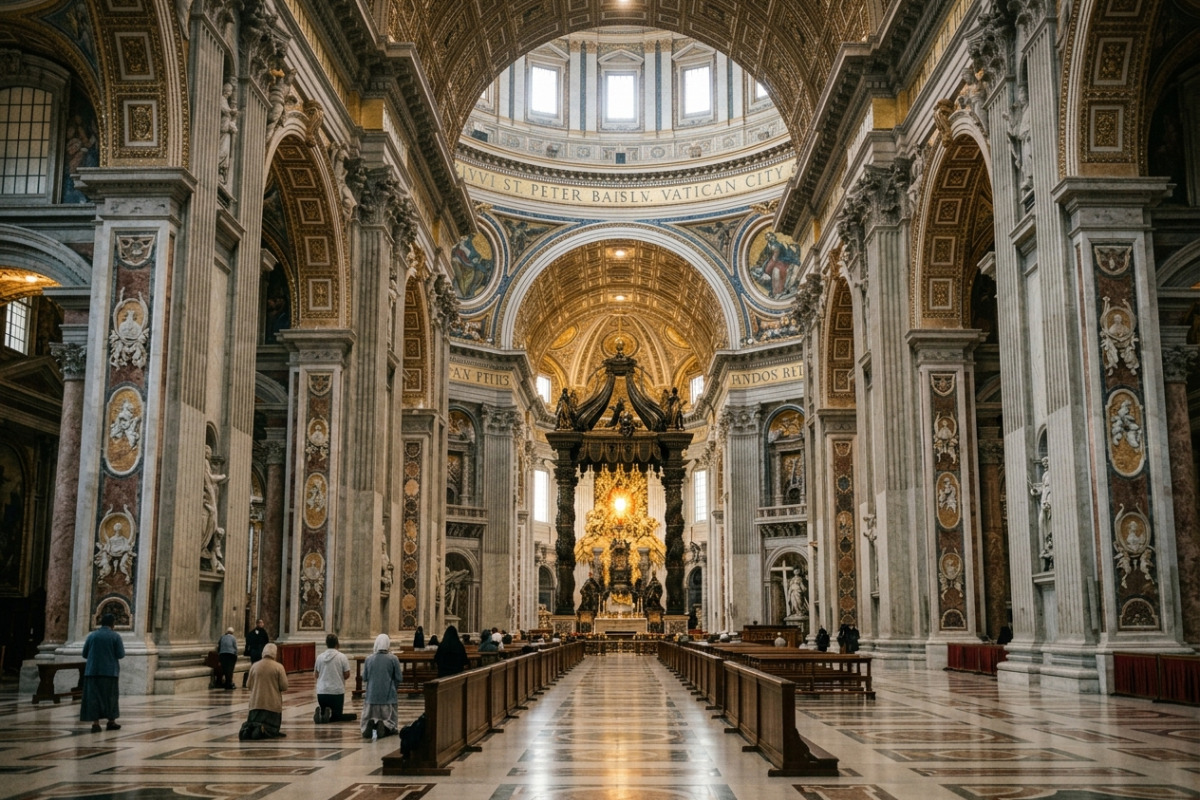
When you first step through the massive bronze doors of St. Peter’s Basilica, your eyes are immediately drawn upward to the heavens. Shafts of light pierce through the windows, illuminating what appears to be an endless gallery of magnificent oil paintings and frescoes. However, this is one of the Vatican’s greatest and most beautiful illusions. Almost every image that adorns the walls and domes of this sacred space is not painted with a brush, but painstakingly pieced together with millions of tiny fragments of glass and stone. This is the legacy of the Vatican Mosaic Studio, a place where art is engineered to defy eternity.
For centuries, the artisans of the Studio del Mosaico have been the silent guardians of the Basilica’s visual splendor. While visitors flock to see famous sculptures, the vibrant colors surrounding them are the result of a unique artistic chemistry that dates back to the 16th century. Understanding the work of this studio transforms a visit from a simple sightseeing tour into a deep dive into human dedication and artistic perseverance. As we move through January 2026, the studio remains as active and vital as it was during the Renaissance.
The Illusion of Paint: A Masterpiece in Stone
The decision to cover the interior of St. Peter's Basilica in mosaic rather than fresco was born out of necessity. In the late 16th century, officials realized that the humidity rising from the Tiber River and the damp conditions within the massive structure were causing paintings to decay rapidly. To preserve the imagery for future generations, a bold decision was made: replace the paintings with mosaics.
This was no small feat. The goal was not just to create mosaics, but to replicate the fluidity, shadow, and emotion of the original oil masterpieces by artists like Raphael and Domenichino. To achieve this, the artisans needed a palette that stone alone could not provide.
- Durability: Unlike canvas or plaster, glass and enamel do not fade or rot.
- Reflectivity: The uneven surface of the tesserae (tiles) catches candlelight and sunlight, making the images feel alive.
- Scale: Over 10,000 square meters of the Basilica are covered in these intricate designs.
As you Plan Your Visit, keep in mind that the visuals you encounter are essentially "eternal paintings," designed to look exactly the same in 500 years as they do today.
Inside the Vatican Mosaic Studio
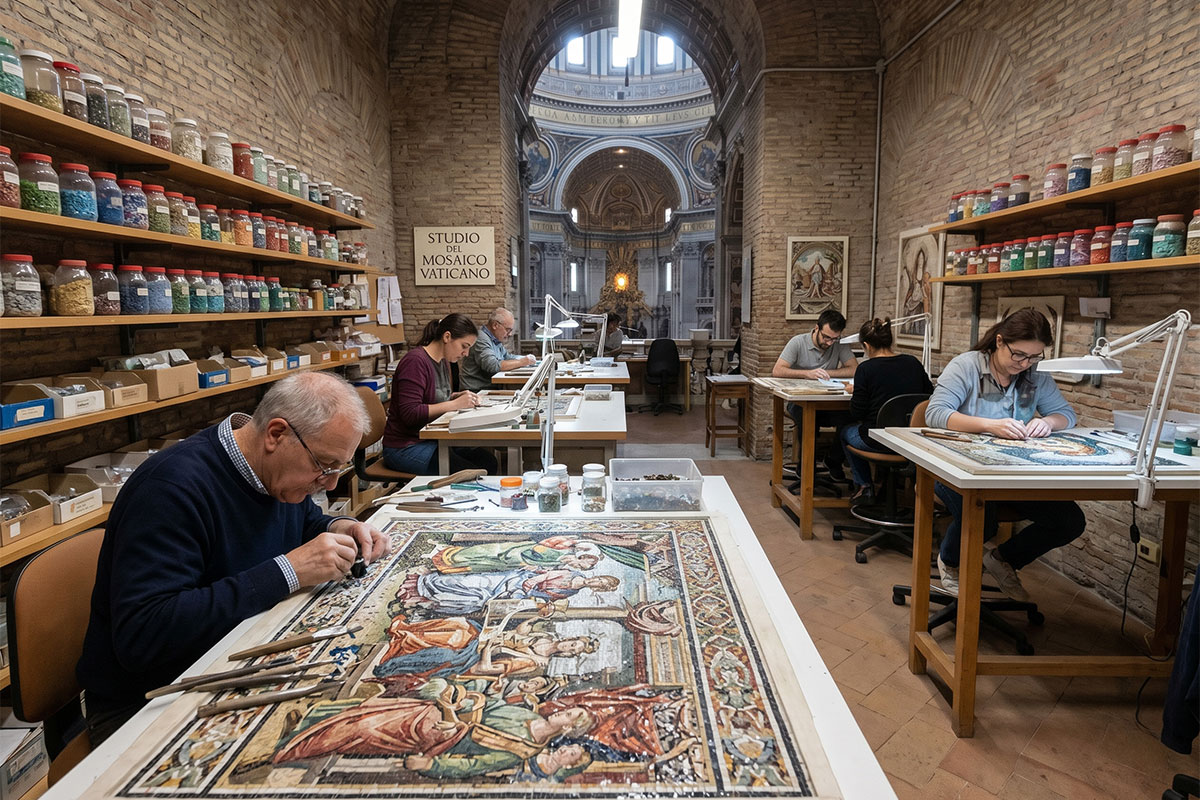
Hidden within the shadow of the great dome lies the Reverenda Fabbrica di San Pietro, home to the Mosaic Studio. Established officially in 1727, though its roots go back deeper, this workshop is a laboratory of alchemy and art. Here, the air smells of adhesive and history. It is not merely a museum piece; it is a functioning workshop where master mosaicists restore damaging sections of the Basilica and create new works for the Pope to gift to foreign dignitaries.
For those fascinated by this specific craft, reading more about The Mosaic Studio reveals how these artisans bridge the gap between ancient tradition and modern conservation. They are the custodians of a secret recipe for glass-making that allows for an infinite variety of shades.
The Secret of 28,000 Colors
The true magic of the Vatican mosaics lies in the smalti—the enamel glass tiles. To replicate the subtle skin tones of a saint or the gradient of a twilight sky, a standard box of crayons would never suffice. The Vatican studio developed a library of approximately 28,000 different distinct shades of colored glass.
The process involves melting glass with various metal oxides. Copper creates greens and rubies; cobalt creates deep blues. By stretching this molten glass into thin threads (a technique called filati), artisans can cut pieces so small they are barely visible to the naked eye. This allows for the incredible detail seen in altarpieces that visitors often mistake for brushstrokes.
Techniques That Defy Time
The technique employed in St. Peter's is distinct from the Byzantine style seen in places like Venice or Ravenna. While Byzantine mosaics rely on gold backgrounds and tilted tiles to refract light dramatically, the Roman style used in the Basilica aims for seamlessness. The tesserae are set close together, and the surface is often ground flat and polished to mimic the texture of a canvas.
However, when you look up at The Dome, the technique changes. Here, the figures are colossal, and the tiles are larger and rougher. This is an optical correction; from the floor of the nave, these rough, large tiles blend perfectly to form sharp images. If they were as detailed as the eye-level altars, they would look blurry from a distance.
| Feature | Roman Mosaic Technique | Byzantine Mosaic Technique |
| Goal | Mimic oil painting (Realism) | Spiritual symbolism & light reflection |
| Surface | Smooth, often polished | Uneven, tilted tiles |
| Joints | Invisible, minimal grout | Visible to enhance texture |
| Location in Basilica | Altars, Lower Walls | Used historically, less common in the nave |
Notable Mosaics to Look For
While the sheer volume of art is overwhelming, there are specific masterpieces where the mosaicist's skill is most evident. When you secure your Tickets & Tours, make a mental note to find these specific works.
The Transfiguration
Perhaps the most famous mosaic in the Basilica is the reproduction of Raphael's The Transfiguration. The original painting is in the Vatican Museums, but the mosaic version stands within the church. It took artisans nine years to complete this copy. The range of colors used to capture the light emanating from Christ versus the chaotic shadows of the possessed boy below is a testament to the filati technique.
The Clementine Chapel
Located near The Altar of the Confessio, this chapel features intricate designs that showcase the transition from the Renaissance to the Baroque. The depth of field achieving in these stone pictures is startling.
The Gregorian Chapel
Here, you will find the icon of Our Lady of Succour. While the ancient fresco is original, it is framed by magnificent mosaic work that protects and highlights the older art. It is a perfect example of how the studio uses its craft to honor the past.
Exploring Deeper: Beyond the Nave
The artistry of the Vatican extends beyond the main floor. For a comprehensive experience, visitors should consider downloading the Audio Guide App, which provides detailed commentary on the specific artists and mosaicists who contributed to each chapel.
Furthermore, the artistic journey continues underground. While the mosaics above celebrate the heavens, a visit to The Vatican Grottoes or the deeper excavation of The Necropolis offers a look at the foundational history of the church. Here, you can see earlier examples of Christian art that set the stage for the grandeur above.
For those interested in smaller, more intricate examples of this craft, a stop at The Treasury Museum is essential. The museum houses liturgical objects and smaller mosaic icons that allow you to see the tiny glass tiles up close, revealing the incredible patience required to create them.
Frequently Asked Questions About the Mosaics
Are there any paintings in St. Peter's Basilica?
There is only one oil painting currently on display in the main basilica: The Trinity by Pietro da Cortona, located in the Chapel of the Blessed Sacrament. All other altarpieces are mosaic reproductions.
Can I visit the Mosaic Studio?
The Studio del Mosaico is primarily a working conservation and production facility and not generally open to the public for casual visits. However, glimpses into their work are sometimes offered through specialized Vatican tour packages focusing on art restoration. These tours are infrequent and often require advance booking through official Vatican channels or authorized tour operators. Keep an eye on the Vatican Museums' official website for any announcements regarding special access opportunities. You can also admire the results of their ongoing efforts throughout the Explore the Basilica sections.
How are the mosaics cleaned?
Cleaning is a delicate process. Artisans use a dough-like substance made from flour and water to lift dust and soot from the uneven surfaces of the glass without using harsh chemicals that could damage the grout or the luster of the enamel.
A Legacy in Every Tile
The mosaics of St. Peter’s Basilica are more than just decoration; they are a theological statement written in stone. They represent the desire to make the divine tangible and permanent. As you walk through the vast nave, perhaps pausing near Michelangelo's Pietà or gazing up into the dome, remember the anonymous artisans who spent their lives cutting and setting millions of pieces of glass. Their studio remains a beating heart within the Vatican, ensuring that this beauty endures for centuries to come. Currently, the studio is involved in the ongoing restoration of sections within the Clementine Chapel, ensuring its vibrant colors continue to inspire for generations. They are also working on a new mosaic panel commissioned as a gift from the Pope to an international organization, showcasing the studio's continued relevance in contemporary art. Whether you are a pilgrim or an art lover, the "paintings" of St. Peter's offer a shimmering glimpse into eternity.