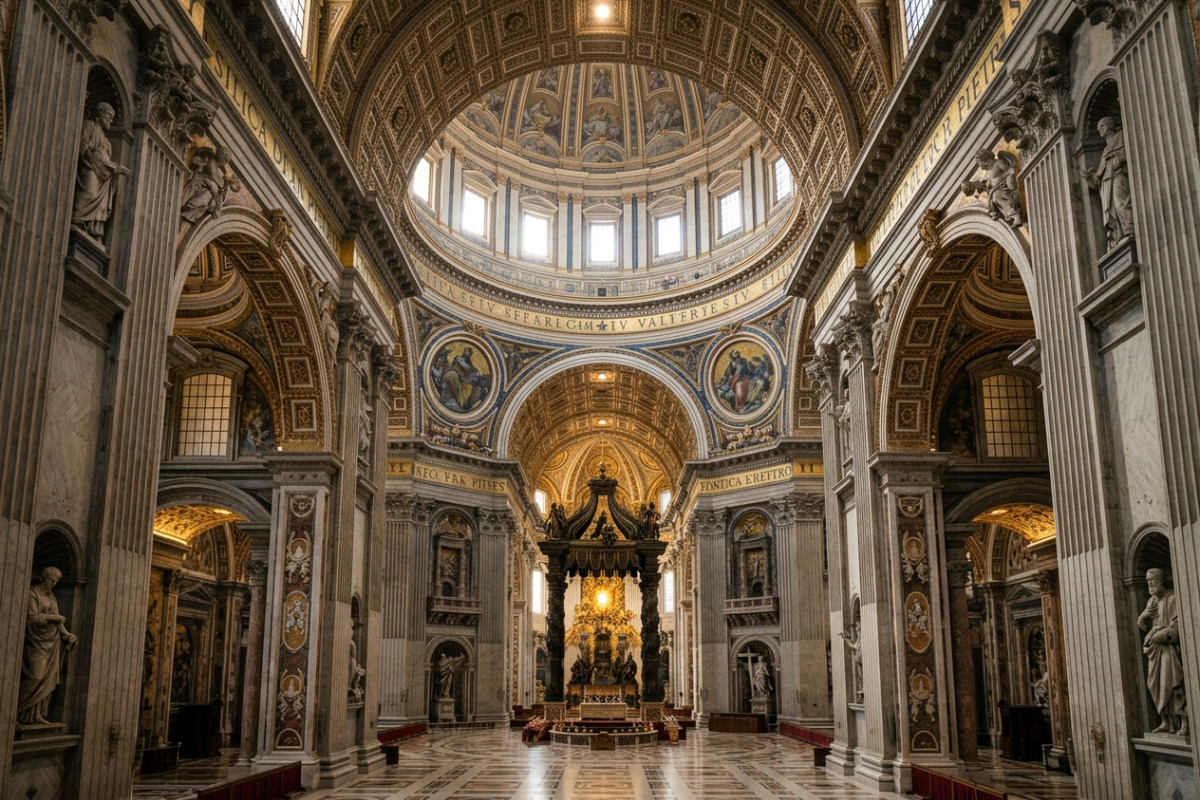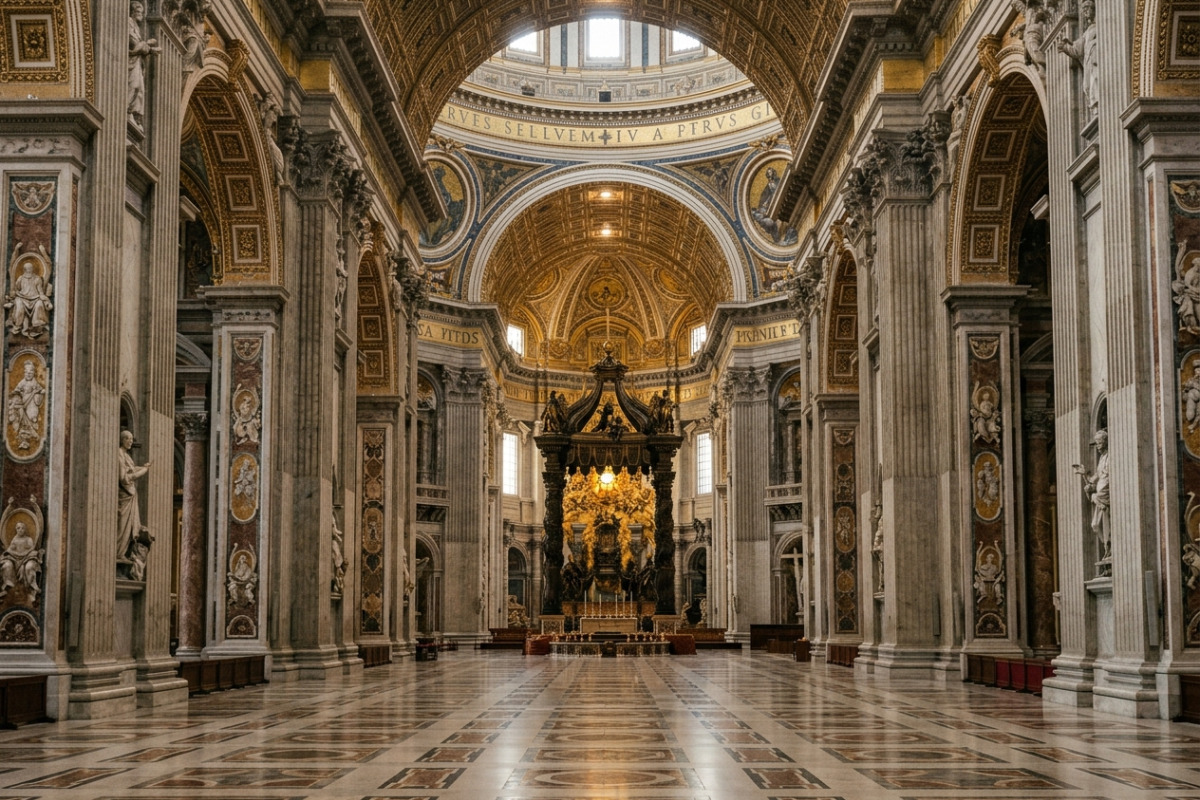
When you step across the threshold into the vast nave of St. Peter's Basilica, the immediate sensation is one of overwhelming grandeur. The sheer scale of the architecture, the gleam of gold leaf, and the intricate patterns of the marble floors are designed to take your breath away. However, for the millions of pilgrims and art lovers who visit, this structure is far more than a display of Renaissance and Baroque opulence. It is a theological book written in stone, bronze, and mosaic. Every statue, altar, and inscription serves a specific purpose: to convey deep spiritual truths and guide the faithful toward a vision of the divine. Understanding the iconography—the visual language of symbols—transforms a simple sightseeing tour into a profound journey through centuries of faith.
The Language of Stone: Reading the Basilica
In the era when St. Peter's was constructed, art was the primary method of communicating scripture and theology to a largely illiterate population. The architects and artists, including Bramante, Michelangelo, and Bernini, were not merely decorating a building; they were constructing a visual representation of the Church's dogma. The layout of the Basilica itself is a cross, symbolizing the sacrifice of Christ, while the dome represents the vault of heaven arching over the earthly realm. As you explore the Basilica, you will notice that the artwork evolves from the human and historical at the ground level to the celestial and divine as your eyes move upward. This vertical hierarchy is a core component of the building's iconographic program, encouraging the viewer to lift their gaze—and their spirit—toward God.
Michelangelo’s Pietà: The Theology of Sorrow and Grace
One of the first and most poignant encounters with divine iconography is located in the first chapel on the right. Michelangelo's Pietà is a masterpiece that transcends the physical properties of marble to reveal a complex theological statement. Unlike previous depictions of the Virgin Mary holding the dead body of Christ, which often emphasized grueling agony, Michelangelo chose to portray a scene of supernatural calm and resignation. The iconography here speaks of the redemption of mankind through sacrifice without the ugliness of death.
Viewers often question why the Virgin Mary appears so young, perhaps younger than her son. This was a deliberate iconographic choice by the artist to symbolize her incorruptible purity and sinlessness. Her open left hand does not clutch the body in desperation but rather offers him to the world, a gesture inviting the faithful to contemplate the necessity of this sacrifice. The pyramidal structure of the sculpture suggests the stability of the Holy Trinity, grounding the emotional scene in theological strength.
The Center of Christendom: The Confessio and Baldachin
Moving to the heart of the Basilica, one encounters the Papal Altar, crowned by Bernini’s massive bronze Baldachin. This structure marks the most sacred spot in the building, located directly above the tomb of St. Peter. To fully understand the significance of this location, one must look at The Altar of the Confessio. The iconography here connects the visible church with its roots. The horseshoe-shaped recess allows pilgrims to be as close as physically possible to the Apostle's remains without entering the excavation area, symbolizing the continuity between the early martyrs and the modern Church.
Bernini’s Baldachin is rich with specific symbols that narrate the authority of the Papacy:
- The Twisted Columns: These solomonic columns mimic those believed to have stood in the Temple of Solomon in Jerusalem, visually linking the Vatican to the biblical tradition.
- The Bees: Scattered across the bronze foliage are bees, the heraldic symbol of the Barberini family (Pope Urban VIII), reminding the viewer of the earthly patronage that supported the divine work.
- The Globe and Cross: At the very top, a globe surmounted by a cross represents the triumph of Christianity over the world (the Orbis Terrarum).
The Dome: A Glimpse of Heaven
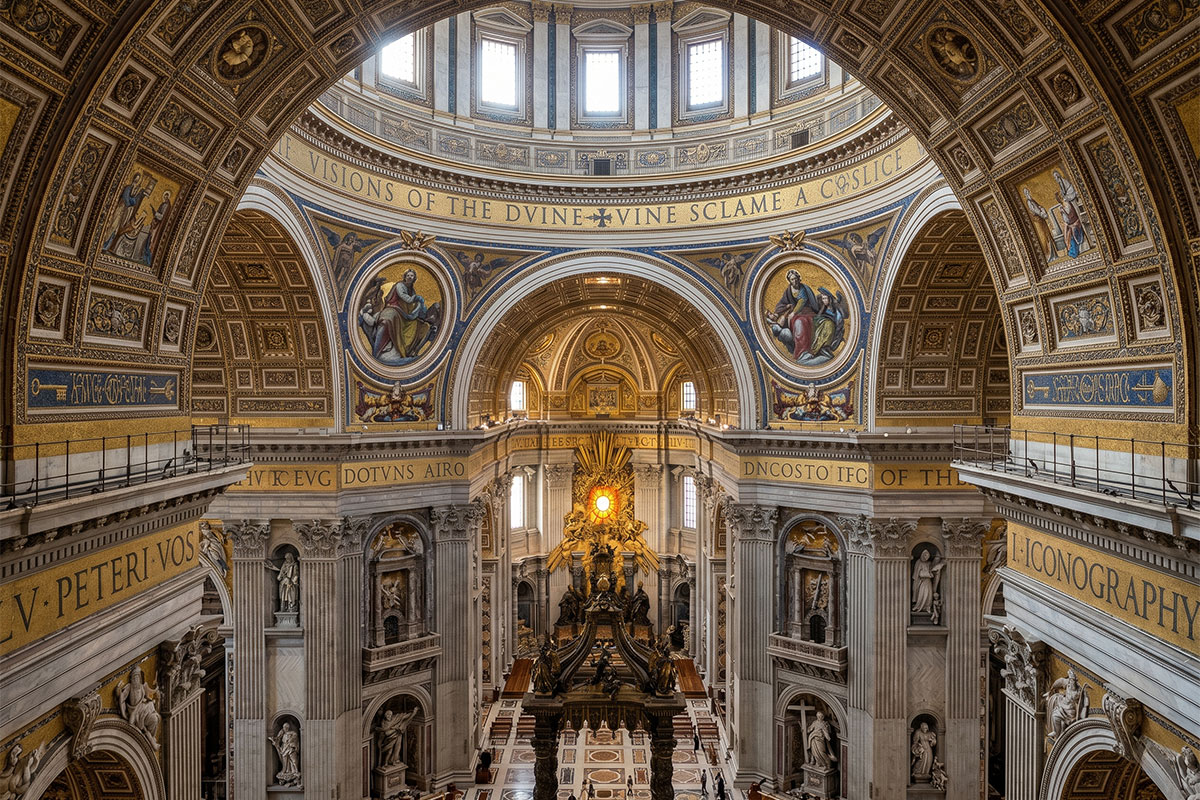
As you lift your eyes to the soaring heights of the cupola, you are looking at a representation of the celestial hierarchy. Designed by Michelangelo and completed by Giacomo della Porta, The Dome is not painted with frescoes, which would be difficult to see from such a distance, but is lined with glittering mosaics. These mosaics are crucial to the iconography of the Basilica, as they reflect light to symbolize the divine illumination of God.
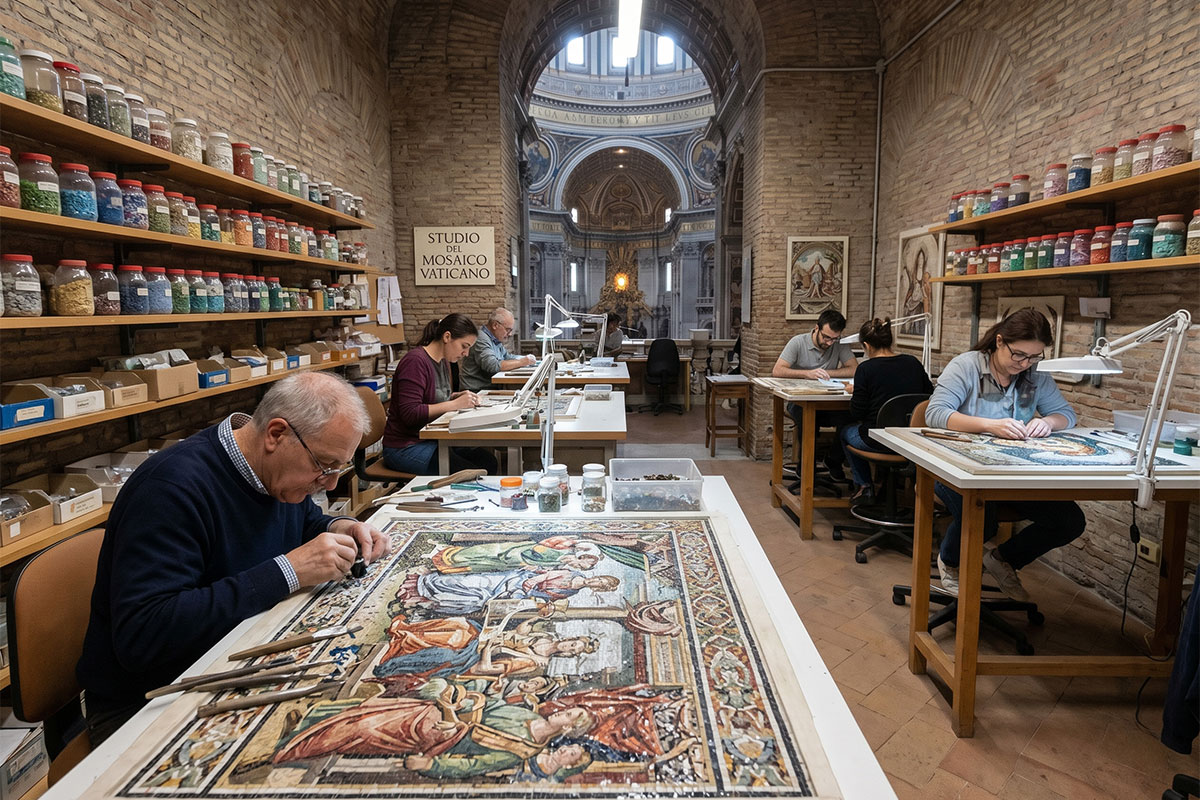
The imagery within the dome is arranged in concentric circles. At the base, you see the busts of the sixteen popes buried in the basilica, followed by figures of Christ, the Virgin Mary, St. John the Baptist, and the Apostles. Above them are angels bearing the instruments of the Passion, and finally, faces of Cherubim and Seraphim. At the very apex, in the lantern, is God the Father. This arrangement visualizes the ascent of the soul from the earthly church hierarchy toward the ultimate presence of the Creator. The preservation of these intricate images is managed by The Mosaic Studio, ensuring that the vision of heaven remains bright for future generations.
Symbols of Authority and Keys to the Kingdom
Throughout the Basilica, certain symbols repeat with high frequency. These are not merely decorative elements; they are the shorthand of Catholic identity. Understanding these symbols is essential for decoding the art around you.
| Symbol | Meaning & Context |
| The Crossed Keys | Represents the authority given by Christ to Peter ("I will give you the keys of the kingdom of heaven"). Gold represents spiritual power; silver represents temporal power. |
| The Tiara (Triregnum) | The three-tiered papal crown symbolizing the Pope's triple role: father of kings, governor of the world, and Vicar of Christ. |
| The Dove | Symbol of the Holy Spirit. Most notably seen in the stained glass window of the Cathedra Petri in the apse, representing the divine guidance of the Church. |
| The Inverted Cross | Refers to the martyrdom of St. Peter, who requested to be crucified upside down as he felt unworthy to die in the same manner as Christ. |
Delving Deeper: More Ikonographic Elements
Beyond the prominent examples, St. Peter's Basilica is filled with countless other iconographic details. Consider the statues of the saints lining the nave. Each figure, from St. Andrew with his distinctive X-shaped cross to St. Longinus holding the spear that pierced Christ's side, tells a story and embodies specific virtues. Paying attention to these details, perhaps with the aid of a detailed guidebook or visual aids, reveals layers of meaning that might otherwise go unnoticed.
The Foundation of Faith: The Necropolis and Grottoes
The visible splendor of the Basilica relies entirely on what lies beneath. The iconography of the upper church is a celebration of the victory of faith, but the roots of that faith are found in The Necropolis. Here, in the ancient city of the dead, simple graffiti and early Christian symbols mark the site of Peter's tomb. This contrast is vital: the humble, hidden reality supports the glorious, public monument.
Between the Necropolis and the main floor lie The Vatican Grottoes. This area contains the tombs of kings, queens, and popes. The art here is more somber and reverent, bridging the gap between the historical reality of death and the heavenly hope depicted in the dome above. Exploring these levels provides a complete picture of the Catholic view of life, death, and resurrection.
Treasures of Devotion
Beyond the architectural elements, smaller liturgical objects also carry immense weight. In The Treasury Museum, visitors can view chalices, vestments, and reliquaries. While these items are masterpieces of goldsmithing and embroidery, their iconographic value lies in their use. The vestments change colors according to the liturgical season (purple for penance, white for celebration), visually signaling the spiritual mood of the church year to the congregation.
Planning Your Journey of Discovery
To truly appreciate the layers of meaning within St. Peter's Basilica, a casual walk-through is often insufficient. The density of the symbolism can be overwhelming without guidance. Utilizing an Audio Guide App can be incredibly helpful, acting as a narrator that decodes the visual language as you stand before each masterpiece. For those who wish to see the specific areas like the Dome or the Treasury, it is wise to arrange Tickets & Tours in advance to ensure access to these specialized sections.
Before you arrive, take a moment to Plan Your Visit by checking the dress code and security regulations. Respecting the sanctity of the space is part of the experience. If you have specific questions about photography or accessibility, the Frequently Asked Questions page is a valuable resource. By preparing for your visit, you allow yourself the mental space to move beyond the crowds and connect with the profound visions of the divine that have inspired pilgrims for centuries.