When you look at the skyline of Rome, one silhouette dominates the horizon above all others, serving as a beacon for pilgrims and travelers alike. The Dome of St. Peter's Basilica is not merely a roof over a church; it is a testament to human ambition, a masterpiece of Renaissance art, and, perhaps most importantly, a defying feat of engineering. For centuries, architects and engineers have studied its curves and structure, marveling at how such a massive weight has remained suspended in the sky since the late 16th century. Understanding the mechanics behind this structure transforms a simple visit into a journey through the history of architectural innovation.
The construction of the dome was not a straightforward process; it was a dramatic saga involving some of the greatest minds in history, including Bramante, Sangallo, and ultimately, Michelangelo. It represents the transition from the static stability of the Middle Ages to the dynamic tensions of the Renaissance, pushing the boundaries of what stone and brick could achieve. As you prepare to Plan Your Visit to the Vatican, knowing the secrets hidden within these walls will undoubtedly elevate your appreciation of this colossal structure.
A Vision Passed Through Generations
The story of the dome begins long before the final stone was placed, originating with Donato Bramante’s initial design in 1506, which envisioned a low, saucer-like dome similar to the Pantheon. However, as decades passed and architects changed, the vision evolved until Michelangelo Buonarroti took control of the project in 1547 at the age of 72. He famously promised to build a dome that was the sister of Brunelleschi’s dome in Florence—"bigger, but not more beautiful," though many today might argue the latter. Michelangelo's design was revolutionary, intending to raise the lantern higher into the heavens to maximize visibility across Rome.
While Michelangelo completed the design and the construction of the drum (the base), he passed away before the dome itself was vaulted. The task of finishing this engineering giant fell to his pupil, Giacomo della Porta, and Domenico Fontana. They slightly altered Michelangelo’s design, raising the curve of the dome to make it more ovoid (egg-shaped) rather than a perfect hemisphere. This crucial adjustment was not just aesthetic; it was a brilliant engineering decision that reduced the outward thrust of the massive structure, ensuring it wouldn't collapse under its own weight.
The Double-Shell Innovation
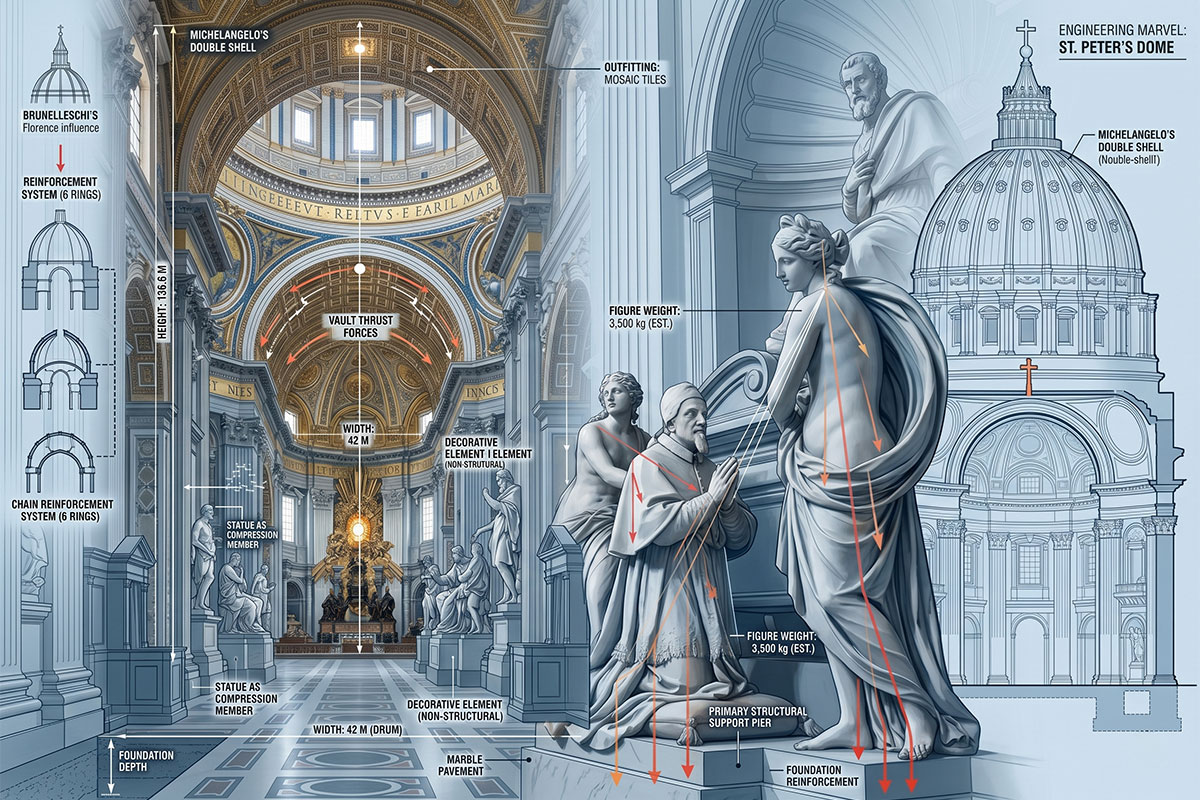
One of the most fascinating engineering aspects of The Dome is that it is not a single solid mass, but rather two domes built one inside the other. This double-shell technique was inspired by the Duomo in Florence but perfected for the Roman context. The inner shell provides the structural integrity and the canvas for the breathtaking mosaics visible from the basilica floor, while the outer shell acts as a protective shield against the elements, boasting the magnificent lead roofing that gleams in the sun.
Between these two shells lies a hidden world—a staircase that allows maintenance workers and visitors to climb to the lantern. This gap also serves a structural purpose: it lightens the total load on the four massive piers supporting the dome. By creating a cavity, the architects reduced the weight significantly without sacrificing the dome's majestic volume. This intricate design allows for the circulation of air, which helps preserve the masonry from humidity and temperature changes, a forward-thinking feature for the 16th century.
Structural Challenges and The Iron Chains
Despite the brilliance of the design, the laws of physics are relentless, and the dome faced significant structural challenges shortly after its completion. The immense weight of the masonry created powerful "hoop stress," pushing the walls outward. Over the centuries, cracks began to appear, alarming the Vatican and the engineering community. This led to one of the earliest examples of structural reinforcement in architectural history.
In the mid-18th century, Pope Benedict XIV commissioned mathematician Giovanni Poleni to assess the stability of the dome. Poleni’s solution was ingenious and effective: he recommended encircling the dome with massive iron chains to contain the outward thrust, acting like the metal hoops on a wine barrel. Today, there are several iron rings embedded within the masonry, invisible to the naked eye but absolutely vital for holding the structure together. This intervention saved the basilica and highlighted the importance of blending mathematics with architecture.
Key Architectural Statistics
To truly grasp the scale of this engineering marvel, it helps to look at the raw numbers that define its existence. The following table illustrates the immense proportions that the architects had to contend with:
| Feature | Measurement / Detail |
| Total Height | 136.5 meters (448 feet) from floor to cross |
| Internal Diameter | 41.47 meters (136 feet) |
| Total Weight | Approximately 14,000 tons |
| Number of Steps | 551 steps to the summit (without elevator) |
| Construction Period | Main construction finished in 1590 |
Artistry Meets Engineering: The Mosaics
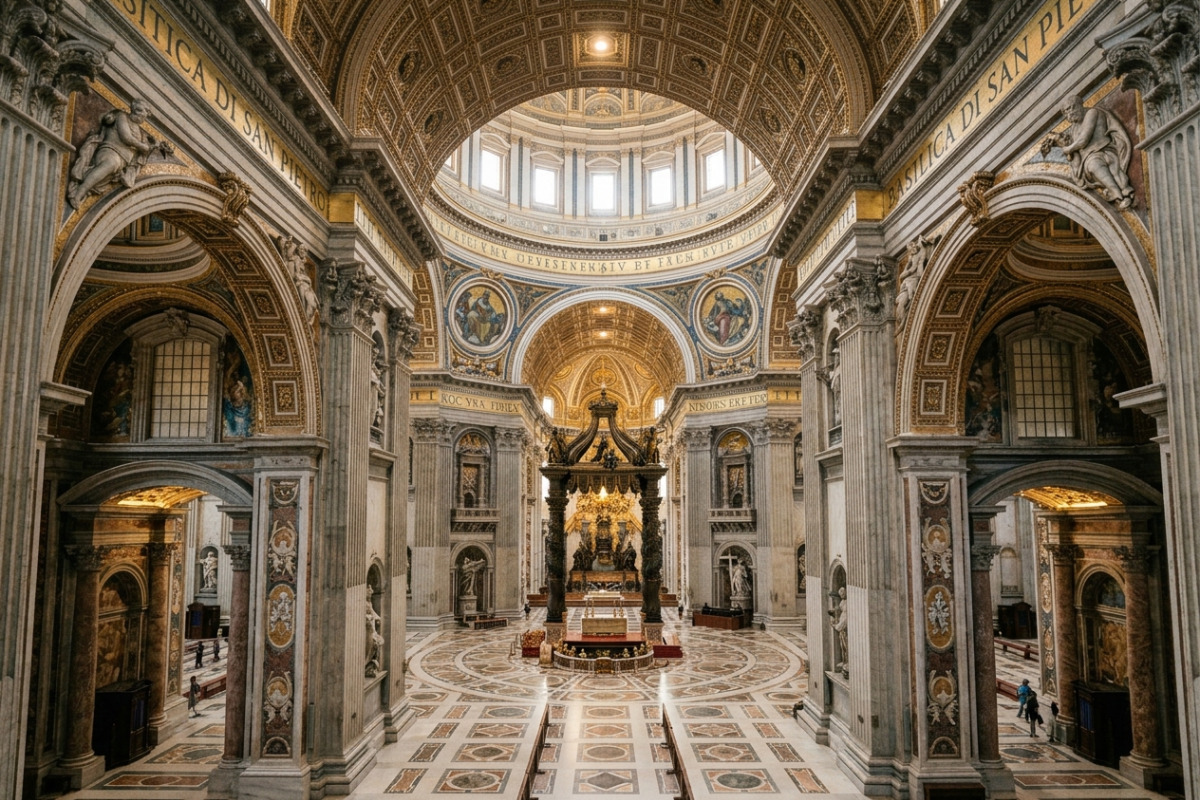
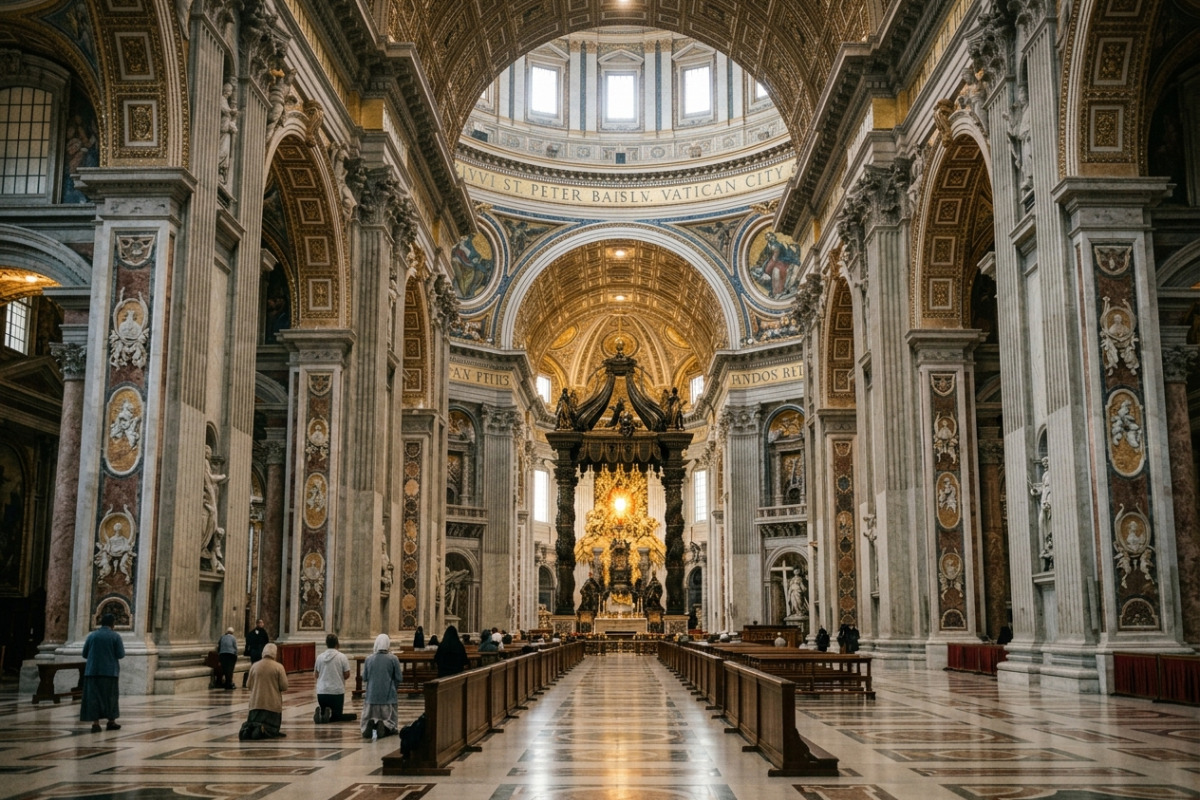
The engineering triumph of the dome provided a canvas for some of the most spectacular artwork in the Vatican. The interior of the dome is lined with vibrant mosaics that depict the heavenly hierarchy, with God the Father at the very apex in the lantern. Creating these mosaics on a curved, concave surface required immense technical skill. The craftsmen had to account for the distortion of perspective when viewed from the ground, 100 meters below.
If you visit The Mosaic Studio, you can learn about the painstaking process of cutting and placing thousands of tesserae (glass tiles). Unlike frescoes, which are painted on wet plaster, mosaics are durable and reflect light, making the dome shimmer even in low light conditions. The structural ribs of the dome divide the artwork into sixteen segments, creating a rhythmic visual flow that draws the eye upward toward the light.
The Visitor Experience: Climbing the Cupola
For those interested in seeing these engineering details up close, climbing the dome is an essential part of the Vatican experience. The journey begins with an elevator or a climb up the first level, bringing you to the interior balcony at the base of the drum. Here, you can view the mosaics up close and look down at The Altar of the Confessio far below. The perspective from this height reveals the sheer magnitude of the letters inscribed around the base, which are actually 2 meters tall despite looking tiny from the ground.
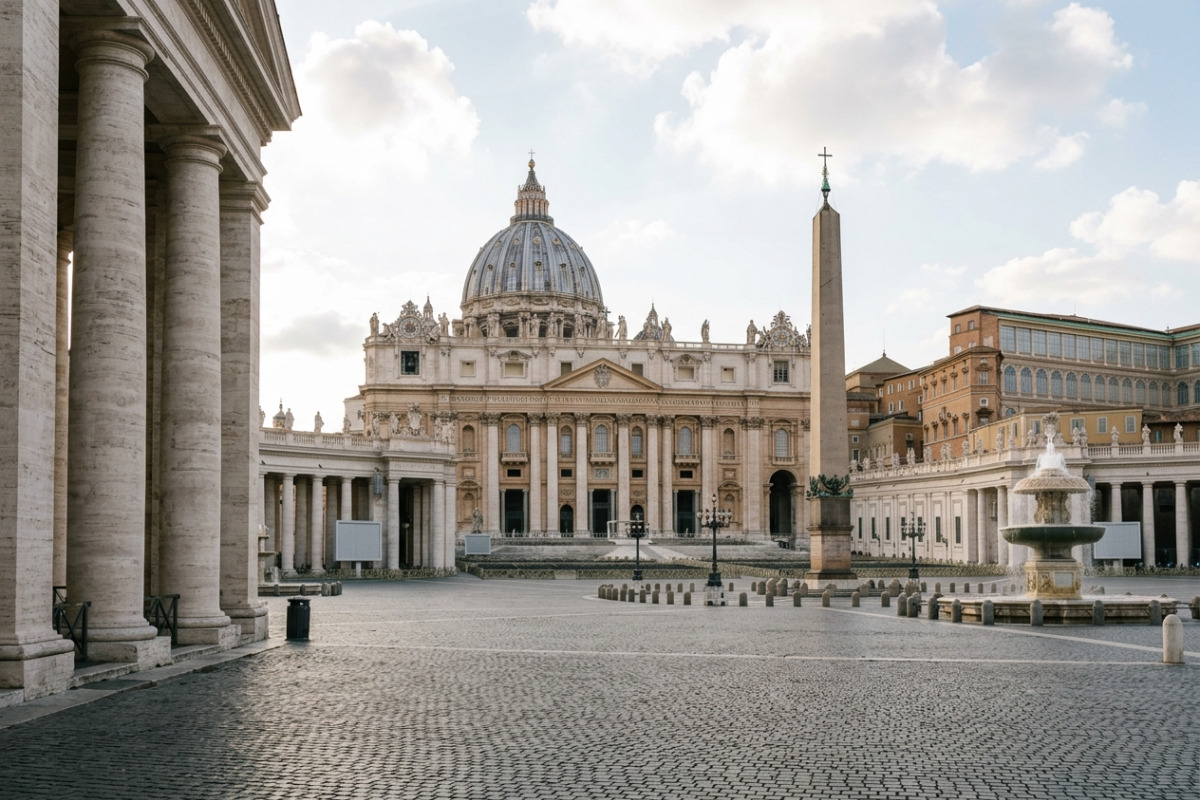
The second part of the ascent takes you between the two shells of the dome. As you climb the narrow, slanted staircase, you can physically feel the curve of the architecture leaning over you. It is a tactile lesson in engineering, where you inhabit the space that makes the structure possible. Upon reaching the top, the panoramic view of St. Peter's Square and the Vatican Gardens is unrivaled. To ensure a smooth experience, it is highly recommended to book Tickets & Tours in advance, as the queue for the dome climb can be quite long.
Exploring Beyond the Dome
While the dome is a highlight, it is structurally and thematically connected to the rest of the basilica. The massive piers that support the dome also define the central crossing where you can find Michelangelo's Pietà in a nearby chapel, showcasing the artist's mastery of sculpture alongside his architectural legacy. Furthermore, the engineering feat continues underground; the foundations of these massive piers dive deep into the earth, neighboring The Necropolis, where the tomb of St. Peter is located.
Visitors often miss the connection between the subterranean world and the soaring height of the cupola. Exploring The Vatican Grottoes gives you a sense of the historical layers that support the visible church. To get the most out of these connections, using the official Audio Guide App provides commentary that links the engineering stats with the spiritual history of the site.
Tips for the Architecture Enthusiast
- Bring Binoculars: To appreciate the iron clamps and the finer details of the lantern, binoculars are a great tool to have on the ground floor.
- Check the Light: The dome looks different at various times of the day. Morning light illuminates the mosaics beautifully, while late afternoon creates dramatic shadows on the exterior ribs.
- Look for the Cracks: While mostly repaired, keen observers might spot the faint lines where historical stress fractures occurred, now safely secured by the hidden chains.
- Visit the Treasury: For models and plans of the basilica's construction, The Treasury Museum often displays artifacts related to the building process.
The Dome of St. Peter’s Basilica remains a standing miracle of engineering. It bridges the gap between the artistic flair of the Renaissance and the scientific precision of the Enlightenment. Whether you are an engineer, a historian, or simply a traveler in awe of beauty, standing beneath this canopy of stone is a reminder of what humanity can achieve when vision is paired with technical prowess.