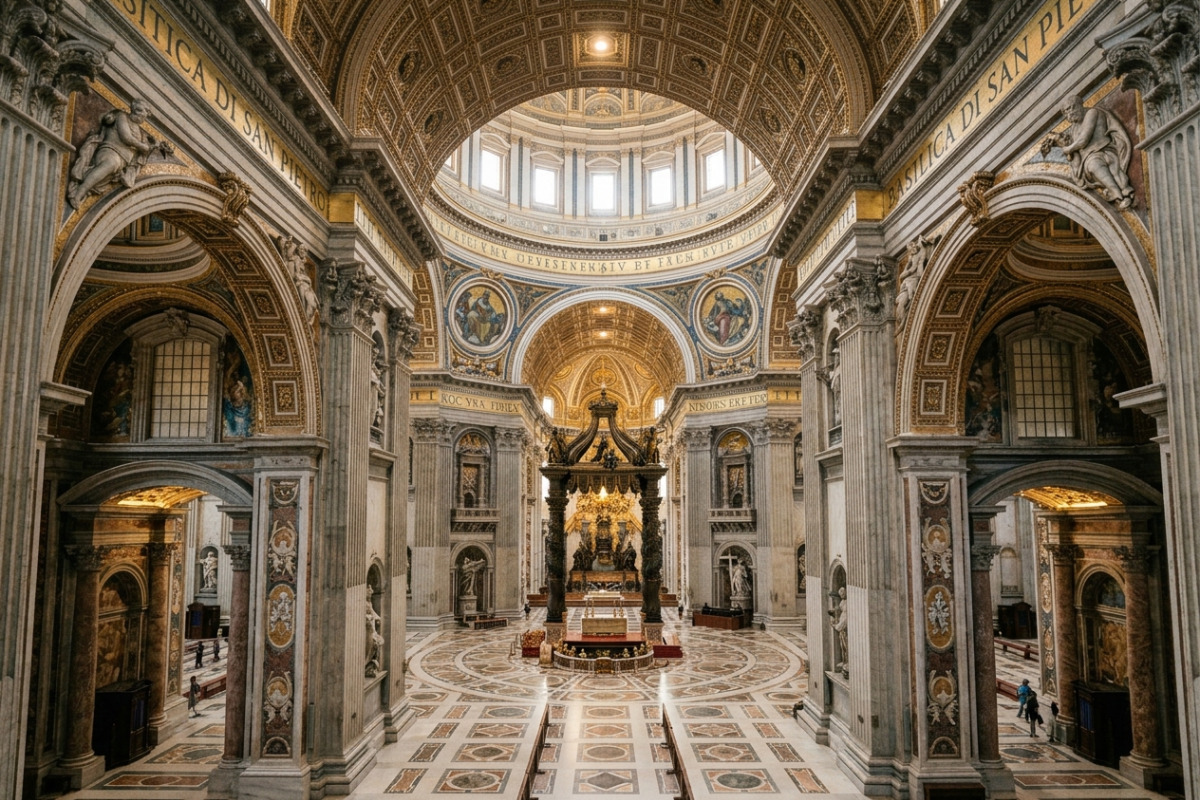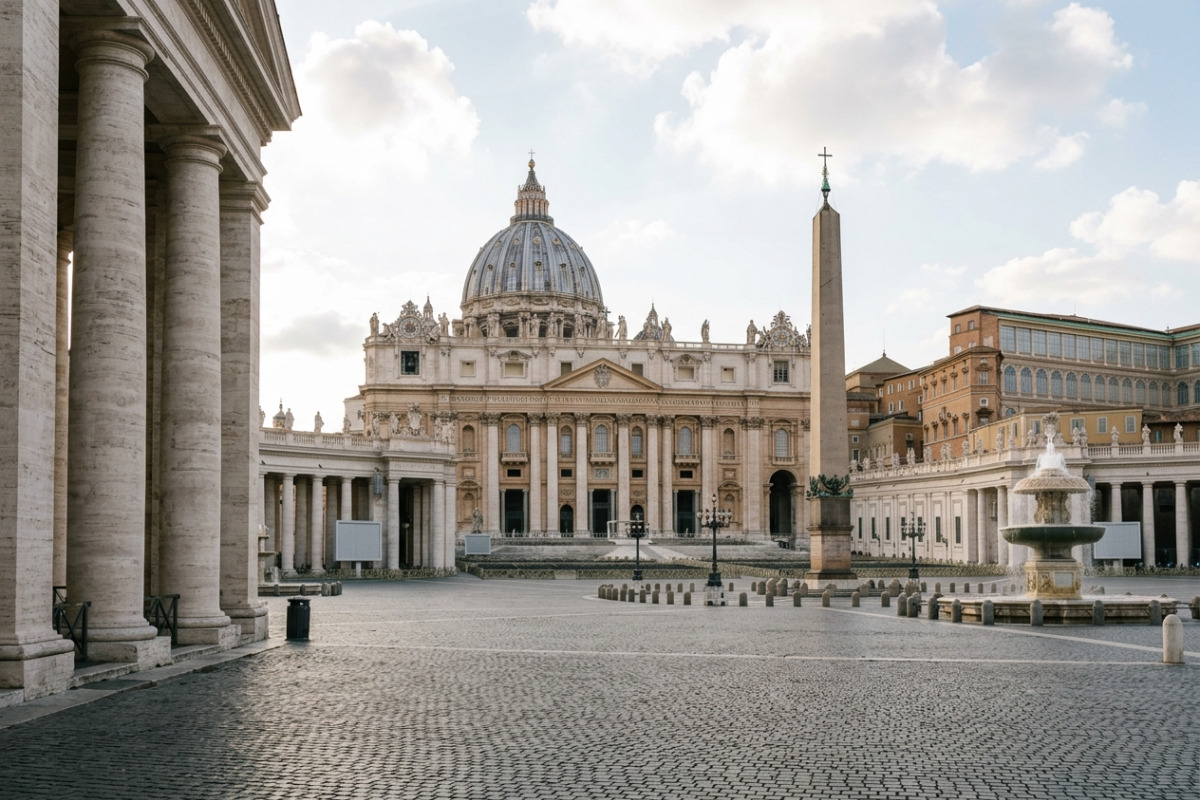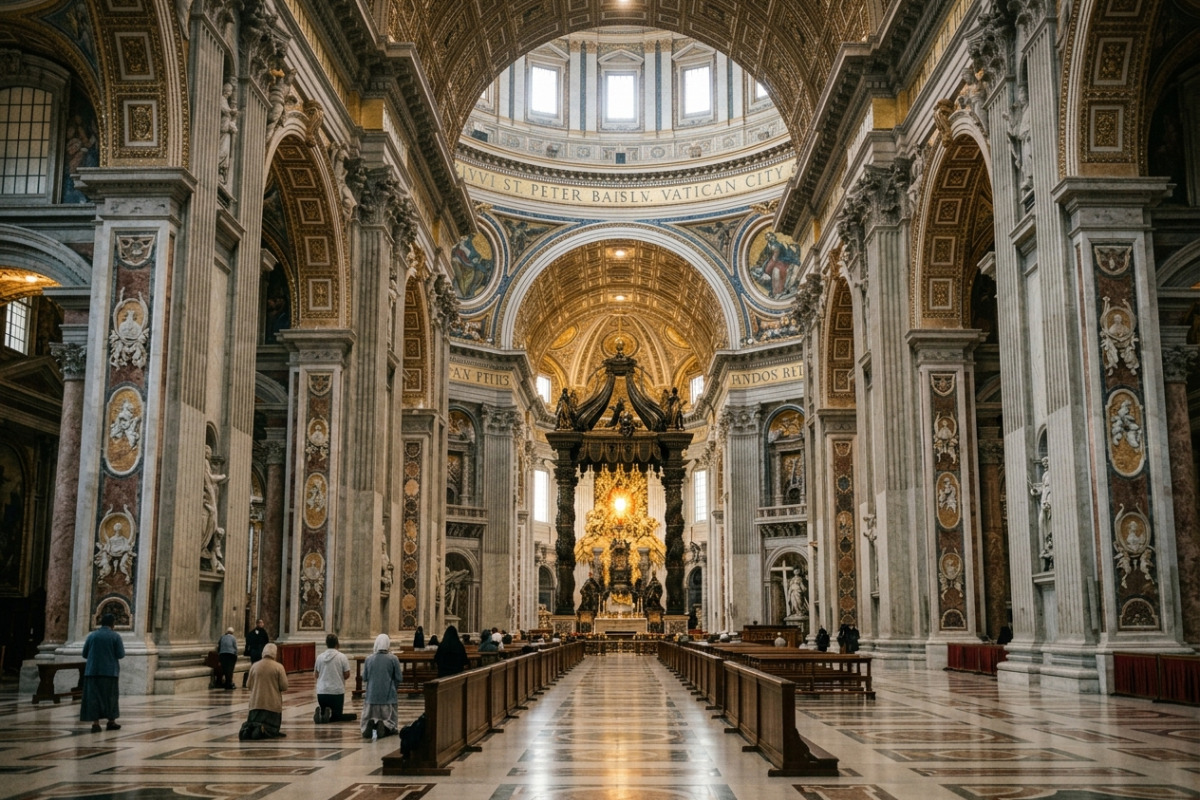
When you step across the threshold of St. Peter's Basilica, the sheer magnitude of the interior often steals your breath away, leaving you awestruck by the golden light and the soaring height of the nave. However, once your eyes adjust to the grandeur, a different kind of journey begins—one that is intimate, emotional, and carved from the earth itself. The basilica is not merely a container for religious ceremonies; it is a library of theology written in marble, travertine, and bronze. Every fold of drapery, every outstretched hand, and every agonized or ecstatic expression tells a specific story, freezing a moment of divine interaction in time for eternity. To truly understand the Vatican, one must learn to read these sculptural narratives that have been whispering to pilgrims for centuries.
The Silent Sorrow: Michelangelo’s Pietà
Perhaps the most poignant story told in stone resides in the first chapel on the right as you enter. Here lies a narrative of maternal grief that transcends language and culture. Michelangelo's Pietà is not simply a statue of a woman holding her son; it is a theological dissertation on acceptance and sacrifice. Unlike other depictions of this scene which often focus on the gruesome reality of death, Michelangelo chose to focus on the serenity of the Virgin Mary. Her face, youthful and calm, suggests a sorrow that is deep but composed, telling the story of a mother who understands the necessity of the sacrifice she cradles.
The narrative power here lies in the contrast between the lifeless, heavy body of Christ and the strength of Mary. The marble, polished to a sheen that mimics the softness of skin, invites the viewer to feel the weight of the moment. It is a story of the intersection between the human and the divine. For visitors who Plan Your Visit specifically to see this masterpiece, the experience is often deeply moving, offering a quiet moment of reflection amidst the bustle of the basilica.
The Drama of the Baroque: Bernini’s Theatrical Stone
Moving from the Renaissance serenity of Michelangelo to the high drama of the Baroque era, the storytelling shifts from quiet contemplation to explosive action. Gian Lorenzo Bernini, the architect of much of the basilica's interior character, understood that sculpture should capture the climax of a story. His works are not static poses; they are scenes of intense movement and emotion.
St. Longinus and the Moment of Conversion
Standing in one of the massive niches surrounding the central crossing, the statue of St. Longinus is a masterclass in narrative tension. This colossal figure represents the Roman centurion who pierced Christ's side and subsequently converted to Christianity. Bernini captures the exact split-second of his realization. His arms are flung wide in shock and awe, and his face looks upward toward the light. The drapery swirls around him, not just as clothing, but as a physical manifestation of his spiritual turbulence. To understand the context of where this statue stands, one must look to the center of the church, near The Altar of the Confessio, linking the saint directly to the sacrifice he witnessed.
The Memento Mori of Alexander VII
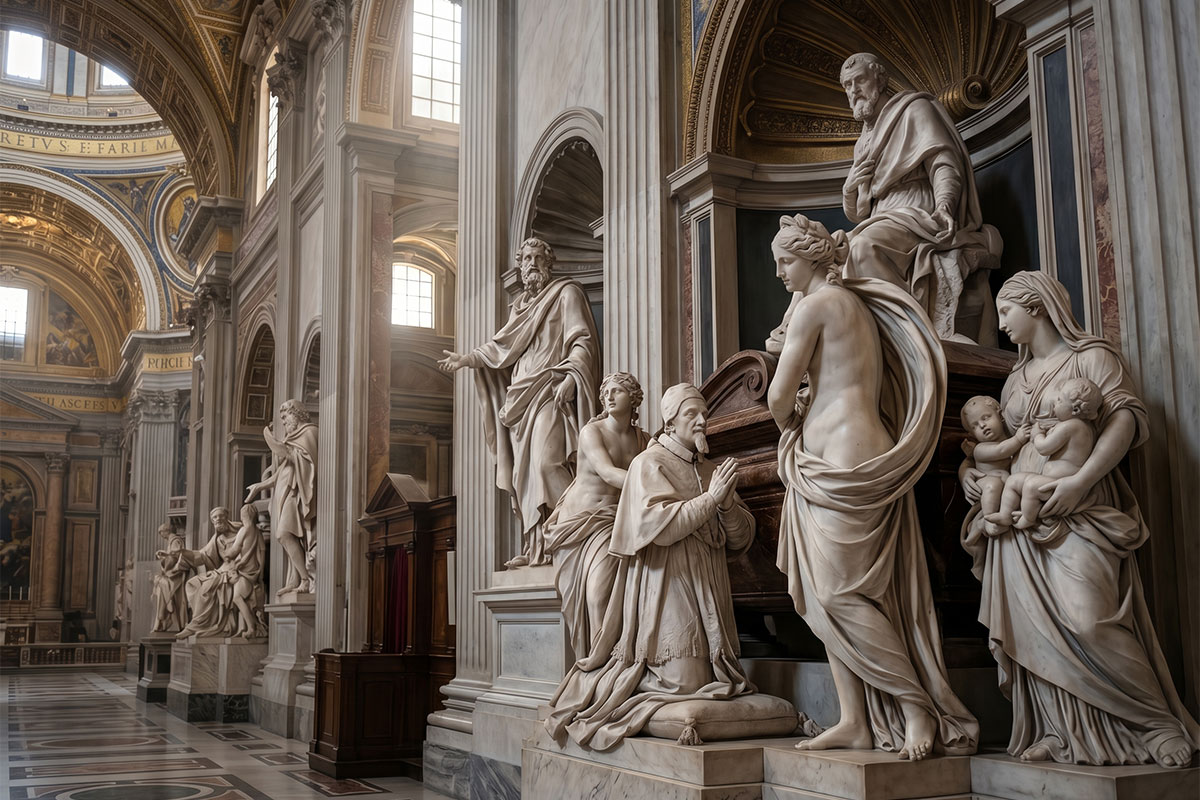
Another profound narrative is found in the Monument to Pope Alexander VII. Here, Bernini tells a story not of a saint's life, but of the universal human condition: mortality. The Pope is depicted praying, surrounded by virtues, but the true protagonist of this story is a winged skeleton rising from beneath a heavy drape of jasper. Holding an hourglass, the skeleton signifies that time runs out for everyone, even the Vicar of Christ. It is a chilling yet beautiful reminder of the transient nature of power, a theme that resonates deeply with those who explore the basilica's history.
Key Sculptural Narratives at a Glance
To help you decode the artistic language during your visit, here is a breakdown of some key sculptures and the specific stories they convey:
| Sculpture | Artist | The Narrative Moment |
| The Pietà | Michelangelo | The quiet moment after the crucifixion; a mother accepting the divine will with sorrowful grace. |
| St. Longinus | Bernini | The instant of spiritual awakening and conversion; shock turning into adoration. |
| Bronze Statue of St. Peter | Arnolfo di Cambio | The enduring authority of the Church; a story of continuity told through the worn foot touched by millions. |
| Monument to Alexander VII | Bernini | The final confrontation with death; truth revealed as the curtain of life is lifted. |
| St. Andrew | Francois Duquesnoy | The agony and ecstasy of martyrdom; gazing toward heaven while embracing the cross. |
The Architecture of Storytelling
The narrative of St. Peter's is not limited to freestanding statues; the very structure of the building participates in the storytelling. As you gaze up into the vastness of The Dome, the mosaics tell the story of the heavens opening up. The statues of the founders of religious orders, placed in niches along the nave, act as a guard of honor, telling the history of the Church's expansion through the centuries. Each figure holds an attribute—a book, a lily, a skull—that acts as a key to unlocking their personal biography and their contribution to the faith.
Furthermore, consider the statue of **Saint Helena**, mother of Emperor Constantine, sculpted by Andrea Bolgi. She stands as a testament to faith and discovery, holding the True Cross. Her story is one of imperial devotion and the search for sacred relics, a powerful narrative of piety and historical significance.
Another compelling, though often overlooked, narrative is embodied in the **Chair of Saint Peter (Cathedra Petri)**, also by Bernini. While not a freestanding sculpture in the traditional sense, the elaborate bronze casing surrounding the supposed chair of the first Pope tells a story of papal authority and divine guidance. The dove of the Holy Spirit, bathed in golden light, symbolizes the inspiration that guides the papacy.
Furthermore, the story extends beneath the floor. The visible grandeur above is supported by the history buried below in The Vatican Grottoes and even deeper in The Necropolis. The sculptures on the sarcophagi of past popes in the grottoes offer a more somber, historical narrative compared to the triumphant art of the main basilica.
Enhancing Your Experience
Because the basilica is so dense with artistic information, it is easy to walk past a masterpiece without realizing the drama it depicts. To fully appreciate these stories in stone, consider the following tips for your visit:
- Use Technology: A good Audio Guide App is indispensable. It acts as a narrator, translating the visual language of the statues into stories you can understand, explaining symbols and historical context that are invisible to the naked eye.
- Check the Lighting: The marble changes throughout the day. Morning light often highlights the eastern sculptures, while the afternoon sun casts dramatic shadows that enhance the Baroque theatricality.
- Secure Access: While the main floor is free, some of the most compelling historical narratives are in restricted areas. Booking Tickets & Tours in advance for the Dome or the Necropolis ensures you get the complete picture.
- Explore the Details: Don't just look at the faces. Look at the hands, the feet, and the objects the statues are holding. Visit The Mosaic Studio page to understand how some "paintings" you see are actually intricate stone narratives.
A Living History
Ultimately, the sculptures of St. Peter's Basilica are not dead relics of the past. They are active participants in a living tradition. When you see a pilgrim touching the worn foot of St. Peter, you are witnessing a new chapter being added to a narrative that has lasted for centuries. Whether you are exploring the artistic treasures of The Treasury Museum or standing in the vast nave, remember that you are surrounded by stories. These stones have witnessed empires rise and fall, and through the genius of artists like Michelangelo and Bernini, they continue to speak to us today, inviting us to listen to their timeless tales.