Stepping into St. Peter's Square, the first thing that strikes you is the sheer magnitude of the space, but the true power of this location lies not in its size, but in its story. For centuries, pilgrims and art lovers alike have flocked to the Vatican, yet many walk past the profound messages carved into the travertine and marble without realizing what they are seeing. St. Peter’s Basilica is far more than a museum or a historical monument; it is a theological statement written in stone, a physical representation of the Christian journey from the earthly realm to the divine. As we explore the basilica today, in January 2026, the timeless nature of these symbols continues to resonate with visitors from every corner of the globe.
Architecture as Theology: The Layout
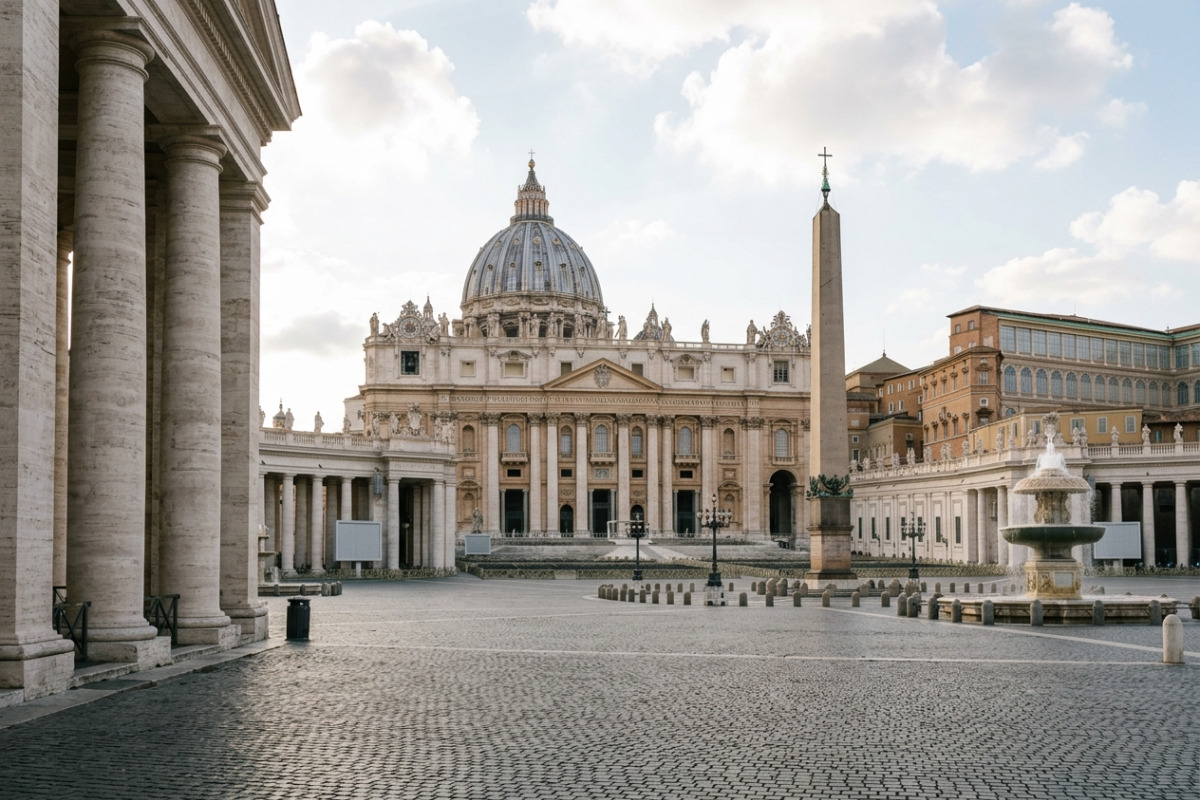
The design of St. Peter’s Basilica was never intended to be merely functional; every inch of the floor plan serves a symbolic purpose designed to guide the believer's soul. The basilica is built in the shape of a Latin cross, a traditional layout that immediately places the visitor within the central symbol of the Christian faith. However, the experience begins before you even cross the threshold. The massive colonnades designed by Gian Lorenzo Bernini, which encircle the square, are not just decorative borders. They represent the "maternal arms of the Mother Church," stretching out to embrace Catholics, heretics, and non-believers alike, gathering the world into a hug of unity and forgiveness.
The Dome: A Window to the Heavens
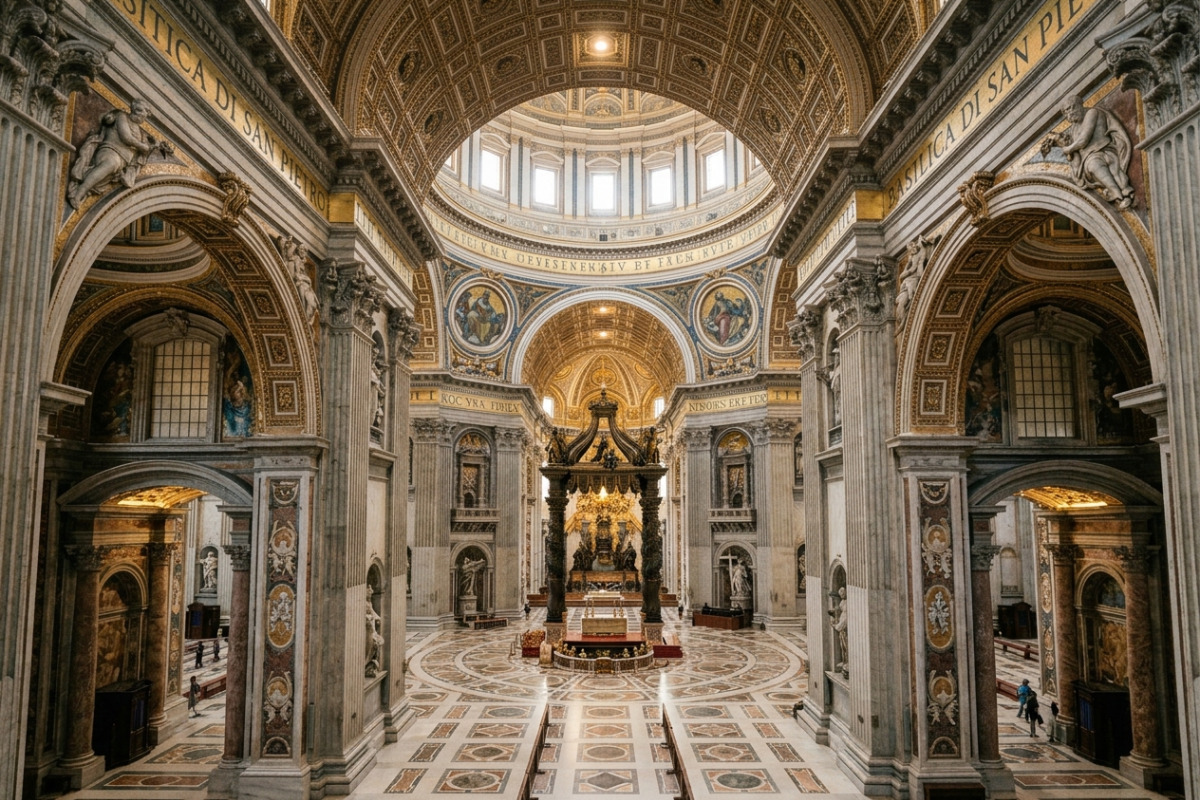
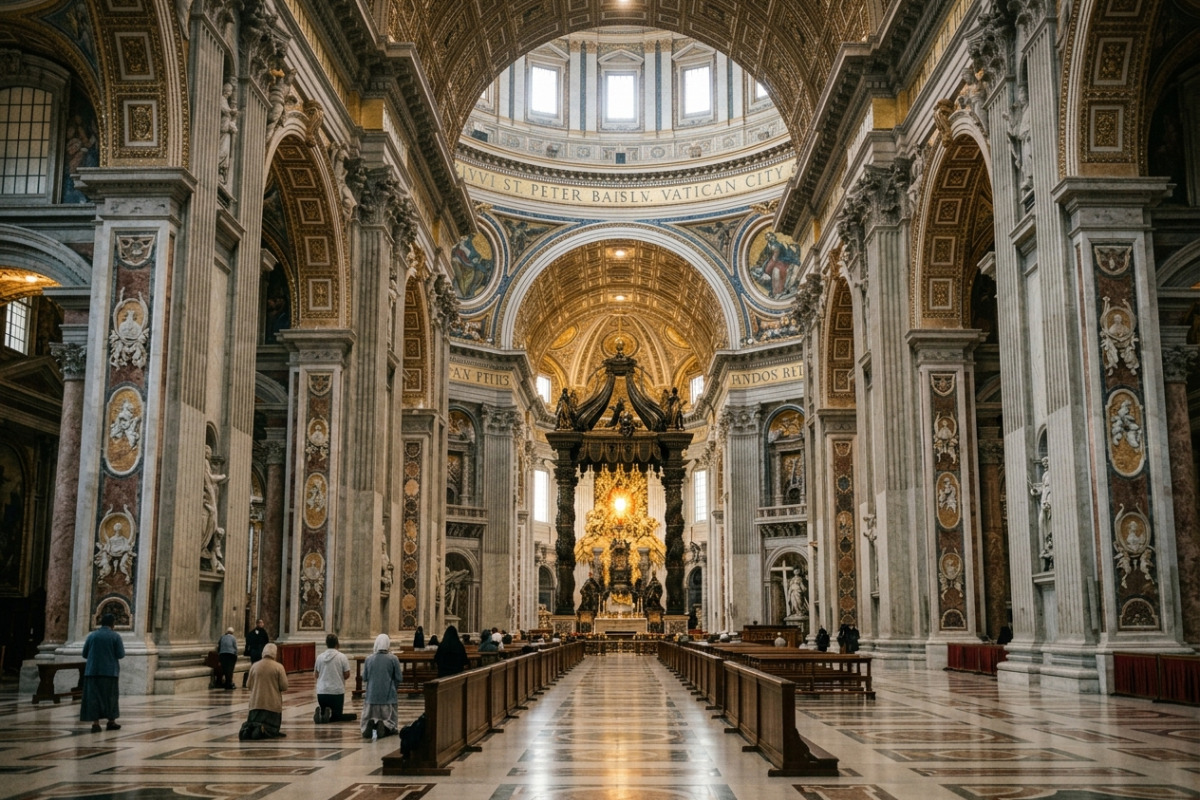
As you move inside and cast your eyes upward, your gaze is inevitably drawn to the soaring cupola. Designed by Michelangelo, The Dome is more than an engineering marvel; it represents the vault of heaven itself. The light pouring in from the lantern at the very top symbolizes divine revelation illuminating the world below. Around the base of the dome, you will see massive letters spelling out the words of Christ to Peter: "Tu es Petrus" (You are Peter, and on this rock, I will build my church). This architectural hierarchy forces the viewer to look up, physically enacting the spiritual act of lifting one's heart toward God.
Sacred Art and Hidden Meanings
The artwork within the basilica serves as a visual Bible, created at a time when literacy was not universal, yet the depth of the symbolism speaks to the most learned theologians. While you can spend days admiring the thousands of square meters of mosaics, certain masterpieces hold the key to understanding the basilica’s heart. To truly understand the narrative behind these works, many visitors find it helpful to use the official Audio Guide App, which provides a curated narration of these spiritual stories.
The Pietà: Divine Sorrow and Youth
Perhaps no single statue captures the emotional core of the Christian faith quite like Michelangelo's Pietà. Located near the entrance, this marble masterpiece depicts the Virgin Mary holding the lifeless body of Jesus. A detail that often confuses observers is Mary’s face; she appears incredibly young, perhaps younger than her son. This was a deliberate symbolic choice by Michelangelo to represent her incorruptible purity and virginity. The smoothness of the marble, the delicate folds of Mary's robes, and the serene expression on her face all contribute to a sense of otherworldly peace amidst profound sorrow. Consider the positioning: Mary is seated on a rock, symbolizing the Church itself, supporting the body of Christ. The Pietà is not just a depiction of grief; it shows the serene acceptance of divine will, inviting the viewer to contemplate the mystery of sacrifice and redemption.
The Altar and the Baldachin
Walking down the central nave, you approach the spiritual epicenter of the church: The Altar of the Confessio. Towering over it is Bernini’s bronze Baldachin, a canopy that marks the holy space. The twisted columns are reminiscent of the Temple of Solomon, linking the new church to biblical history. However, the location is the most crucial symbol here. The altar is situated directly above the tomb of St. Peter. This vertical alignment connects the roots of the church—the Apostle buried in the earth—with the celebration of the Eucharist at the altar, and finally to the dome and the heavens above. It is a physical line connecting the human, the ecclesial, and the divine.
The Statue of St. Peter
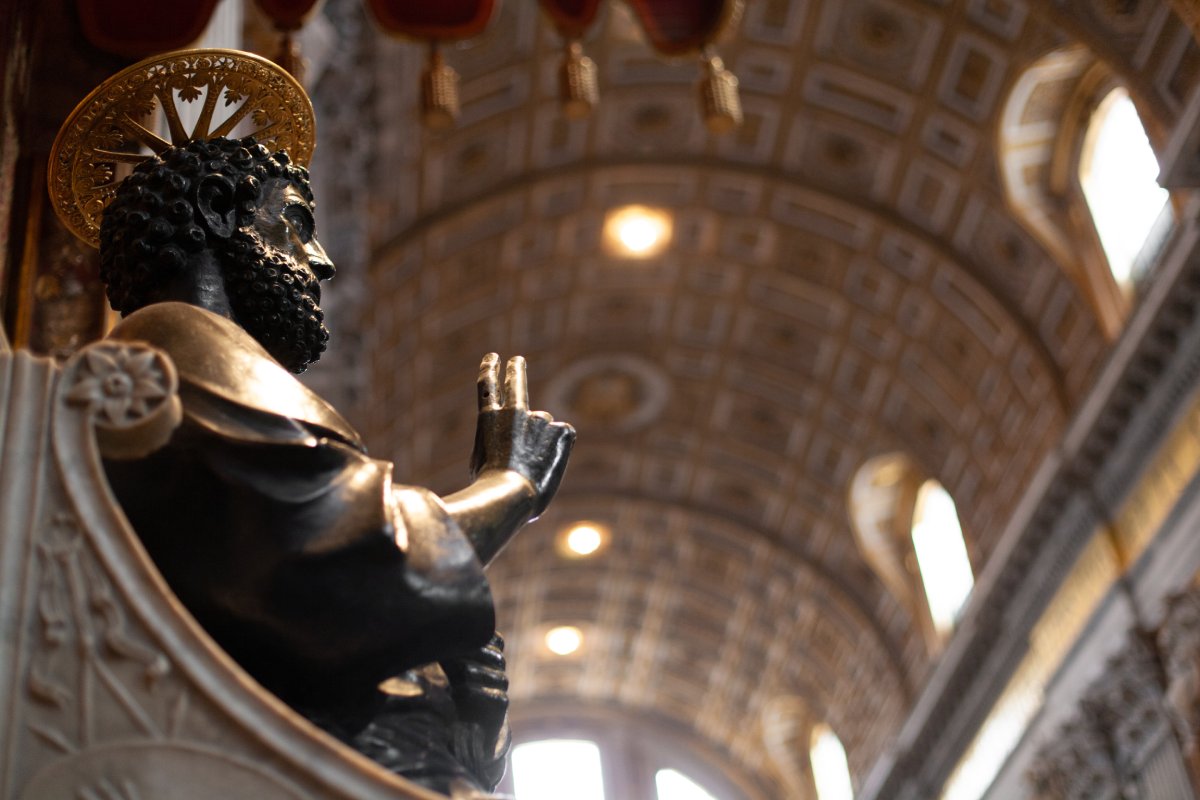
Don't miss the bronze statue of St. Peter, attributed to Arnolfo di Cambio, located near the altar. Over centuries, countless pilgrims have touched or kissed its foot, resulting in significant wear. This act of devotion symbolizes a connection to the Apostle and a request for his intercession. The worn foot is a tangible representation of the faith and devotion of generations.
The Foundations of Faith
To fully grasp the symbolism of the basilica, one must look beneath the surface. The grandeur of the main floor rests upon the literal and figurative foundations of early Christianity. Below the marble floors lie The Vatican Grottoes, where popes and royals have been interred for centuries close to the Apostle. Yet, even deeper lies the true origin. The Necropolis, or Scavi, contains the ancient Roman street of the dead and the original grave of St. Peter. This layering of history symbolizes that the Church is not built on abstract ideas, but on the concrete testimony of those who came before.
Key Symbols and Their Meanings
For those looking to decode the visual language of the basilica during their visit, here is a quick reference guide to the most prominent elements:
| Element | Location | Spiritual Symbolism |
| The Colonnade | St. Peter's Square | The embracing arms of the Mother Church welcoming the world. |
| The Holy Door | Entrance Vestibule | Represents Jesus as the only way to salvation; opened only during Jubilee years. |
| The Main Dome | Central Crossing | The connection between Earth and Heaven; the ascent of the soul. |
| Bernini's Baldachin | High Altar | Marks the sacred site of St. Peter's tomb; twisted columns recall Solomon's Temple. |
| Inverted Cross | Various Artwork | Symbolizes St. Peter's humility in his martyrdom (crucified upside down). |
| Keys of Heaven | Statues & Mosaics | Represents the authority given by Christ to Peter and his successors. |
Planning Your Spiritual Visit
Visiting St. Peter's Basilica is a journey that requires some preparation to fully appreciate the layers of history and spirituality. Because the basilica is an active place of worship and a major cultural site, lines can be long. It is highly recommended to look into Tickets & Tours in advance to ensure you have the time and space to reflect on what you are seeing without the stress of rushing. Whether you choose to Explore the Basilica on your own or join a guided group, remember to dress modestly, as this is a requirement for entering this sacred space.
Before you go, take a moment to Plan Your Visit by checking opening hours and liturgical schedules. As you walk through the nave, let the architecture guide your eyes and your spirit. From the depths of the Necropolis to the heights of the Dome, St. Peter's is designed to be a transformative experience, reminding us that art, at its highest level, is a bridge to the divine.