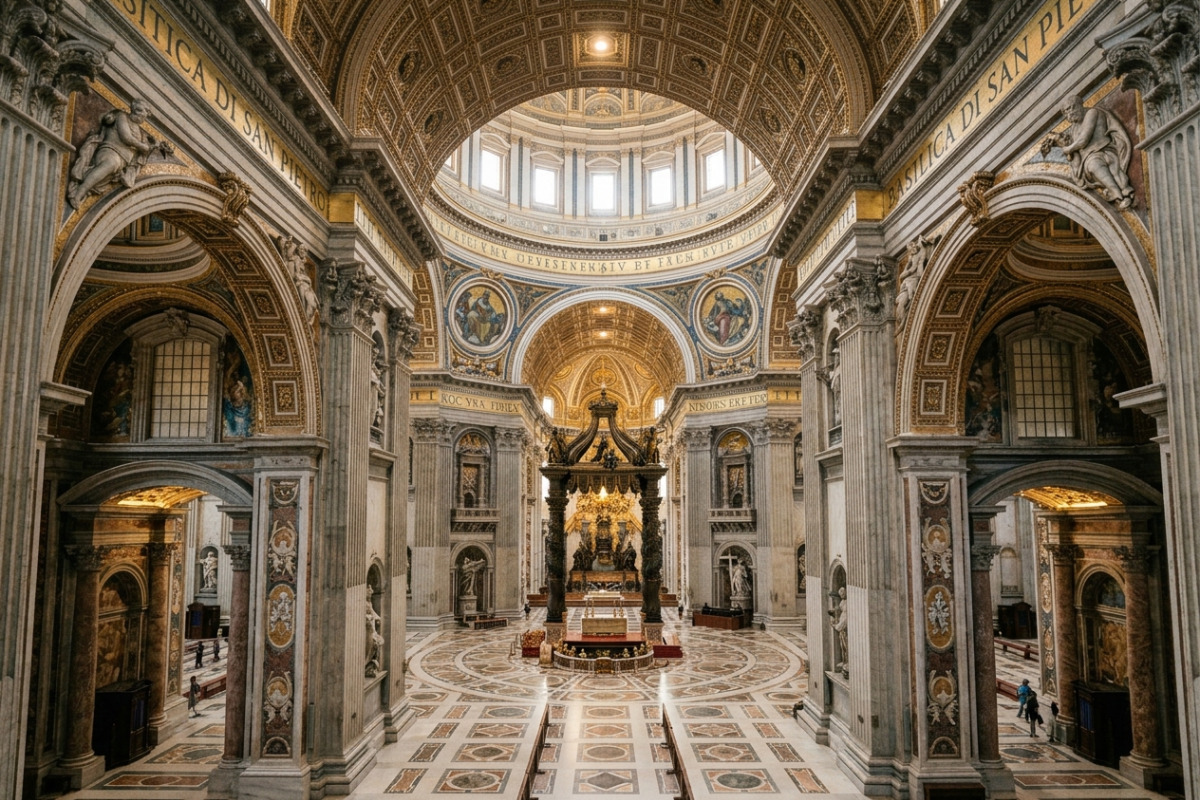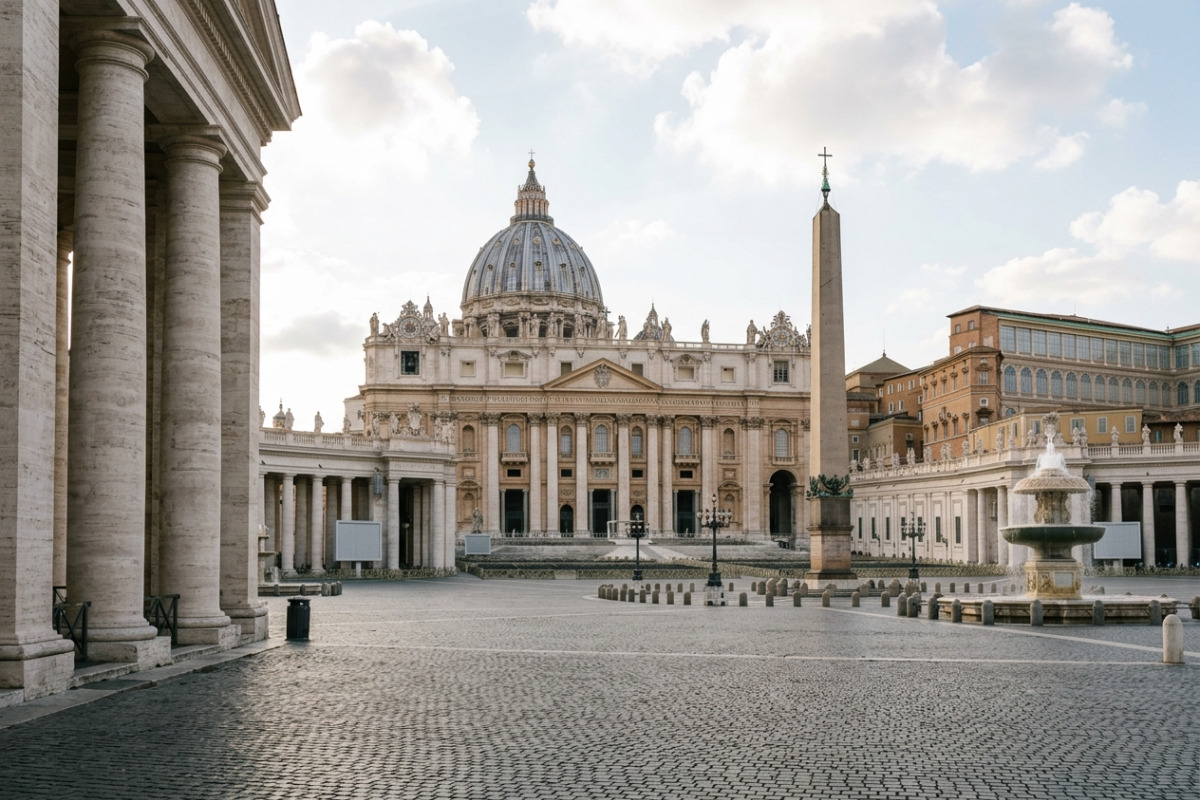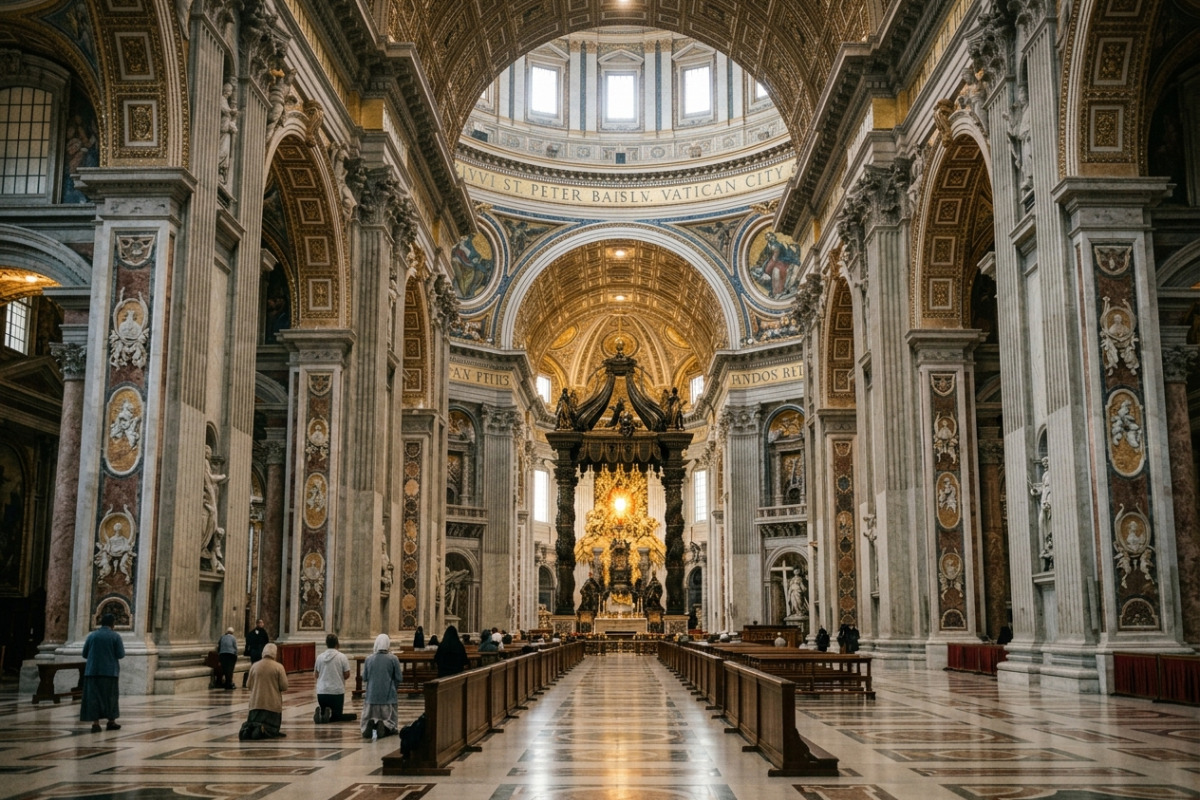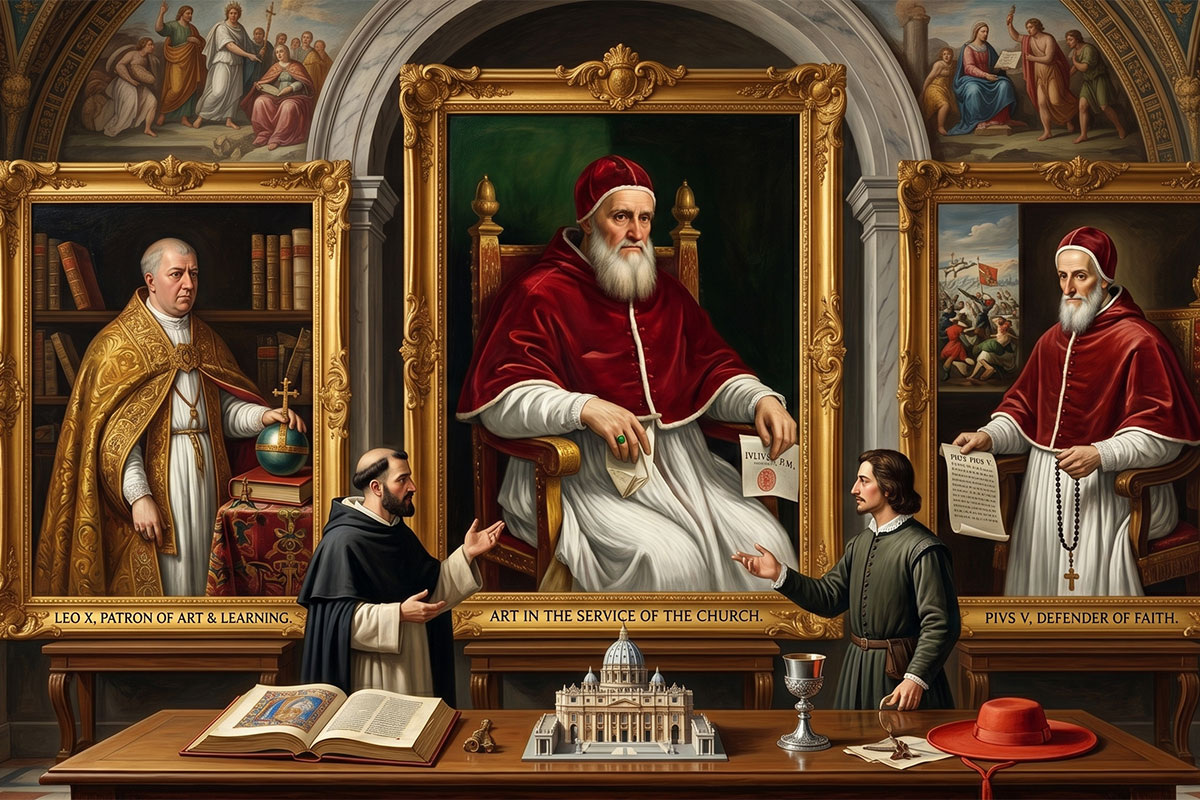
When you step across the threshold of St. Peter's Basilica, you are not merely entering a place of worship; you are walking into a grand theater of history where the protagonists are immortalized in stone, bronze, and glass. The vast interior is populated by the commanding figures of past pontiffs, their likenesses captured not just to preserve their physical appearance, but to convey the theological authority and temporal power of the Papacy. These papal portraits, primarily manifested as monumental tombs and intricate mosaics, serve as a testament to the symbiotic relationship between the Church and the greatest artists of the Renaissance and Baroque periods. As we navigate the nave and the aisles, we discover that every gesture, symbol, and expression was calculated to tell a specific story about the man who sat on the Throne of Peter.
The Theology of Representation: More Than Just a Likeness
In the context of the Vatican, a portrait is rarely a simple snapshot of a face; it is a political and spiritual statement designed to endure for eternity. The art found within the Basilica was commissioned during times of intense religious upheaval and triumph, requiring imagery that projected stability and divine right. When you explore the Basilica, you will notice that the Popes are rarely depicted as frail old men, even if they were so at the time of their death. Instead, they are shown in acts of blessing, teaching, or prayer, often surrounded by allegorical figures representing virtues like Justice, Charity, or Prudence. This artistic choice elevates the individual from a mortal ruler to a perpetual symbol of the institution itself, bridging the gap between the earthly and the divine.
The placement of these monuments is equally significant, often situated near the relics or altars that were significant to that specific Pope's reign. This creates a spatial map of Church history, where the visitor moves from the early centuries of Christianity through to the modern era. The artists tasked with these commissions, including legends like Bernini and Canova, understood that they were not merely decorating a church but were actively participating in the service of the Church's message. The resulting works are dynamic interactions between the subject and the viewer, intended to inspire awe and reverence long after the pontiff had passed.
Bernini and the Baroque Spectacle
No discussion of papal portraiture in St. Peter's is complete without examining the revolutionary contributions of Gian Lorenzo Bernini. His work transformed the concept of the papal tomb from a static memorial into a dramatic narrative that engages the viewer's emotions. One of the most striking examples is the Monument to Pope Urban VIII, a masterpiece that balances the glory of the living Pope with the grim reality of death. High atop the plinth, the bronze figure of Urban VIII sits enthroned, his hand raised in blessing, exuding an air of absolute authority and confidence. However, below him, a winged skeleton writes the Pope's name on a scroll, a chilling memento mori that reminds us that even the Vicar of Christ must eventually answer to time.
Another profound example of Bernini's genius is the Monument to Alexander VII, located near the transept. Here, the portrait of the Pope is humble; he is kneeling in prayer, having removed his tiara, signifying his submission to God. Yet, the artistic drama surrounding him is intense, with a heavy jasper shroud draped over the doorway, pushed aside by a skeleton holding an hourglass. For those interested in the deeper artistic details of these masterpieces, using an Audio Guide App can reveal the subtle symbolism hidden in the folds of marble and the gestures of the allegorical figures. These sculptures redefined how the Church presented its leaders, moving away from rigid stoicism to emotional, human vulnerability combined with spiritual grandeur.
Bernini's influence extends beyond the tombs themselves. Consider the Cathedra Petri (Chair of Saint Peter), a monumental bronze throne that encases an actual wooden chair believed to have been used by St. Peter himself. While not strictly a portrait, the Cathedra Petri embodies the power and continuity of the Papacy, visually representing the unbroken chain of succession from Peter to the current Pope. The swirling clouds of gilded stucco and the radiant window of stained glass create a breathtaking backdrop, further emphasizing the divine authority associated with the Chair.
The Eternal Painting: The Art of Mosaic
Visitors are often surprised to learn that many of the "paintings" they admire above the altars in St. Peter's are not paintings at all, but incredibly intricate mosaics. As the humidity and lighting conditions in the vast Basilica proved detrimental to oil canvases, the Church made a strategic decision to reproduce famous painted portraits and religious scenes using glass and stone tesserae. This transition ensured that the images of the Popes and saints would remain vibrant and unfading for centuries, a metaphor for the enduring nature of the Church itself. You can learn more about this fascinating process by reading about The Mosaic Studio, which still operates today to maintain these works.
The technique used in these mosaics is so refined that, from a distance, the human eye cannot distinguish the individual stones from brushstrokes. This method allowed the Vatican to preserve the likenesses of Popes in a medium that defies decay. When you stand before these altarpieces, you are looking at thousands of shades of enamel, painstakingly assembled to capture the glint in an eye or the texture of velvet robes. This dedication to permanence is a key aspect of how the Church utilizes art; it is an investment in immortality, ensuring that the visual history of the Papacy is never lost to the ravages of time.
Key Papal Monuments to Observe
To help you navigate the immense collection of art within the Basilica, here is a guide to some of the most significant papal monuments and what makes them artistically unique:
| Pope | Artist | Artistic Significance |
| Pope Urban VIII | Gian Lorenzo Bernini | A pinnacle of High Baroque, featuring the famous bronze bees (the Barberini family crest) and the dramatic figure of Death writing on a scroll. |
| Pope Clement XIII | Antonio Canova | A shift to Neoclassicism. The lions at the base—one sleeping, one awake—are among the most celebrated animal sculptures in history. |
| Pope John XXIII | Emilio Greco | A modern bronze relief depicting the Pope visiting prisoners and the sick, showcasing a departure from imperial grandeur to pastoral care. |
| Pope Innocent VIII | Antonio del Pollaiuolo | One of the few monuments that predates the current Basilica, featuring the Pope holding the Holy Lance, a rare relic. |
The Grottoes: A Solemn Contrast
While the main floor of the Basilica celebrates the Papacy with Baroque splendor and towering monuments, the area beneath the church offers a starkly different artistic experience. In The Vatican Grottoes, the tombs are simpler, often consisting of marble sarcophagi with recumbent effigies. Here, the portraits are less about projecting power and more about rest and humility. The proximity to the grave of St. Peter, located near The Altar of the Confessio, adds a layer of sanctity that renders elaborate decoration unnecessary. Walking through these quiet corridors allows visitors to connect with the human history of the Church, seeing the Popes not as giants of stone, but as individuals laid to rest near the first Apostle.
This contrast between the upper church and the grottoes perfectly illustrates the dual nature of the Papacy: the glorious, public institution represented by the soaring dome and the humble, spiritual foundation rooted in tradition. For those wishing to delve even deeper into the history of the site, a visit to The Necropolis reveals the ancient Roman origins of the burial ground, providing context to the centuries of art that have been built upon this sacred earth.
Practical Tips for Appreciating the Art
To truly appreciate the artistry of these papal portraits, it is essential to visit with a plan. The Basilica can be crowded, and the details of the monuments are easily missed if you are rushing. We highly recommend that you Plan Your Visit for early morning or late afternoon to take advantage of the best natural light, which illuminates the marble and mosaics in spectacular ways. Binoculars can also be a helpful tool for admiring the upper reaches of the monuments and the intricate mosaic work in The Dome.
Furthermore, understanding the historical context of each Pope enhances the visual experience. Knowing why a certain Pope is depicted crushing a dragon or holding a specific document transforms the statue from a piece of art into a chapter of history. Before you go, checking Tickets & Tours options can help you secure a guided experience where experts can point out these nuances. Finally, do not forget to visit The Treasury Museum, where you can see the liturgical vestments and busts that offer a more intimate, personal scale of portraiture compared to the colossal tombs in the nave.
The papal portraits of St. Peter's Basilica are far more than decorative elements; they are a dialogue between the past and the present, art and faith. They remind us that while the individuals may pass, the institution—and the beauty created to serve it—remains timeless. Whether you are an art lover, a history buff, or a pilgrim, these stone faces have a story to tell if you are willing to pause and listen.