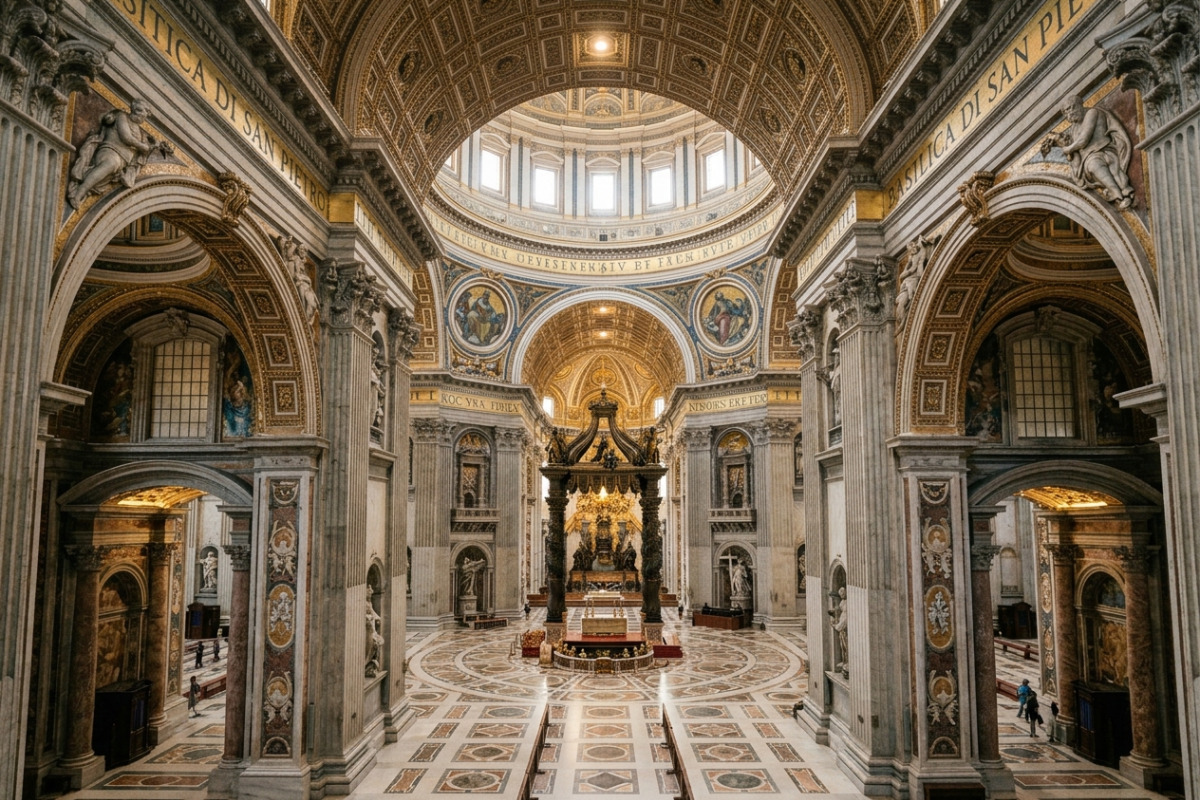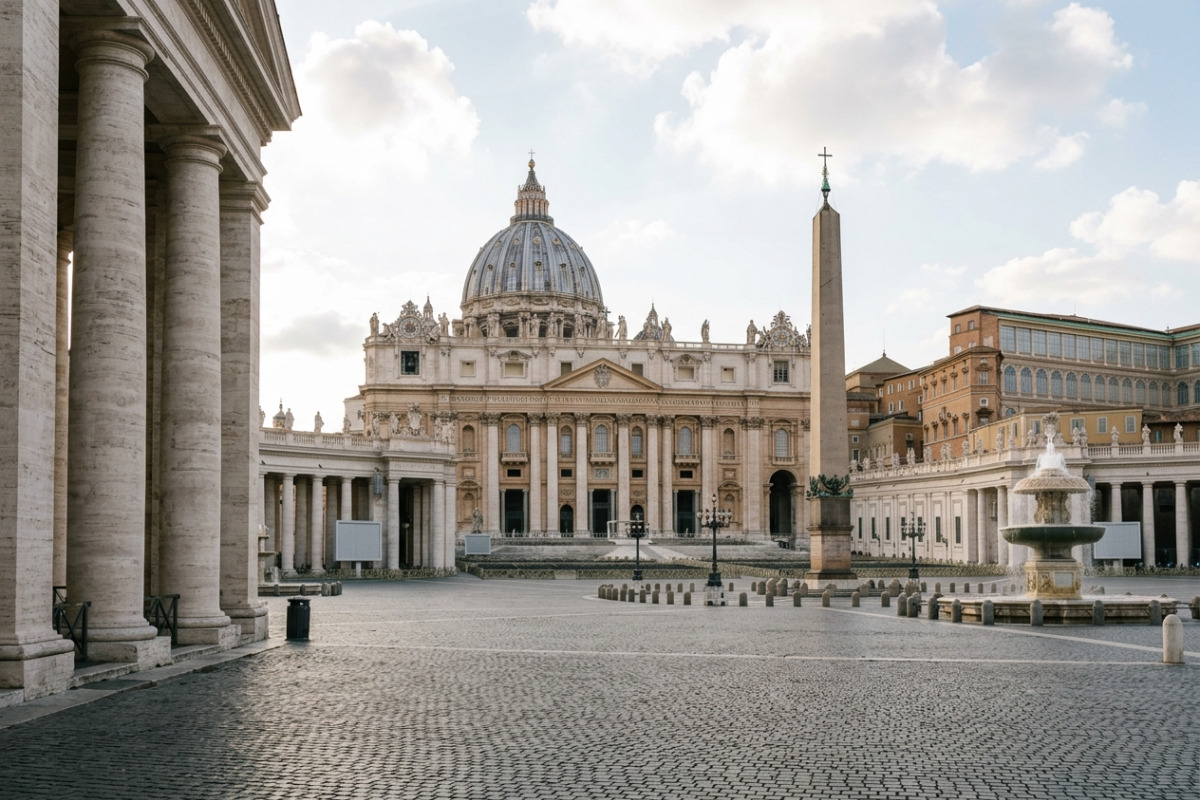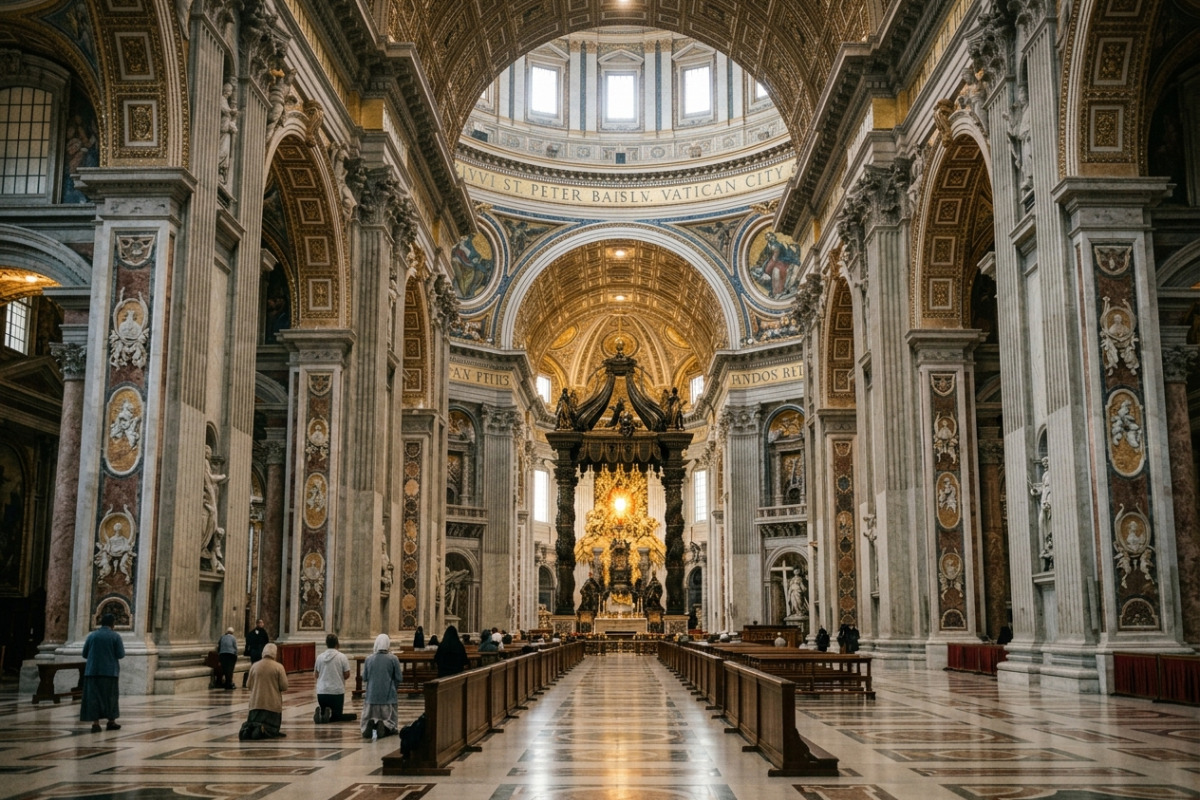
Stepping into the vast expanse of St. Peter’s Basilica is an experience that defies simple description; the sheer scale of the nave and the brilliance of the artwork can be overwhelming to the senses. Yet, amidst the towering marble columns and the golden light filtering through the windows, all lines of sight converge on a singular, powerful focal point. Located directly beneath Michelangelo’s soaring dome, the Papal Altar, also known as the Altar of the Confessio, stands not just as a piece of liturgical furniture, but as the spiritual center of the Catholic world. It is here, in this precise location, that history, art, and theology intersect to tell the story of the church’s foundation.
For centuries, pilgrims have traveled thousands of miles to stand before this sacred space, driven by a desire to connect with the roots of Christianity. The altar is much more than a platform for the Mass; it is a monumental marker indicating the final resting place of the Prince of the Apostles. Understanding the significance of this altar requires peeling back layers of history, from the humble burial ground of the first century to the grandeur of the Renaissance, revealing why this spot remains the most important coordinate in Vatican City.
The Heart of Christendom: Defining the Confessio
The term "Confessio" might confuse some visitors, as it does not refer to the sacrament of confession in the way we typically understand it today. Instead, it refers to the "confession of faith" made by St. Peter through his martyrdom. The Altar of the Confessio is so named because it sits immediately adjacent to the space where St. Peter’s faith was sealed with his blood. This open, sunken area in front of the altar allows the faithful to look down toward the level of the original Constantine basilica and, spiritually, toward the tomb itself.
This sunken chapel, often glowing with the warm light of oil lamps, serves as a bridge between the present-day church and the ancient past. It creates a physical and visual connection between the congregation standing on the marble floor and the sacred earth beneath. While visitors cannot typically walk into the Confessio area during a standard visit, the view from the railing above provides a profound moment of reflection, allowing one to gaze upon the bronze doors of the niche of the pallium, which aligns directly with the tomb below.
A Vertical Axis: From the Dome to the Tomb
The architectural genius of St. Peter’s Basilica lies in its perfect vertical alignment. If you were to draw a straight line from the very top of the cross on The Dome down to the earth, it would pass through the center of the dome, through the canopy of the Baldachin, through the center of the Altar of the Confessio, and finally rest upon the tomb of St. Peter. This axis mundi symbolizes the connection between Heaven and Earth, mediated through the church built upon the "Rock" that is Peter.
This alignment is not accidental but was the primary directive for the architects who worked on the basilica over centuries, including Bramante, Michelangelo, and Bernini. To fully appreciate this structural marvel, many visitors choose to explore the lower levels. The Necropolis, located deep beneath the foundations, reveals the pagan burial ground where Peter was interred, offering archeological proof of the site's authenticity. Meanwhile, the level just below the main floor, known as The Vatican Grottoes, allows pilgrims to walk around the central core surrounding the Confessio, bringing them as close as physically possible to the apostle’s remains without entering the excavations.
Bernini’s Baldachin: Crowning the Sacred Space
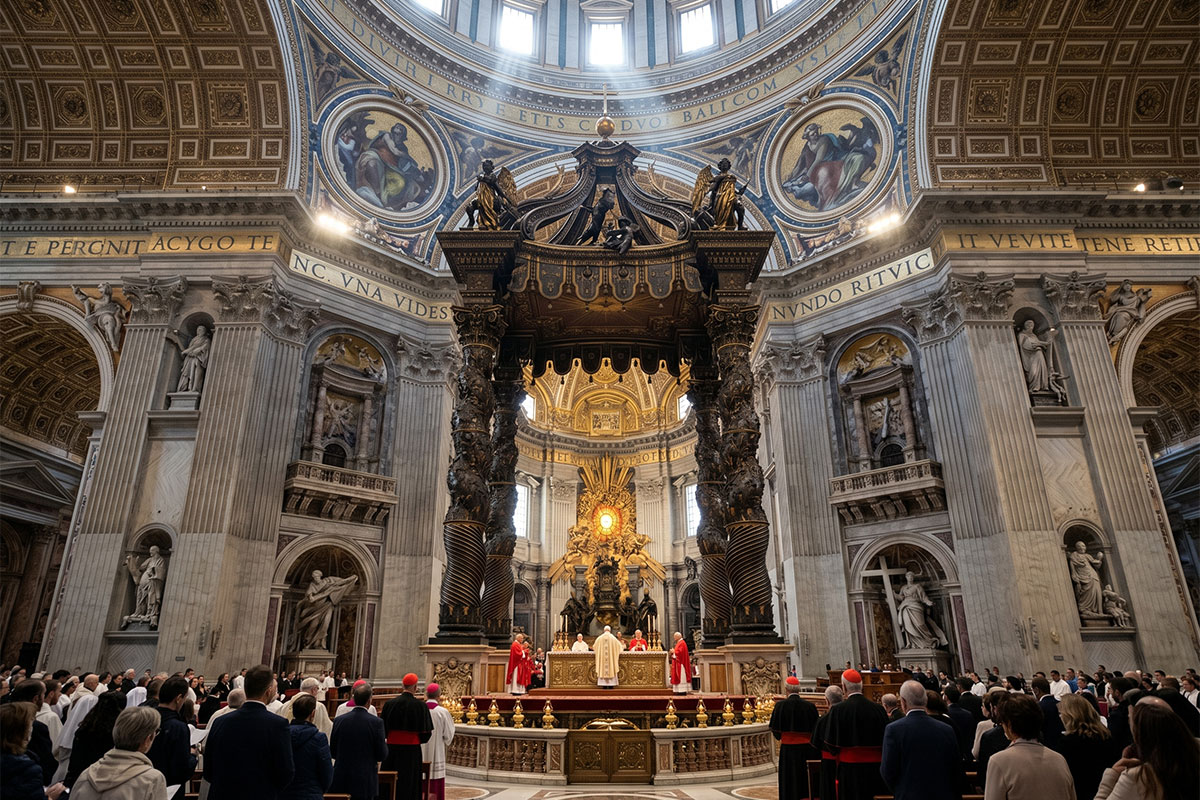
While the altar itself is a block of consecrated Greek marble, its visual impact is amplified by the massive bronze structure that towers over it: Gian Lorenzo Bernini’s Baldachin. Commissioned by Pope Urban VIII, this baroque masterpiece was designed to mark the location of the tomb and the altar so that they would not be lost in the cavernous space of the new basilica. The twisted columns, reminiscent of the Temple of Solomon, frame the Altar of the Confessio, drawing the eye upward and creating a sacred enclosure within the open nave.
The synergy between the altar and the Baldachin creates a theatrical and emotional atmosphere that defines the interior of the basilica. The dark bronze contrasts with the white marble, symbolizing the strength and permanence of the church. For those interested in the artistic details of the basilica, utilizing an Audio Guide App can provide fascinating insights into the symbolism hidden within Bernini’s work, from the bees of the Barberini family to the sunbursts of the Holy Spirit.
The Symbolism of the 99 Lamps
One of the most evocative features of the Confessio is the semi-circular balustrade that surrounds the sunken area. Adorning this railing are 99 oil lamps that burn perpetually. These flickering flames represent the unceasing prayer of the church and the enduring light of faith that St. Peter’s witness brought to the world. In the quiet moments of the early morning or late afternoon, the golden glow of these lamps against the multicolored marble creates an atmosphere of intense sanctity.
- Perpetual Prayer: The lamps symbolize the constant vigil kept over the Apostle's tomb.
- Visual Guide: The light draws visitors' eyes immediately to the center of the transept.
- Historical Continuity: The tradition of burning lamps at martyrs' tombs dates back to early Christianity.
- Atmosphere: They provide a warm contrast to the cool stone of the basilica's interior.
Religious Significance and Papal Tradition
The Altar of the Confessio is strictly reserved for the Pope. Only the Holy Father, or a high-ranking cardinal with specific authorization, can celebrate Mass on this high altar. This exclusivity underscores the altar's role as a symbol of unity for the Roman Catholic Church. When the Pope celebrates the Eucharist here, he stands directly over the remains of the first Pope, creating an unbroken chain of succession that spans two millennia.
Major liturgical events, such as Christmas Eve Mass or Easter services, are centered around this altar. During these times, the basilica transforms; the vast space fills with music, incense, and the faithful. For travelers hoping to witness such an event or simply to see the altar in its quiet majesty, it is essential to Plan Your Visit carefully, as the basilica’s schedule can change based on the Papal calendar.
Key Historical Facts of the Altar
| Feature | Details |
| Consecration | Consecrated by Pope Clement VIII in 1594. |
| Material | A single massive block of Greek marble from Naxos. |
| Location | Central crossing, directly under the Dome and Bernini's Baldachin. |
| Underneath | The Niche of the Pallium and the Tomb of St. Peter. |
| Architectural Era | Late Renaissance / Early Baroque transition. |
Exploring the Surroundings
A visit to the Altar of the Confessio is usually part of a broader exploration of the basilica's treasures. Just a short walk from the central crossing, visitors can admire Michelangelo's Pietà, a sculpture that rivals the altar in emotional intensity and artistic perfection. Additionally, the nearby entrance to the The Treasury Museum offers a look at the liturgical objects, chalices, and vestments that have been used at the high altar throughout history, providing context to the ceremonies performed there.
For those who wish to see the altar from a different perspective, climbing the dome offers a bird's-eye view. From the interior gallery of the cupola, you can look straight down onto the Baldachin and the altar, appreciating the geometric patterns of the marble floor and the layout of the Confessio. You can learn more about accessing this area through the Explore the Basilica guide.
Practical Tips for the Modern Pilgrim
Visiting St. Peter’s Basilica is a highlight of any trip to Rome, but the crowds can be significant. To ensure you have the time and space to appreciate the Altar of the Confessio without feeling rushed, booking Tickets & Tours in advance is highly recommended. This often allows for skipped lines or guided access that provides deeper historical context.
When approaching the altar, remember that while you cannot enter the sanctuary cordoned off for the clergy, you can get quite close to the balustrade. Take a moment to pause here. Look down at the burning lamps, look up at the dove of the Holy Spirit in the apse window, and feel the weight of history. Whether you are a devout Catholic or a lover of history and art, the Altar of the Confessio stands as a testament to human devotion and architectural brilliance. If you have specific questions about dress codes or photography near the altar, the Frequently Asked Questions page is an excellent resource to consult before your arrival.