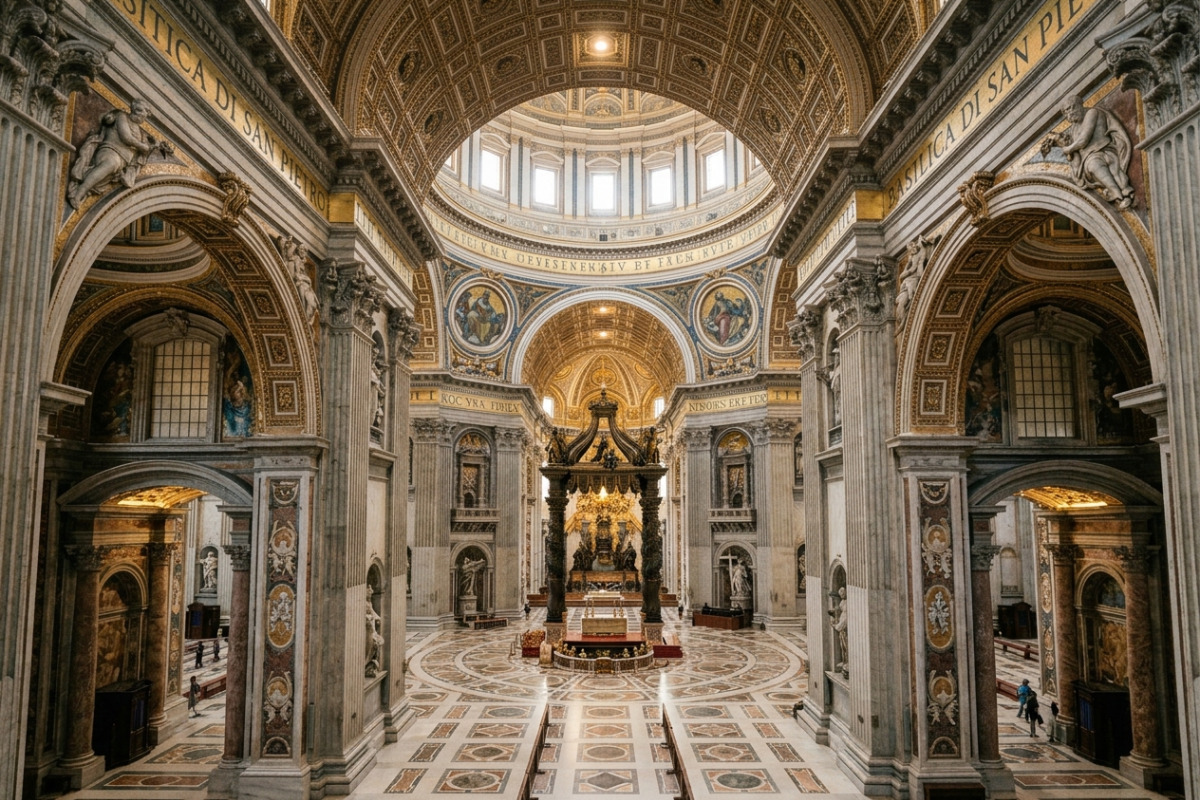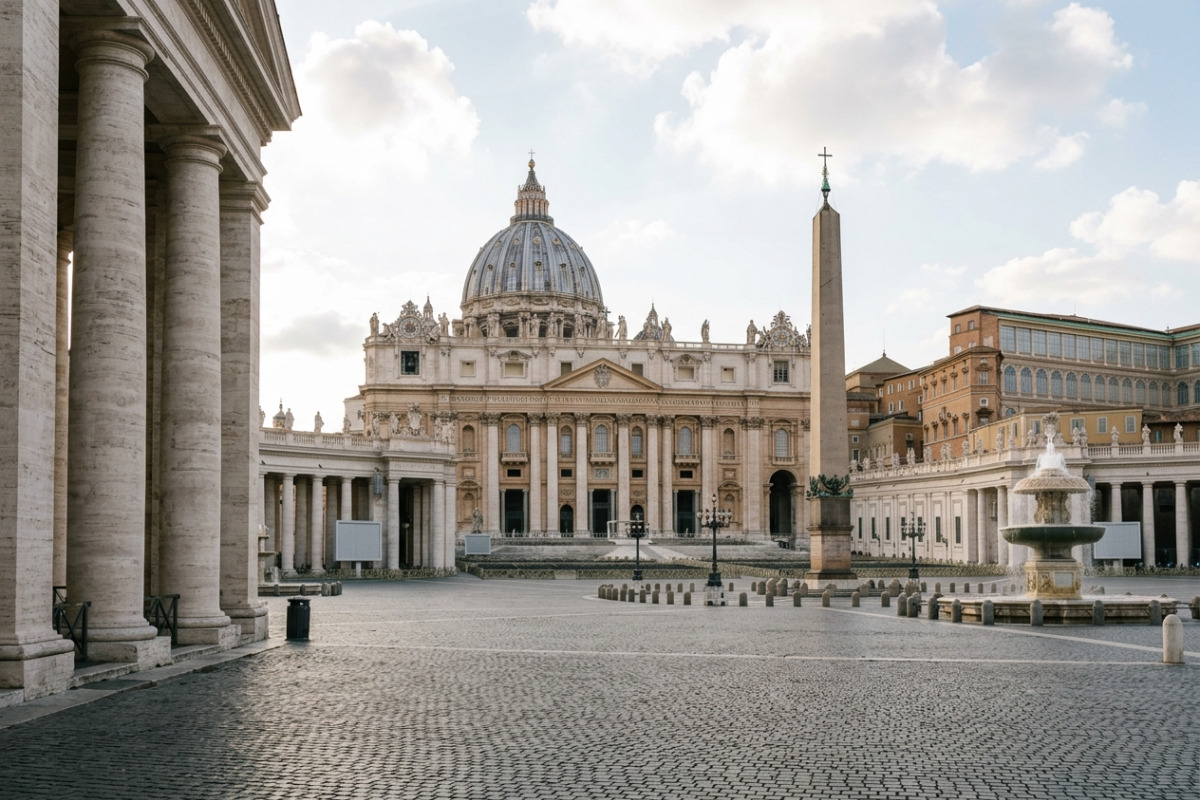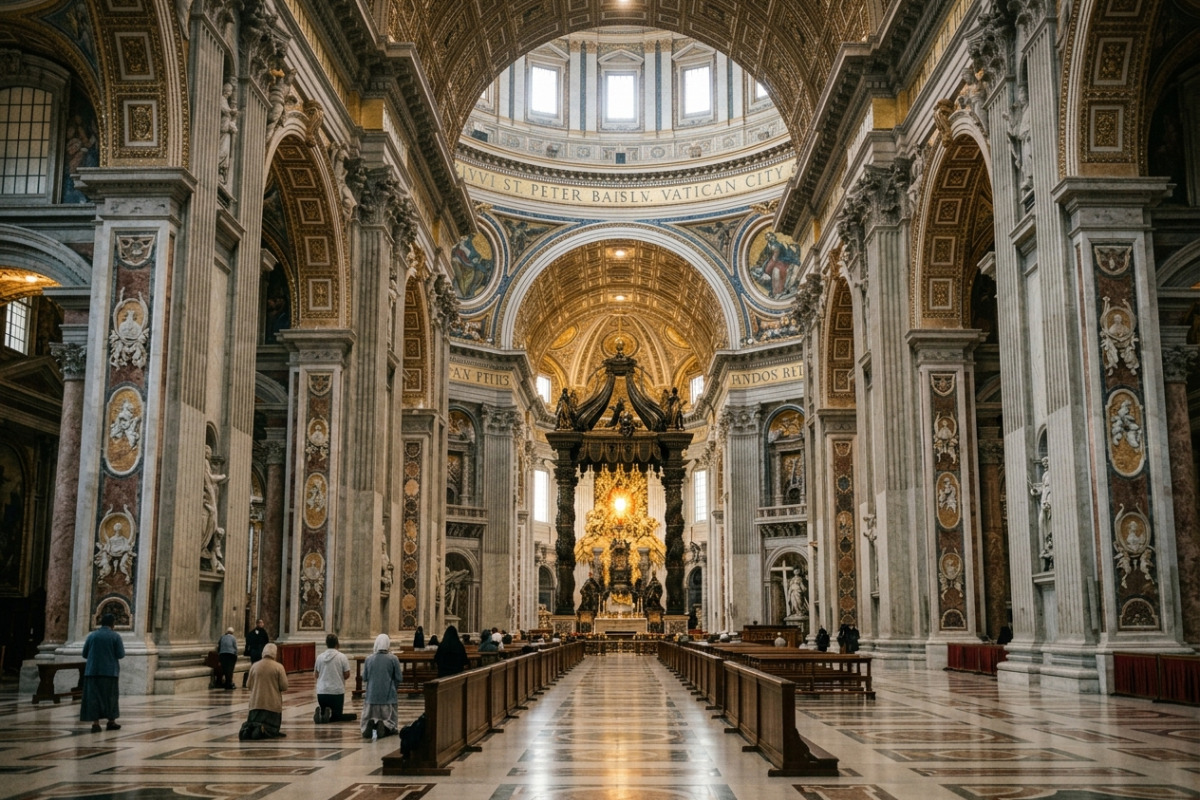
When you step into the vast expanse of St. Peter's Basilica, your eyes are immediately drawn upward to the soaring ceilings and the magnificent light filtering through the windows. However, to truly understand the soul of this architectural wonder, one must look downward and inward. At the very center of the nave, beneath the towering bronze canopy of Bernini, lies a space that is often photographed but frequently misunderstood: The Altar of the Confessio. It is here, in this sunken chapel, that the convergence of art and faith is most palpable, marking the physical and spiritual foundation upon which the entire Vatican is built.
This sacred area is not merely a decorative feature; it is the gravitational center of the Catholic faith. While visitors often rush to see Michelangelo's Pietà or queue for the climb to the top, the Confessio invites a moment of stillness. It serves as a bridge between the earthly church and the historical roots of Christianity, offering a window into the past that dates back to the first century. Understanding the Confessio is essential for anyone wishing to grasp the full magnitude of a visit to the Vatican.
The Spiritual Heart of the Basilica
The term "Confessio" refers to the confession of faith by St. Peter, which ultimately led to his martyrdom. This sunken area, designed by Carlo Maderno, is located directly beneath the Papal Altar and, more significantly, directly above the tomb of St. Peter himself. It represents the hallowed ground where the Apostle’s remains have rested for nearly two millennia. The architecture here creates a powerful vertical axis: from the deep earth of the necropolis, through the Confessio, up to the High Altar, and finally ascending into the heavens through The Dome designed by Michelangelo. This alignment is intentional, symbolizing the ascent from earthly sacrifice to heavenly glory.
For pilgrims and art historians alike, the Confessio is a testament to continuity. It connects the modern visitor with the early Christians who worshipped at this site in secret. While the current basilica is a Renaissance masterpiece, the earth beneath the Confessio holds the secrets of the original Constantinian basilica and the Roman cemetery where Peter was buried. For those interested in the archaeological layers beneath the marble floor, a visit to The Necropolis offers a profound look at the literal foundations of this site.
Why the "Confessio" Matters
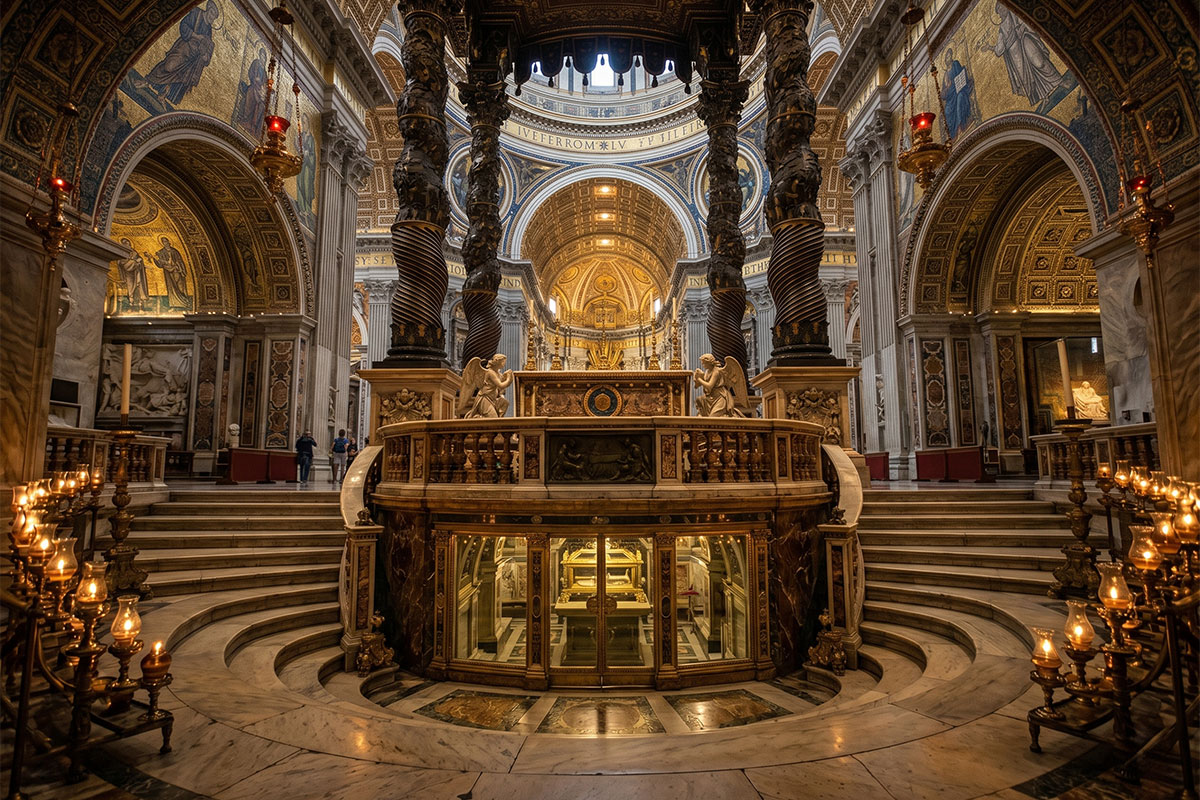
The name does not refer to the sacrament of confession as we know it today, but rather to the confessio fidei—the confession of faith sealed by blood. In the early Church, martyrs who died for their beliefs were called "confessors." Therefore, this altar is a tribute to Peter’s ultimate sacrifice. The open, semi-circular balustrade allows the faithful in the nave to look down into this sacred space, creating a visual connection to the roots of the church without needing to descend into the grottoes immediately. It is a visual reminder that the grandeur of the building above rests entirely on the testimony of the fisherman buried below.
Artistic Masterpieces Within the Sacred Space
While the spiritual significance is paramount, the artistic execution of the Altar of the Confessio is nothing short of breathtaking. The area is adorned with polychrome marbles, intricate bronze work, and sculptures that embody the Baroque era's emotional intensity. The design draws the viewer's eye toward the Niche of the Pallia, a small recess that is vertically aligned with Peter's tomb. This niche contains a silver casket housing the "pallia"—white wool stoles woven from the wool of lambs blessed on the feast of St. Agnes, which are conferred upon new archbishops as a symbol of their jurisdiction and unity with the Pope.
One of the most striking features within the Confessio is the colossal statue of Pope Pius VI, sculpted by Antonio Canova. The statue depicts the Pope kneeling in eternal prayer, his gaze fixed intently on the tomb of the Apostle. This artwork is crucial because it represents the proper attitude of the believer: humility before the sacred. Canova captured a lifelike intensity in the marble, and the placement of the statue permanently enshrines the papacy's devotion to its predecessor, St. Peter.
The Vigil of the 99 Lamps
Perhaps the most atmospheric element of the Confessio is the array of flickering lights. On the balustrade surrounding the depression, ninety-nine oil lamps burn perpetually. These are not merely for illumination; they symbolize the unceasing prayer of the Church and the eternal vigilance over the Apostle's remains. The number 99 is often associated with the totality of the faithful, or the angels, keeping watch. The soft, golden glow of these lamps against the bronze and marble creates a reverent atmosphere that contrasts with the bright daylight flooding the nave above.
| Feature | Significance | Artist/Creator |
| The Niche of the Pallia | Directly above St. Peter's Tomb; holds the wool stoles for Archbishops. | Various (Ancient origins) |
| Statue of Pius VI | Represents eternal prayer and humility before St. Peter. | Antonio Canova |
| The 99 Lamps | Symbolizes eternal vigilance and unceasing prayer. | Carlo Maderno (Design of space) |
| Bronze Balustrade | Separates the sacred space while allowing visual access. | Various Baroque artisans |
How to Experience the Confessio
Visitors to the Basilica cannot typically walk down into the Confessio itself, as this space is reserved for the clergy during specific ceremonies. However, the view from the curved balustrade on the main floor is spectacular and allows for close inspection of the details. To get the most out of your viewing experience, it is highly recommended to use the Audio Guide App. The guide provides a detailed narrative of the symbolism and history of the altar, helping you spot details like the intricate mosaic flooring and the specific iconography of the bronze gates that might otherwise go unnoticed.
For those who wish to get closer to the level of the tomb, you can descend to The Vatican Grottoes. The entrance to the grottoes usually leads you past the Clementine Chapel, which allows you to see the Confessio from the "backside" or the lower level, offering a completely different perspective on the altar's structure. Planning this part of your journey is crucial, so be sure to check Plan Your Visit pages for opening hours of the Grottoes, as they differ from the main Basilica hours.
Exploring Surrounding Treasures
The Altar of the Confessio serves as a central point from which you can explore the other magnificent sections of the Basilica. Directly behind the Confessio stands the Chair of St. Peter (Cathedra Petri), another Bernini masterpiece that visually completes the axis of the church. After paying your respects at the Confessio, you might consider visiting The Treasury Museum, which houses liturgical ornaments and statues that have been used in celebrations at this very altar for centuries.
- Look Up: Stand at the balustrade and look straight up into the dome to see the inscription "Tu es Petrus" (You are Peter).
- Look Down: Observe the intricate marble patterns of the floor that guide pilgrims toward the center.
- Look Around: Notice the four massive piers supporting the dome, each housing a statue of a saint associated with major relics.
Furthermore, understanding the artistry of the Confessio gives you a deeper appreciation for the craftsmanship seen elsewhere in the Vatican, such as in The Mosaic Studio. The intricate designs you see around the altar are often mosaics that look like paintings, a technique perfected by Vatican artisans over centuries. Recognizing this skill transforms a casual walk through the nave into an immersive art history lesson.
In conclusion, the Altar of the Confessio is far more than a hole in the floor of St. Peter's Basilica. It is the anchor of the entire structure, a hidden gem that pulsates with history, art, and deep spirituality. Whether you are a devout pilgrim or a curious traveler, taking the time to pause at the balustrade and contemplate the 99 lamps and the kneeling Pope allows you to connect with the heart of the Vatican. To ensure a smooth visit to this and other areas, consider booking your Tickets & Tours in advance, allowing you to focus on the profound beauty before you rather than the logistics of entry.