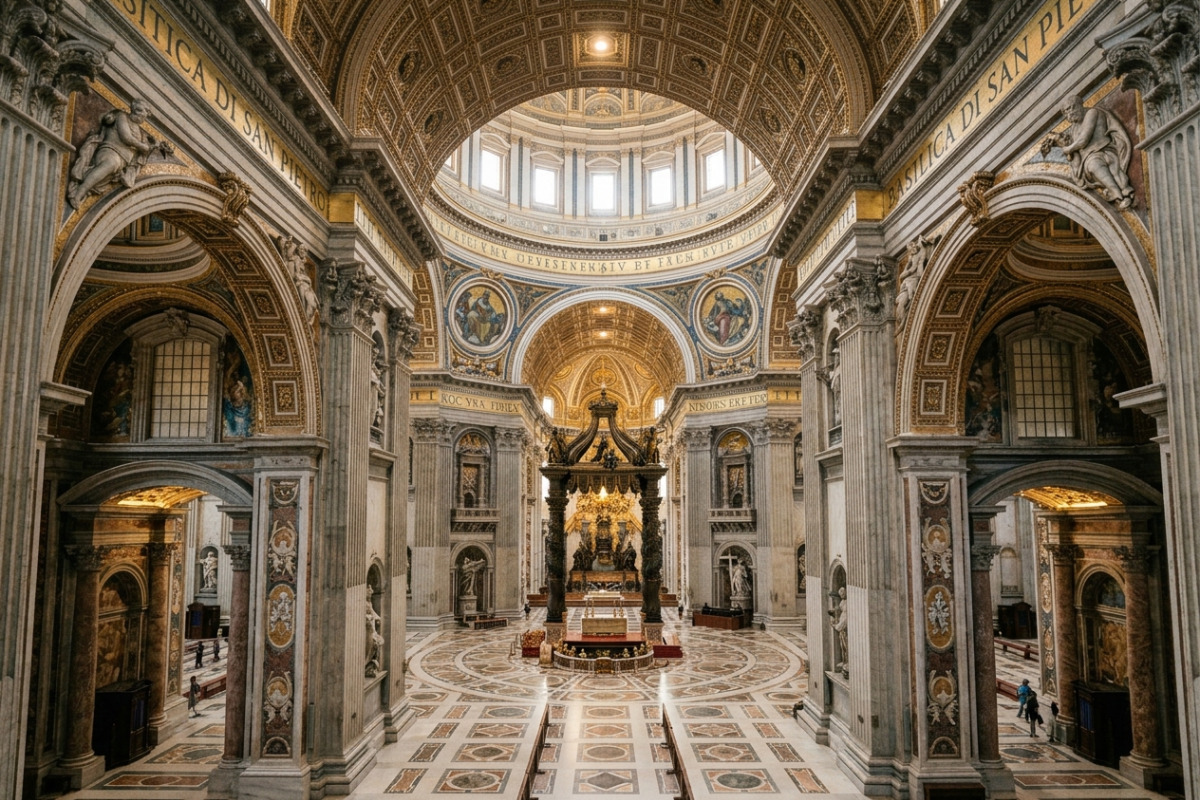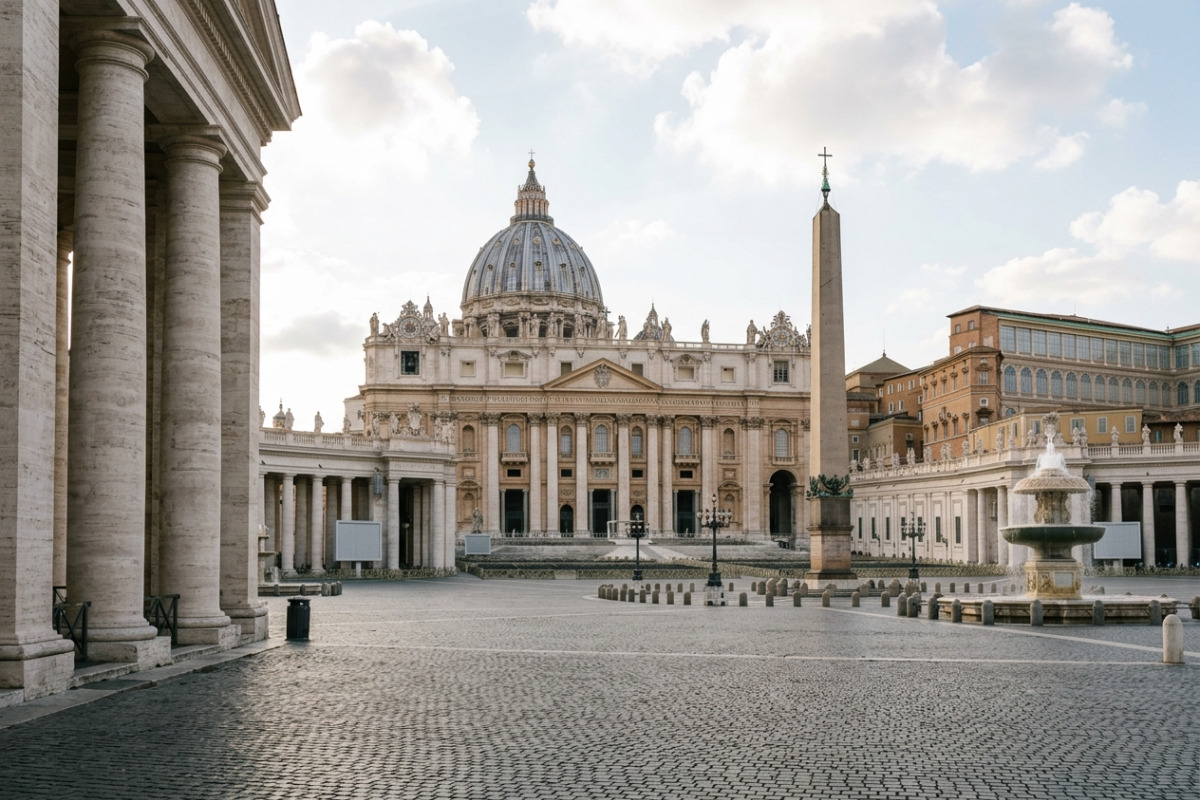
Stepping into St. Peter's Square feels less like visiting a church and more like entering a distinct universe of artistic grandeur. Whether you are a devout pilgrim or a secular admirer of history, the sheer scale of the Vatican’s centerpiece commands silence and awe. Standing in the heart of Vatican City, St. Peter's Basilica represents the pinnacle of Renaissance and Baroque creativity, a collaborative masterpiece that spanned over a century of construction. It is not merely a building; it is a timeline of human genius carved in stone, cast in bronze, and painted in mosaic.
The basilica we see today is actually the second structure to stand on this site. The original church, built by Emperor Constantine in the 4th century, eventually fell into disrepair, prompting Pope Julius II to commission a replacement that would surpass all others in Christendom. The result is a complex architectural narrative written by some of the most famous names in art history. As you prepare to Explore the Basilica, it helps to understand the layers of history that support the massive dome above your head.
The Architects Behind the Stone Giant
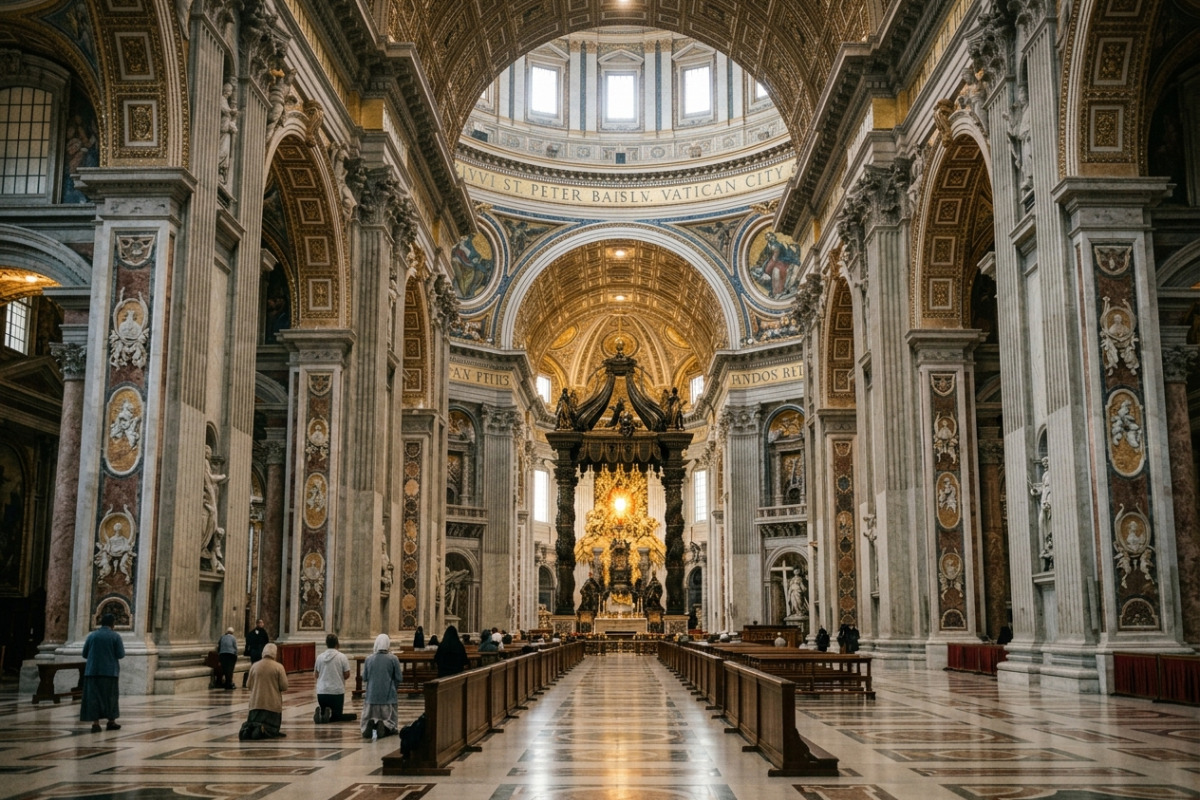
The construction of the new basilica began in 1506 and wasn't consecrated until 1626. During those 120 years, the architectural baton was passed between several masters, each altering the design to fit their vision and the changing liturgical needs of the Church. Initially, Donato Bramante envisioned a Greek cross plan (four arms of equal length), symbolizing perfection and balance. However, as the decades passed, the design evolved into the Latin cross structure we navigate today.
Understanding who built what can be confusing given the timeline. To clarify the major contributions, here is a breakdown of the key architects and their influence on the structure:
| Architect | Period | Key Contribution |
| Donato Bramante | 1506–1514 | Designed the original Greek Cross plan and the massive central piers. |
| Raphael | 1514–1520 | Proposed changing the layout to a Latin Cross to accommodate more congregants. |
| Michelangelo | 1547–1564 | Returned to the Greek Cross, strengthened the piers, and designed the magnificent Dome. |
| Carlo Maderno | 1603–1629 | Extended the nave to form the final Latin Cross and designed the monumental façade. |
| Gian Lorenzo Bernini | 1629–1680 | Created the interior decoration, the Baldachin, and the piazza's famous colonnade. |
This shifting of visions resulted in a unique hybrid style. While the exterior façade by Maderno is distinctly Baroque, the core structure retains the muscular, Renaissance strength of Michelangelo's design. This fusion creates a dynamic tension that makes the building feel alive.
Michelangelo’s Pietà: A Study in Sorrow and Beauty
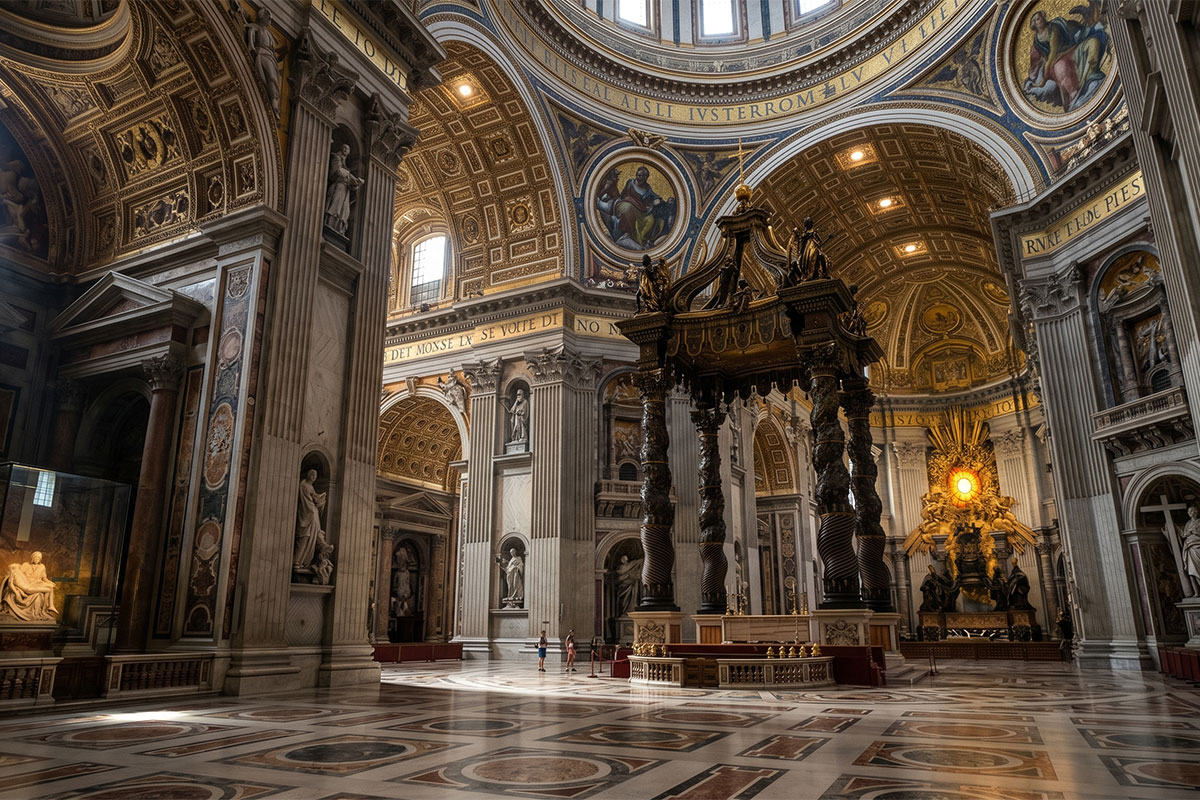
Upon entering the nave, most visitors instinctively drift to the right. Here, protected behind glass, lies one of the most emotive sculptures ever created: Michelangelo's Pietà. It is difficult to comprehend that Michelangelo was only 24 years old when he carved this masterpiece from a single block of Carrara marble. Unlike other depictions of the Virgin Mary holding the body of Christ, Michelangelo’s version is serene rather than distraught.
The artistry lies in the contradictions. The marble, a cold and hard substance, is transformed into the soft folds of Mary’s dress and the lifeless, heavy musculature of Jesus. If you look closely, you will notice that Mary looks remarkably young—perhaps younger than her son. Michelangelo explained this as a symbol of her eternal purity. This represents the only work Michelangelo ever signed; legend has it he overheard visitors attributing the work to another artist, prompting him to carve his name across Mary’s sash in a fit of pride.
Bernini’s Theatrical Centerpiece
Walking further into the nave, your eyes are inevitably drawn to the center of the crossing. Rising nearly 30 meters into the air is the massive bronze canopy known as the Baldachin (Baldacchino). Designed by Gian Lorenzo Bernini, this structure marks the holiest site in the basilica: The Altar of the Confessio, which sits directly above the tomb of St. Peter. The use of twisted, solomonic columns gives the structure a sense of upward motion, bridging the gap between the human scale of the congregation and the heavenly scale of the dome.
The bronze used for the Baldachin has a controversial history. Much of it was stripped from the portico of the Pantheon, leading to the famous quip, "What the barbarians didn't do, the Barberini did" (referring to Pope Urban VIII Barberini who commissioned it). Beneath the altar, the Confessio area glows with the light of nearly a hundred oil lamps, creating a golden aura that highlights the spiritual heart of the building.
The Dome: Touching the Heavens
Dominating the skyline of Rome, The Dome is Michelangelo’s architectural legacy. Although he died before its completion, his student Giacomo della Porta finished it, slightly elevating the curve to make it more stable. The interior of the dome is a kaleidoscope of mosaics, depicting Christ, the Apostles, and saints ascending toward the lantern, where God the Father is depicted looking down.
For those willing to make the climb (or take the elevator part of the way), the experience is twofold. First, you can walk along the interior gallery, viewing the basilica from a bird’s-eye perspective. From this height, the people below look like ants, emphasizing the colossal size of the letters in the frieze running around the dome. Second, climbing to the exterior lantern offers a panoramic view of the Vatican Gardens and the entire city of Rome, a visual reward that justifies the physical effort.
Hidden Depths: The Grottoes and Necropolis
The art of St. Peter's is not limited to what you see in the main hall. Beneath the marble floors lies a different kind of history. The Vatican Grottoes contain the tombs of dozens of popes, as well as royalties like Queen Christina of Sweden. The atmosphere here is somber and respectful, with sarcophagi ranging from early Christian simplicity to modern artistic interpretations.
For those interested in archaeology, venturing even deeper into The Necropolis (Scavi) reveals the ancient Roman cemetery upon which the basilica was built. This area requires special reservation but offers a glimpse into the pre-Christian era and the humble origins of the site believed to be St. Peter's original burial place.
Mosaics and Treasures
A surprising fact for many visitors is that there are almost no paintings in the main basilica. What appear to be oil paintings are actually intricate mosaics, crafted to withstand the test of time and humidity. The skilled artisans of The Mosaic Studio have spent centuries replicating famous artworks using tiny tesserae. This tradition continues today, ensuring that the colors remain vibrant for centuries to come.
Additionally, The Treasury Museum houses a collection of liturgical ornaments, statues, and papal tiaras that have been donated or commissioned over the centuries. It provides a fascinating look at the wealth of craftsmanship dedicated to the church, featuring items encrusted with jewels and woven with gold thread that are rarely seen during regular mass.
Planning Your Art Pilgrimage
Visiting St. Peter's Basilica can be overwhelming due to the crowds and the sheer amount of information to absorb. To make the most of your visit, preparation is key. Here are a few practical suggestions for your journey:
- Timing is Everything: Early mornings (around 7:00 AM) or late afternoons are generally quieter. This allows for a more intimate connection with the art.
- Dress Appropriately: The Vatican enforces a strict dress code. Shoulders and knees must be covered. For more details, check the Plan Your Visit page.
- Skip the Lines: The queue for security can be long. Booking Tickets & Tours that include guided access can save hours and provide context you might otherwise miss.
- Listen and Learn: The visual stimuli are intense. Using the official Audio Guide App allows you to hear the stories behind the sculptures at your own pace.
- Clarify Doubts: If you have questions about accessibility, photography rules, or bag restrictions, the Frequently Asked Questions section is a valuable resource.
St. Peter's Basilica is a testament to the idea that art can be a bridge to the divine. From the polished marble of the Pietà to the soaring heights of the Cupola, every inch of this structure was designed to elevate the human spirit. Take your time, look up often, and let the history of this magnificent space wash over you.