When you step through the massive bronze doors of St. Peter's Basilica, the sheer magnitude of the space is enough to take your breath away. However, once your eyes adjust to the vastness, they are inevitably drawn to the dramatic, swirling energy that defines the interior. This is the legacy of Gian Lorenzo Bernini, the master architect and sculptor who dedicated decades of his life to transforming this church into a masterpiece of Baroque art. While the structure itself bears the marks of Bramante and Michelangelo, the soul of the interior—the theatricality, the movement, and the emotional intensity—belongs largely to Bernini. As we explore the basilica in January 2026, his works remain as vibrant and awe-inspiring as they were centuries ago.
The Heart of the Basilica: St. Peter's Baldachin
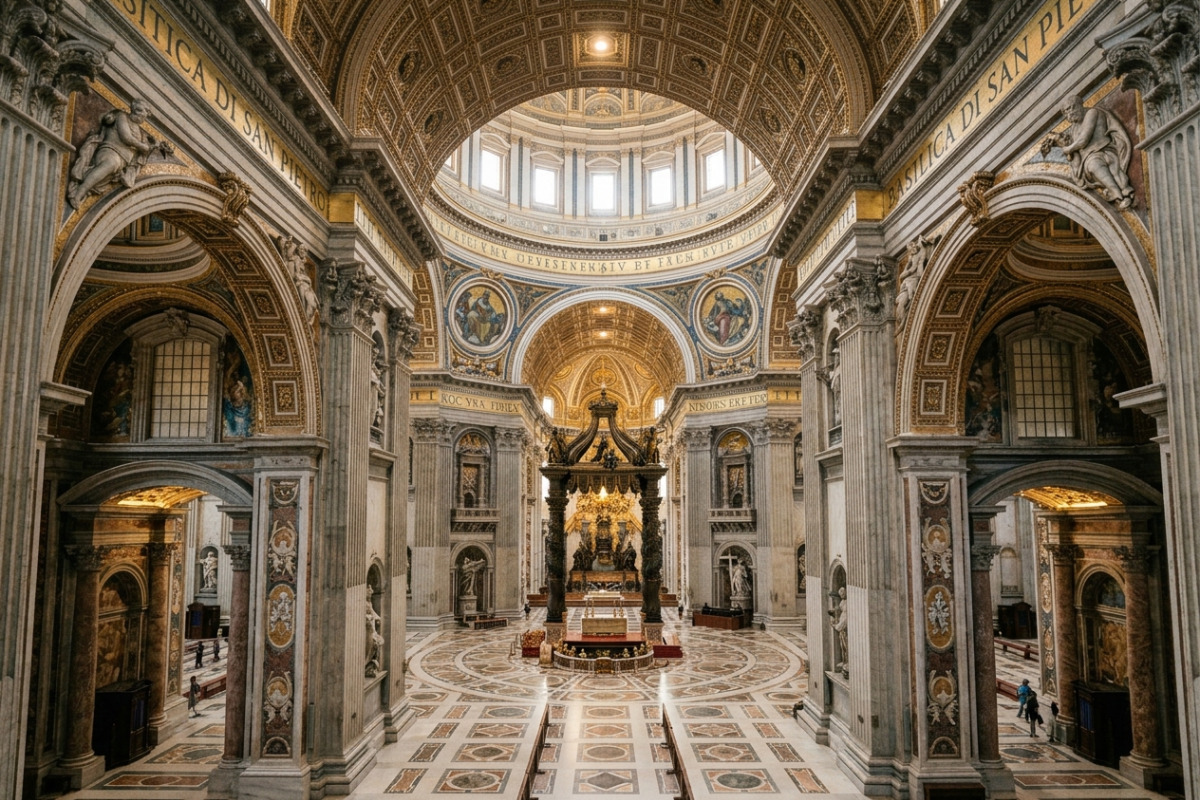
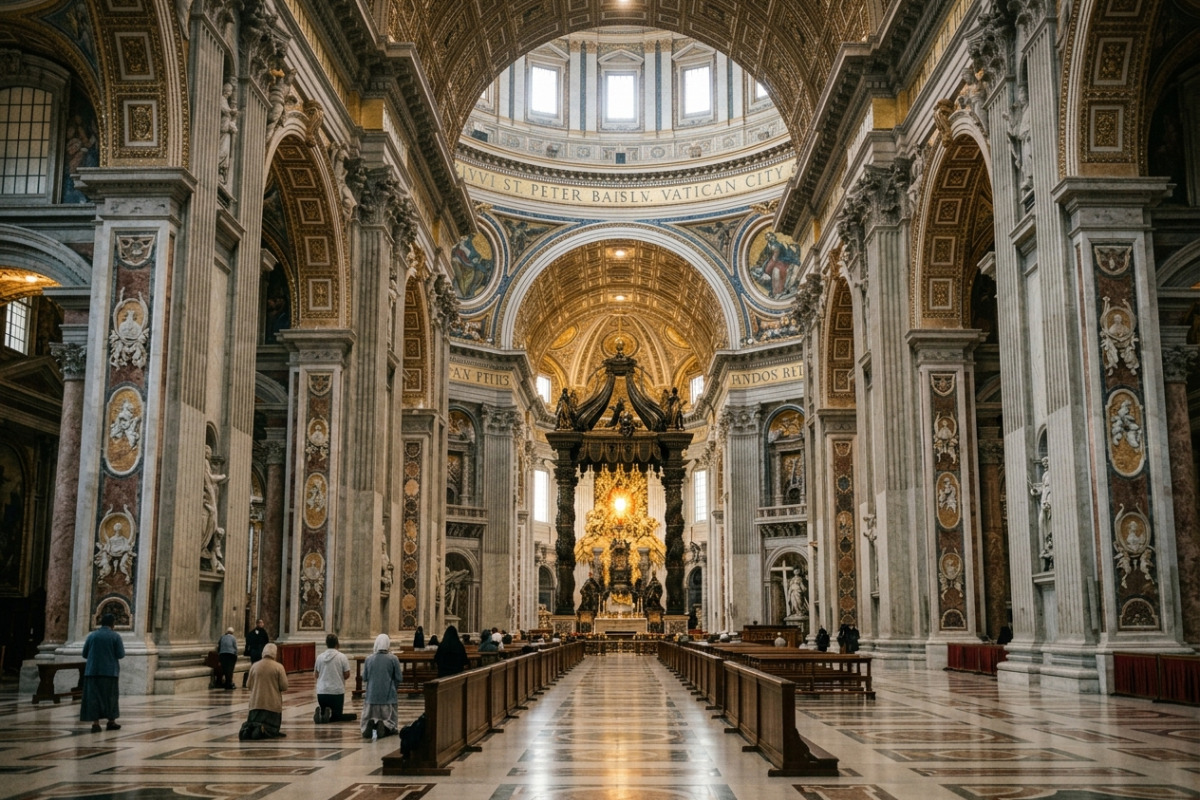
The first thing that commands your attention as you navigate the central nave is the colossal bronze canopy rising above the high altar. Known as the Baldachin (Baldacchino), this structure is the pivot point of the entire basilica, acting as a visual bridge between the human scale of the congregation and the soaring heights of the dome above. Standing nearly 30 meters tall, it is a feat of engineering as much as it is a work of art. Bernini rejected the traditional straight columns of the Renaissance, opting instead for twisting, Solomonic columns that seem to dance upward, decorated with golden olive leaves and bees—the heraldic symbols of the Barberini family, to which Pope Urban VIII belonged.
This masterpiece marks the most sacred spot in the church, located directly above the tomb of St. Peter. The dark bronze contrasts beautifully with the light flooding in from the dome, creating a silhouette that is iconic to Vatican City. For those wishing to understand the spiritual layers beneath this artistic triumph, visiting The Altar of the Confessio is essential. It provides a glimpse into the history that lies beneath the marble floors, connecting Bernini’s soaring bronze to the foundational roots of the church.
The Cathedra Petri: A Throne of Light
If you look past the Baldachin to the apse at the far end of the basilica, you will witness what many consider Bernini’s most mystical creation: the Cathedra Petri, or the Chair of St. Peter. This is not merely a sculpture; it is a theological explosion of gilded bronze and stucco. The work encases an ancient wooden chair believed to have been used by St. Peter himself. Bernini elevates this relic, literally and figuratively, holding it aloft with the statues of four Doctors of the Church—St. Ambrose, St. Augustine, St. Athanasius, and St. John Chrysostom.
The true genius of the Cathedra Petri, however, lies in its use of light. Bernini incorporated a window made of alabaster into the center of the composition, depicting the Holy Spirit as a dove. In the afternoon, the natural sunlight streams through this window, turning the golden rays surrounding the chair into a blinding, divine radiance. It is a perfect example of the Baroque desire to merge architecture, sculpture, and natural elements into a single spiritual experience. To fully appreciate the layout of these masterpieces, you might want to Explore the Basilica sections online before your arrival to map out your route.
Sculpting Death and Devotion
Bernini was not only an architect of grand structures but also a sculptor of intimate and sometimes terrifying details. His funerary monuments within the basilica are groundbreaking in their storytelling. The Tomb of Pope Urban VIII and the Tomb of Pope Alexander VII show Bernini’s evolution as an artist. In the monument to Alexander VII, a skeleton holding an hourglass emerges from beneath a heavy drape of colored marble—a stark memento mori reminding viewers that time runs out for everyone, even Popes. The way Bernini carved the marble drapery to look like soft, flowing fabric is a testament to his technical virtuosity.
While Bernini’s dramatic flair dominates much of the nave, it is interesting to contrast his style with the Renaissance serenity found elsewhere in the church. For instance, just a short walk from Bernini’s energetic works, you can find the quiet, sorrowful beauty of Michelangelo's Pietà. Seeing these two masters under one roof offers a profound lesson in the history of art, moving from the idealized beauty of the Renaissance to the emotional movement of the Baroque.
Beyond these major works, Bernini's influence can be felt in other, often overlooked, details. For example, the Statue of St. Longinus, located in one of the four niches beneath the dome, depicts the Roman soldier who pierced Christ's side with a lance. Bernini captures the moment of Longinus's spiritual conversion with incredible dynamism. Another notable, though less prominent, piece is the Altar of the Sacrament in the Chapel of the Blessed Sacrament, where Bernini's bronze tabernacle mirrors the design of the Baldachin, further emphasizing the Eucharist's importance.
Bernini's Key Masterpieces Checklist
To ensure you don't miss the critical contributions of Bernini during your visit, here is a breakdown of his major works located within and immediately outside the Basilica:
| Masterpiece | Location | Key Feature |
| The Baldachin | Central Nave / High Altar | Twisted bronze columns, 29m height. |
| Cathedra Petri | The Apse (Far end) | Alabaster window with the Holy Spirit dove. |
| Statue of St. Longinus | Niche in the Crossing | Depicts the moment of spiritual conversion. |
| Tomb of Alexander VII | Left Aisle | The skeleton (Death) holding an hourglass. |
| The Colonnade | St. Peter's Square | 284 columns representing the "embracing arms". |
The Embrace of the Colonnade
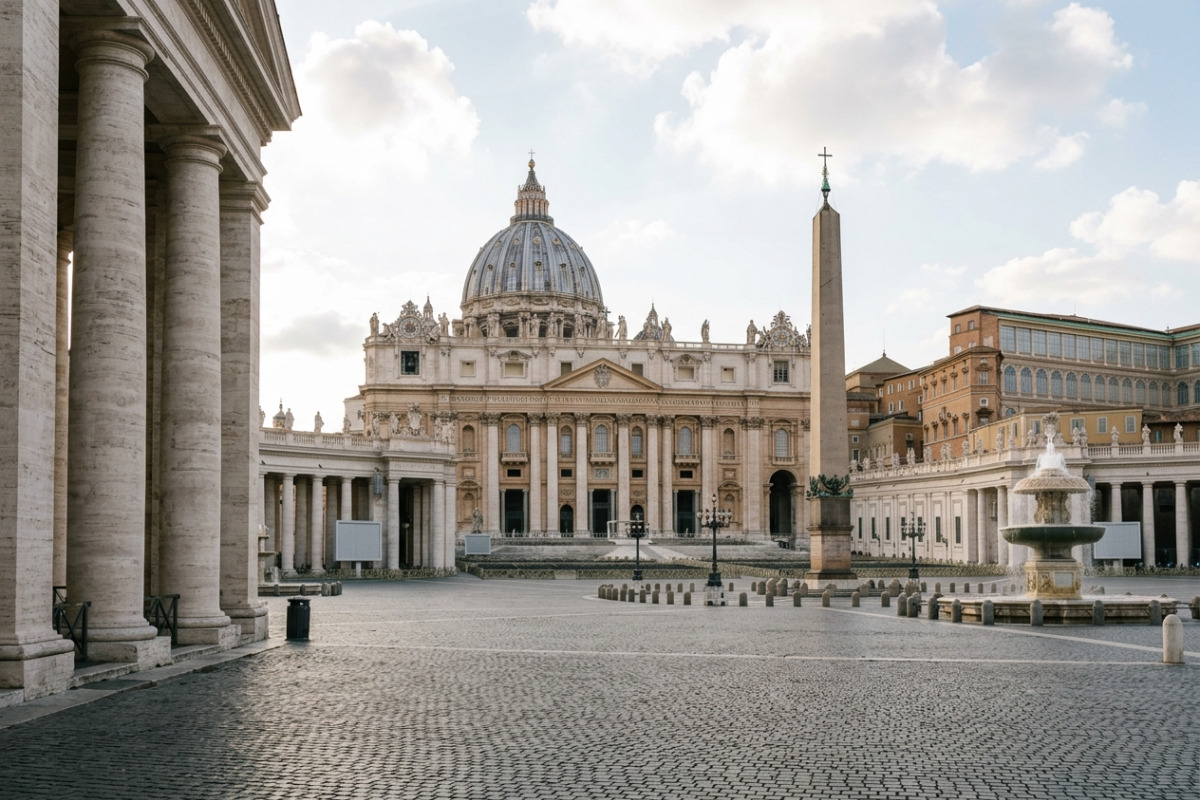
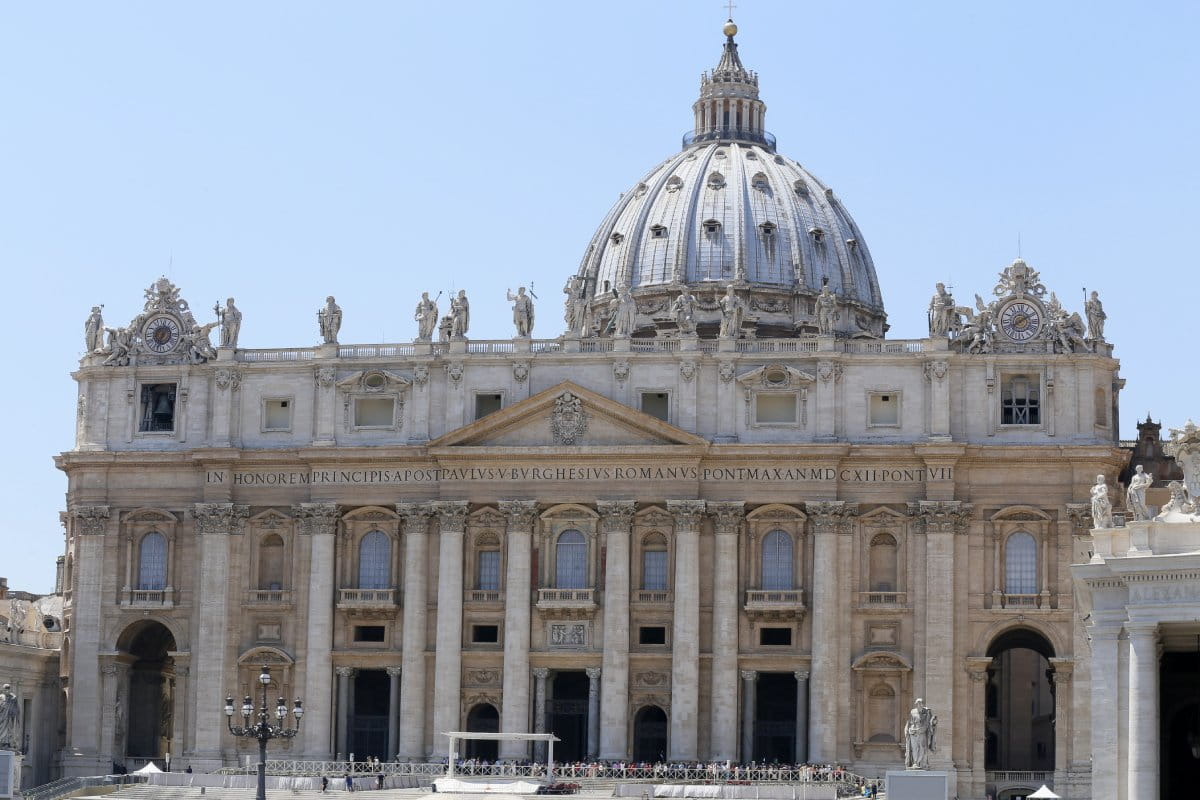
Bernini’s influence extends beyond the interior walls. Before you even enter the church, you are greeted by his architectural masterpiece: the massive colonnade of St. Peter's Square. Bernini described this design as the "maternal arms of Mother Church" reaching out to embrace the faithful. The four rows of Doric columns create a perfect oval, guiding pilgrims toward the façade. Standing on the specific focal points marked on the pavement of the square creates an optical illusion where the four rows of columns seem to merge into one.
This architectural feat changes the way visitors approach the Basilica, preparing their minds and hearts for the grandeur inside. If you are interested in the structural secrets of the Vatican, including the areas beneath the square, a visit to The Necropolis offers a fascinating journey into the ancient foundations that predate even Bernini’s columns.
Planning Your Visit to See the Masterpieces
Visiting St. Peter's Basilica to see these works requires some planning, especially given the popularity of the site. The sheer number of visitors can be overwhelming, so arriving early in the morning is highly recommended to appreciate the art without the dense crowds. Additionally, understanding the history behind each piece significantly enhances the experience. Using a digital aid can be very helpful; the official Audio Guide App provides excellent commentary on Bernini’s specific contributions, allowing you to stand before the Baldachin and hear the story of its controversial bronze sourcing.
- Dress Appropriately: Remember that this is an active place of worship. Shoulders and knees must be covered.
- Secure Access: While the main floor is free, lines are long. For guided experiences or skip-the-line options, look into Tickets & Tours.
- Go Deeper: Don't just look up; look down and around. Visit The Vatican Grottoes to see the resting places of popes, which gives context to the elaborate tombs upstairs.
- Climb the Dome: For a unique perspective of the Baldachin from above, looking down into the nave, you should visit The Dome.
Gian Lorenzo Bernini did not just decorate a building; he created an environment designed to overwhelm the senses and elevate the spirit. His works in St. Peter’s Basilica are a testament to the power of faith expressed through art. Whether you are an art history enthusiast or a curious traveler, the splendor of his Baroque vision is something that stays with you long after you leave Rome. For comprehensive details on logistics, ensure you check the Plan Your Visit page to make your pilgrimage to these masterpieces as smooth as possible.