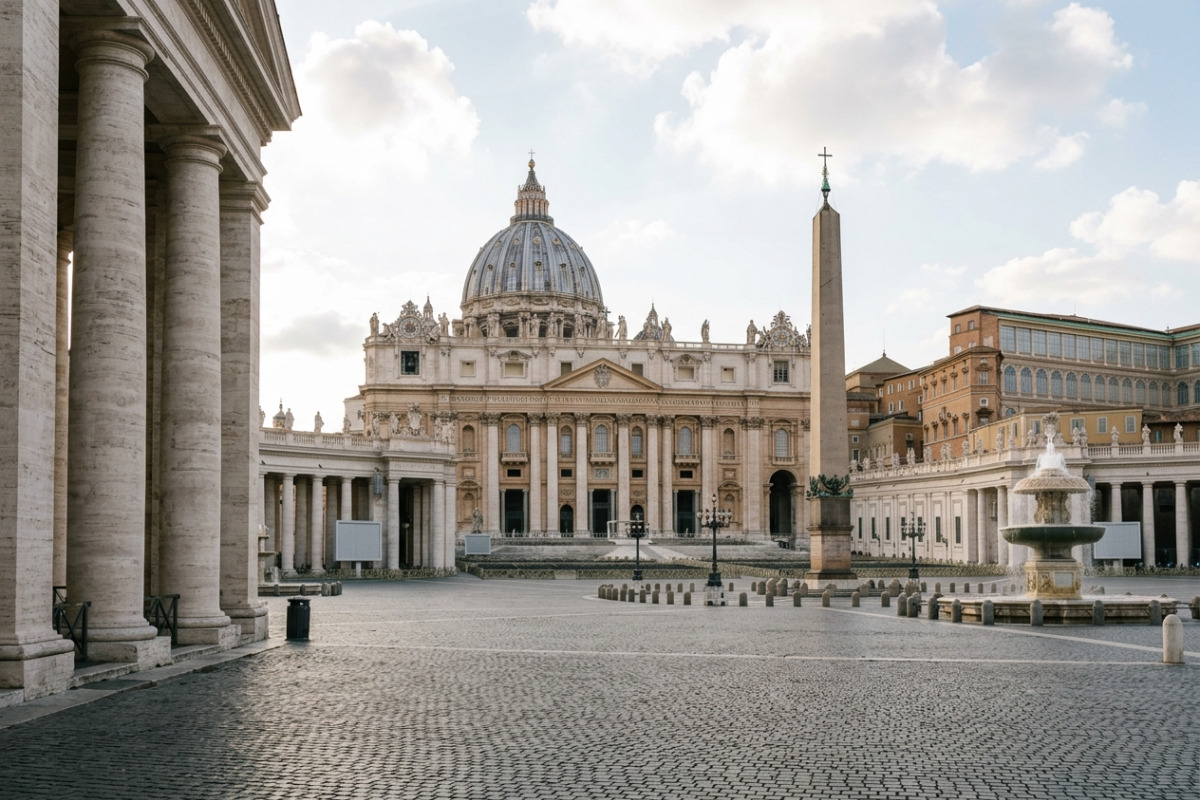
Stepping through the massive bronze doors of St. Peter's Basilica is an experience that transcends mere sightseeing; it is an immersion into the very heart of the Renaissance and Baroque eras. For art lovers and spiritual pilgrims alike, the sheer scale of creativity housed within these walls is often overwhelming. Everywhere you look, from the polychrome marble floors to the soaring coffered ceilings, you are surrounded by the genius of history’s greatest artists. While the architecture itself is a marvel, the specific artistic treasures contained within turn the basilica into one of the world's most significant museums of sacred art. As you prepare to explore the Basilica, it is essential to understand that every statue, altar, and mosaic here tells a profound story of faith and human ingenuity.
The basilica stands not just as a church, but as a collaborative triumph spanning more than a century of construction and decoration. It represents a dialogue between the restrained beauty of the Renaissance and the theatrical grandeur of the Baroque. Navigating this vast space requires a keen eye, as some masterpieces are towering and obvious, while others are hidden in plain sight or tucked away in the sacred grottos below. This guide delves into the artistic legacy that makes St. Peter’s a pivotal landmark in art history, ensuring you don't miss the details that breathe life into the stone and gold.
The Emotional Power of Marble: Sculptural Highlights
Sculpture is perhaps the most defining medium within St. Peter's Basilica, with works that range from intimate portrayals of grief to bombastic expressions of glory. Undoubtedly, the most famous of these is Michelangelo's Pietà, located in the first chapel on the right as you enter. Carved when the artist was only 24 years old, this masterpiece is the only work Michelangelo ever signed. The sculpture depicts the Virgin Mary holding the lifeless body of Jesus, yet the scene is not one of despair, but of resigned, divine peace. Visitors are often struck by the realistic texture of the fabric and the youthful, serene face of Mary, which Michelangelo argued represented her eternal purity. It is a moment of stone turned into soft flesh and flowing drapery.
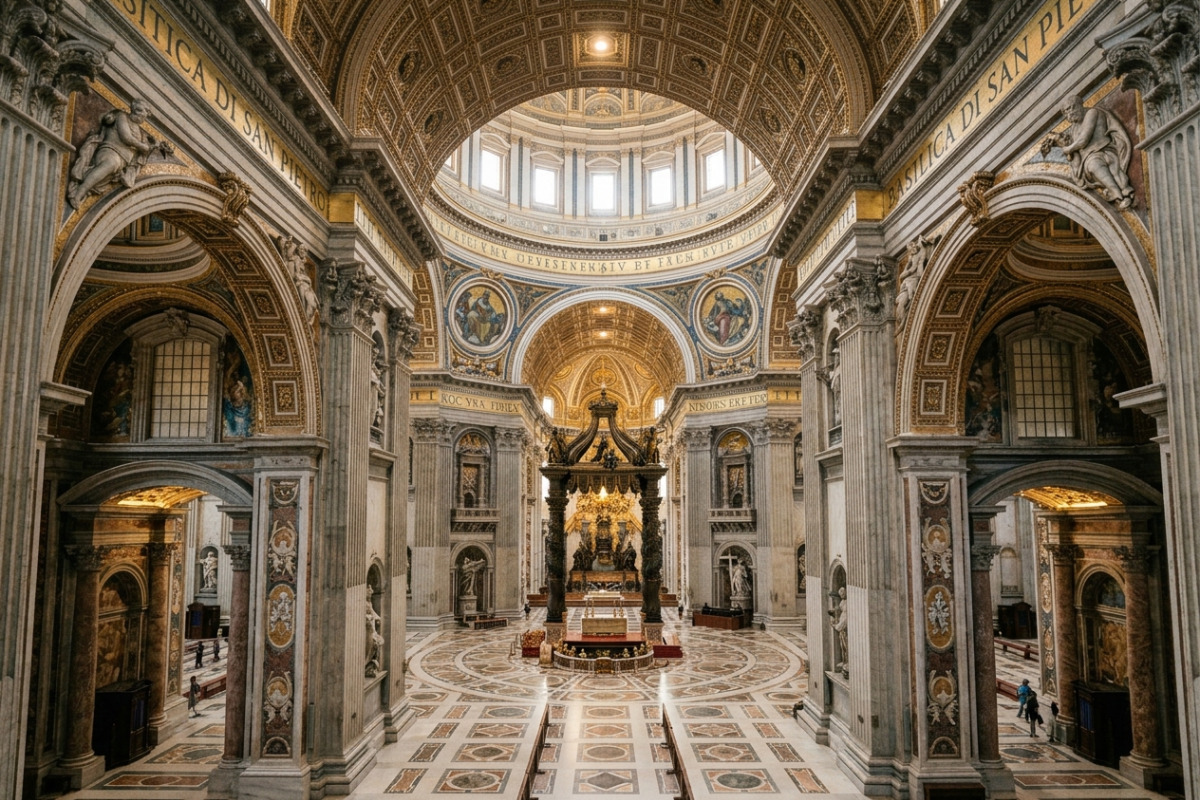
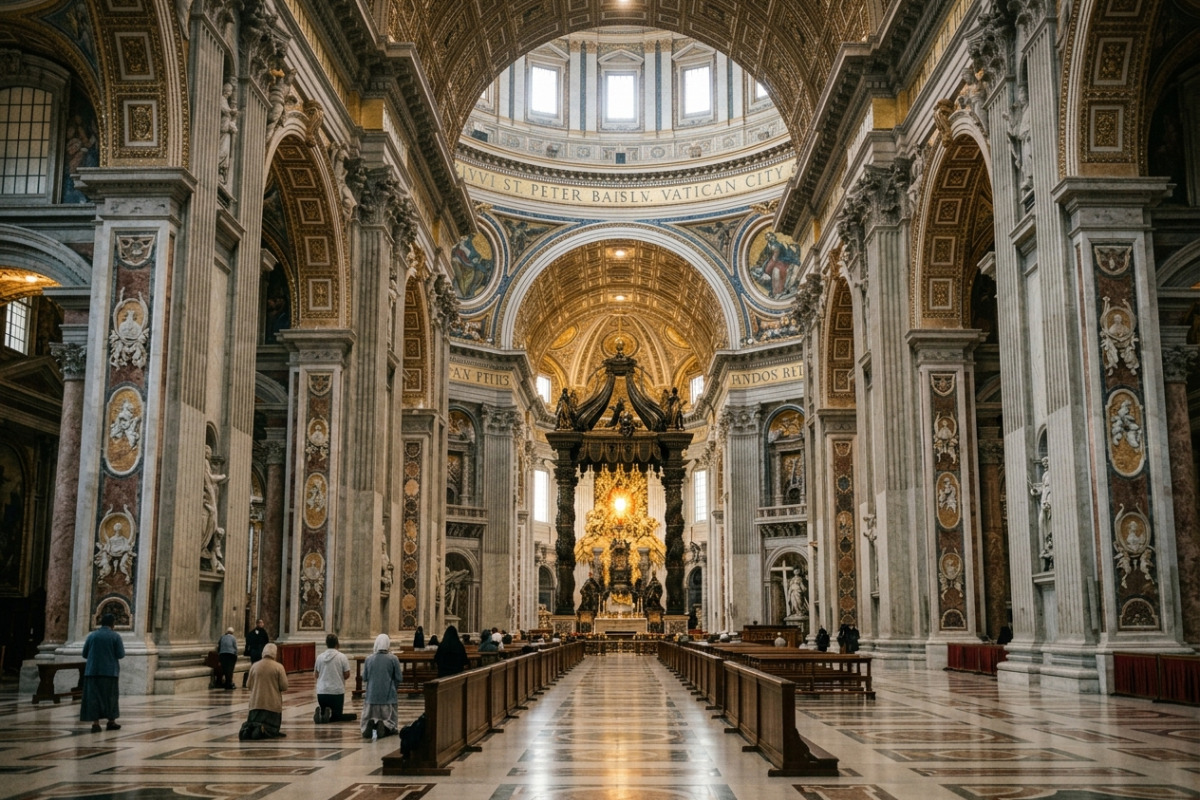
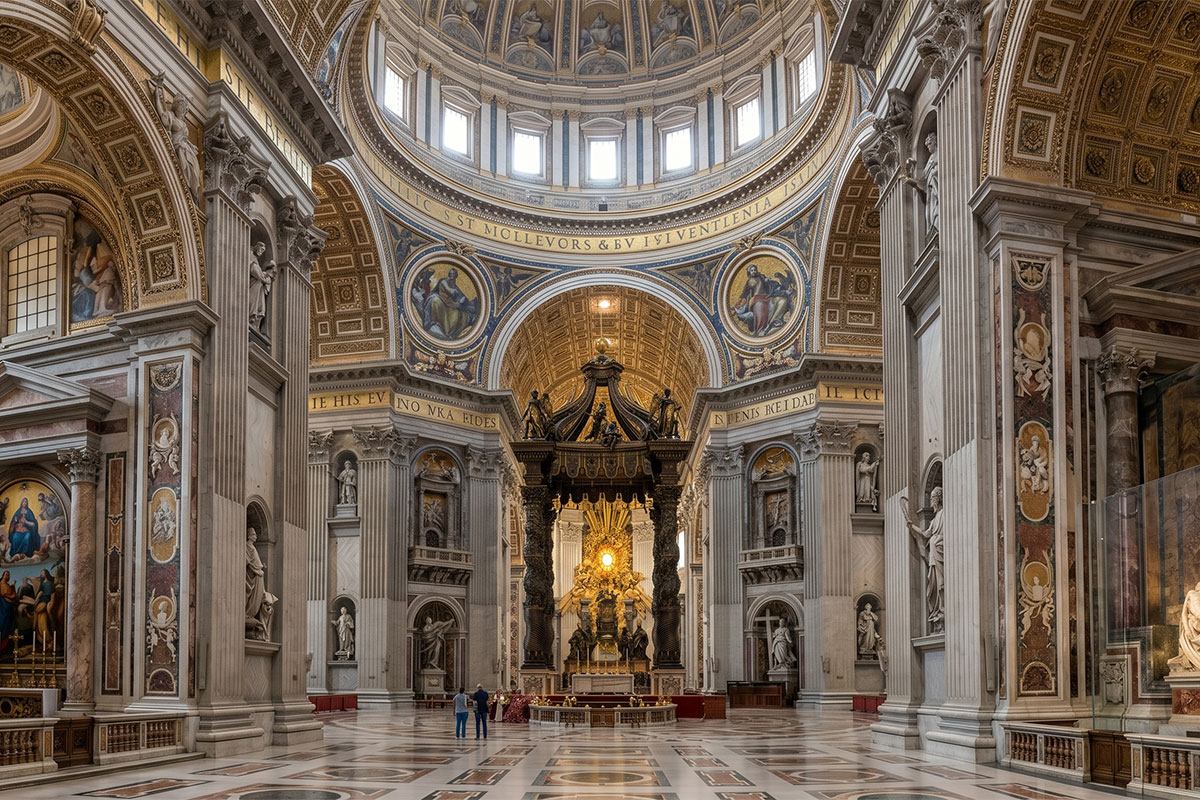
Moving from the entrance toward the central crossing, the artistic atmosphere shifts from Michelangelo’s Renaissance idealism to Gian Lorenzo Bernini’s Baroque dynamism. Dominating the center of the church is the colossal Baldachin, a bronze canopy that stands over the Papal Altar. This structure is a feat of engineering and art, standing as tall as a ten-story building. The twisted columns, decorated with olive branches and bees (symbols of the Barberini family), guide the eye upward toward the dome. Directly beneath this masterpiece lies The Altar of the Confessio, marking the tomb of St. Peter. The interplay between the dark bronze of the canopy and the light streaming in from above creates a theatrical effect that is pure Bernini.
Other Notable Sculptures
- St. Longinus: Also created by Bernini, this larger-than-life statue stands in one of the niches of the central crossing pillars. It captures the moment of the Roman centurion's conversion, with arms flung wide in dramatic revelation.
- The Statue of St. Peter: Attributed to Arnolfo di Cambio, this ancient bronze statue depicts the Apostle seated and blessing the faithful. It is a beloved tradition for pilgrims to touch or kiss his right foot, which has been worn smooth by centuries of devotion.
- Monument to Alexander VII: Another Bernini masterpiece, this tomb features a skeletal figure of Death holding an hourglass, emerging from a shroud of red jasper marble, symbolizing the inevitable passage of time.
The Illusion of Painting: The Vatican Mosaics
One of the most surprising facts for visitors is that St. Peter's Basilica contains almost no traditional paintings. The humidity and scale of the interior made oil on canvas impractical for long-term preservation. Instead, what appear to be paintings are actually intricate mosaics composed of thousands of tiny tesserae. The artisans of The Mosaic Studio developed techniques to create glass tiles in thousands of different shades, allowing them to replicate famous brushstrokes with imperceptible precision. This transition from paint to stone ensures that the vibrant colors you see today will remain just as bright for centuries to come.
A prime example of this technique is the mosaic reproduction of Raphael’s “The Transfiguration.” The original oil painting resides in the Vatican Museums, but the mosaic version in the basilica allows the artwork to serve its liturgical purpose within the sacred space. As you walk through the aisles, take a moment to look closely at these "paintings." Only when you are just a few feet away do the tiny squares of glass reveal themselves, showcasing a level of craftsmanship that rivals the original painters. This dedication to durability and beauty is a testament to the Vatican's commitment to eternalizing art.
Another notable mosaic is the depiction of St. Peter walking on water, based on a design by Giovanni Lanfranco. This piece showcases the dramatic storytelling possible with mosaic art, capturing the moment of faith and doubt with incredible detail.
Architecture as Art: The Dome and Below
The architecture of St. Peter's is sculpture on a macro scale, and nowhere is this more evident than in the cupola. Designed by Michelangelo, The Dome is the crowning jewel of the Roman skyline. Inside, the dome is decorated with mosaics depicting Jesus, the Apostles, and saints, arranged in ascending circles towards the lantern, representing the journey from earth to heaven. The sheer height is difficult to comprehend from the ground; the pen in the hand of St. Mark in the mosaic medallions is actually six feet long. For those who choose to climb to the top, the view offers a unique perspective on the artistic geometry of St. Peter's Square below.
However, the artistic journey continues beneath the floor. The basilica sits atop a history that goes back to the first century. By visiting The Vatican Grottoes, you can see the tombs of past popes and remnants of the original 4th-century basilica built by Emperor Constantine. For those interested in ancient history, The Necropolis offers a glimpse into Roman burial art and the very origins of the site. Furthermore, the immense wealth of artistic objects, including chalices, vestments, and statues that are no longer on display in the main church, can be viewed in The Treasury Museum. These smaller items highlight the intricate goldsmithing and embroidery skills that complemented the monumental stone works.
Key Artists and Their Contributions
To help you navigate the immense collection of art, here is a quick reference to the primary masters whose work defines the basilica.
| Artist | Key Masterpiece | Artistic Era | Location |
| Michelangelo Buonarroti | The Pietà | High Renaissance | North Aisle (First Chapel) |
| Michelangelo Buonarroti | The Dome (Design) | Renaissance | Central Crossing |
| Gian Lorenzo Bernini | The Baldachin | Baroque | Papal Altar |
| Gian Lorenzo Bernini | Cathedra Petri (Chair of St. Peter) | Baroque | Apse (Far end of church) |
| Arnolfo di Cambio | Bronze Statue of St. Peter | Medieval/Gothic | Nave (Right side) |
| Raphael (Mosaic Copy) | The Transfiguration | High Renaissance | Left Aisle |
Planning Your Art Pilgrimage
Appreciating the art of St. Peter's requires some logistical planning, especially given the crowds that flock to Rome throughout the year. To fully absorb the history and significance of these works, using an Audio Guide App is highly recommended. These guides provide the narrative context that a simple visual inspection misses, explaining the theological symbolism behind Bernini’s theatricality or Michelangelo’s restraint. If you prefer a more interactive experience, booking professional guidance through Tickets & Tours can provide skip-the-line access to specific areas and expert commentary.
Before you go, ensure you check the dress code and opening hours on the Plan Your Visit page. The basilica is an active place of worship, and access to certain artistic sections, like the Altar of the Confessio, may be restricted during mass. Additionally, if you have specific questions about photography rules or accessibility for viewing the art, the Frequently Asked Questions section is a valuable resource. Whether you are standing beneath the massive dome or examining the delicate veins on a marble hand, St. Peter's Basilica offers an artistic encounter that stays with you long after you leave Rome.