When you step across the threshold of St. Peter's Basilica, leaving the bright Roman sun of the piazza behind, you are not immediately plunged into darkness. Instead, you enter a realm where light behaves differently, acting less like a physical necessity and more like a divine narrator. The architects of this monumental structure—Bramante, Michelangelo, Bernini, and Maderno—understood that to build the greatest church in Christendom, stone and marble were not enough; they had to sculpt with light itself. The illumination within the Basilica is not accidental; it is a carefully orchestrated strategy designed to guide the pilgrim’s eye, distort perception of scale, and ultimately heighten the spiritual experience of everyone who enters.
The vast interior of the nave does not rely on a single, overwhelming light source but rather a complex interplay of shadows and beams that evolve throughout the day. As you walk toward the altar, the light changes texture and intensity, drawing you deeper into the sacred mystery. This masterful manipulation of luminosity transforms the architecture from static masonry into a living, breathing entity that reacts to the sun’s path over Rome. Whether you are a devout pilgrim or an admirer of art history, understanding this illumination strategy unlocks a deeper appreciation of the Basilica’s genius. For further reading on the architectural principles behind such designs, consider exploring resources on Vatican architecture.
The Architecture of Light: Shaping Sacred Sightlines
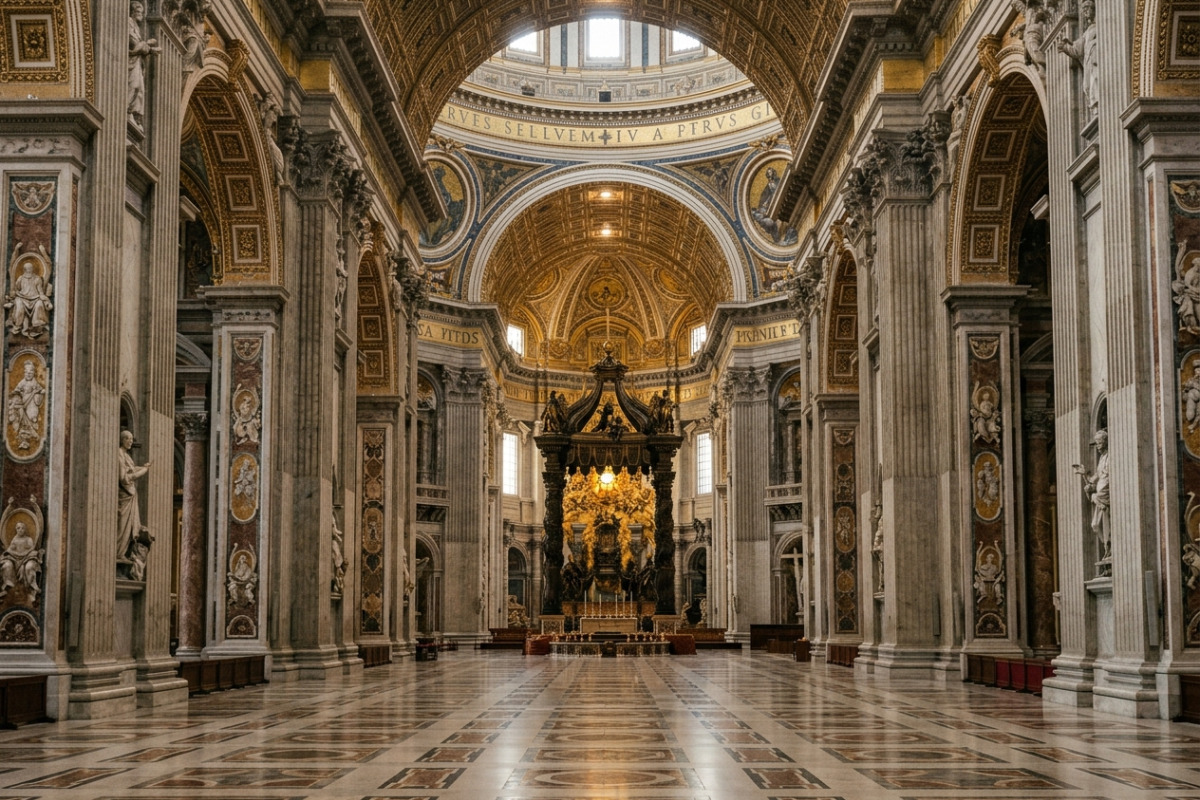
The primary function of light in St. Peter's Basilica is to direct the gaze. In a building of such colossal proportions, the human eye can easily become lost in the sheer volume of space. To counteract this, the architectural design utilizes clerestory windows—high, arched openings located above the cornice line of the nave—to cast rhythmic shafts of light downward. These beams act almost like architectural columns made of photons, creating a visual rhythm that pulls the visitor forward from the entrance toward the transept. It is a subtle psychological guide, ensuring that your attention is constantly drawn toward the spiritual heart of the church.
This technique creates what architects call "hierarchical illumination." The side aisles are kept relatively dimmer, creating a sense of intimacy and introspection suitable for private prayer in the chapels. In contrast, the central nave is bathed in a brighter, more ethereal glow. This contrast serves to emphasize the vastness of the main path while providing a comforting enclosure in the peripheral spaces. If you take the time to explore the Basilica thoroughly, you will notice how this lighting hierarchy shifts as you move from the cavernous entrance toward the soaring heights of the crossing.
The Dome: Michelangelo’s Beacon of Heaven
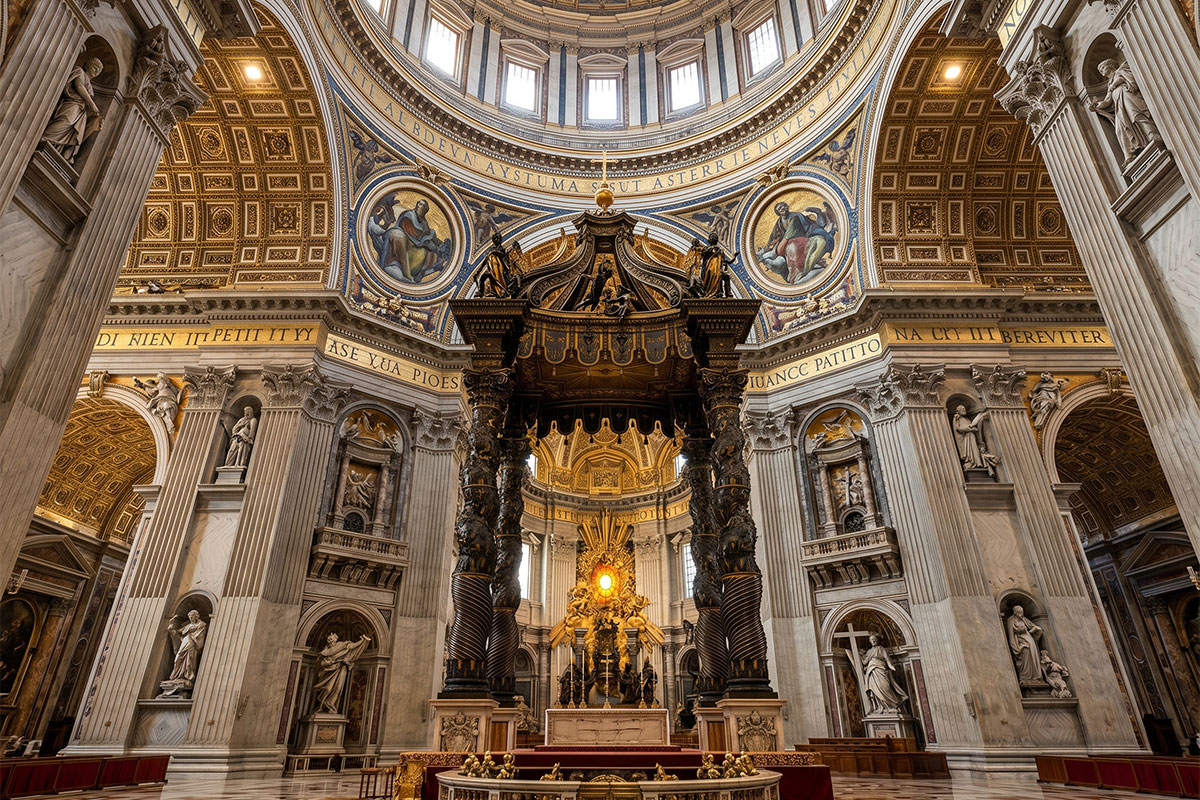
The undisputed climax of the Basilica’s lighting script is the great dome designed by Michelangelo. It acts not just as a roof, but as the primary light source for the transept and the altar below. The drum of the dome is pierced by sixteen large windows, and above them, the lantern admits a concentrated beam of vertical light. This design creates a dramatic column of illumination that falls directly upon the Papal Altar and the tomb of St. Peter beneath it. It serves as a visual metaphor for the connection between heaven and earth, a literal spotlight on the church's most sacred ground.
Standing beneath the dome, the effect is mesmerizing. The light here is diffuse and omnipresent, washing over the intricate mosaics that decorate the interior of the cupola. These mosaics were specifically designed with reflective angles to catch this light, making the gold backgrounds shimmer and appear to radiate their own luminosity. The dome's oculus, a central opening at the top, further enhances this effect, allowing even more light to flood the space. For those who wish to understand the scale of this engineering marvel, a visit to the Dome offers a chance to see these windows up close and witness how the light floods the basilica from above, a perspective that changes your entire understanding of the building's volume.
Bernini’s Theatricality: The Altar and the Dove
While Michelangelo used light to define space, Gian Lorenzo Bernini used it to create drama. Nowhere is this more evident than in the apse, behind the main altar, where the magnificent Cathedra Petri (Chair of St. Peter) resides. Bernini integrated a window of Bohemian glass into the center of his sculpture, featuring the Dove of the Holy Spirit. Surrounding this window is a burst of golden stucco rays and clouds, crowded with angels. In the late afternoon, as the sun sets over the Vatican, the light pours through this amber-colored window, igniting the gold and creating a supernatural explosion of light that seems to dissolve the surrounding architecture. You can explore more of Bernini's works to understand his mastery of Baroque art.
This is Baroque theatricality at its finest. The light is used to dematerialize the heavy bronze and stone, making the heavy sculpture appear weightless and floating. It draws the eye past the massive Altar of the Confessio and the twisting columns of the Baldachin, culminating in this blinding vision of the Holy Spirit. It is a masterclass in controlling the viewer's emotional response, using the sun itself as a dynamic element of the artwork. To fully appreciate this, one should consult the Audio Guide App while standing in the nave, which provides detailed context on Bernini’s vision and the theological symbolism behind this radiant spectacle.
Shadow and Revelation: Illuminating Art and History
The lighting strategy also plays a crucial role in how we perceive the countless masterpieces housed within the Basilica. The interplay of light and shadow, known as chiaroscuro, adds depth and emotion to the sculptures. A prime example is Michelangelo's Pietà. The lighting here is soft and directional, highlighting the polished marble of Mary’s face and the lifeless body of Christ, while casting deep shadows in the folds of her drapery. This contrast enhances the sorrow and tenderness of the scene, making the stone feel incredibly soft and human.
Similarly, the light reveals the texture of history in the subterranean levels. While the main basilica is celebrated for its brightness, the areas below ground rely on a different atmosphere. A visit to The Vatican Grottoes or the deeper excavations of The Necropolis offers a contrast of somber, artificial lighting designed to preserve ancient frescoes and masonry. Here, light is used for preservation and reverence, illuminating the resting places of popes and the original foundations of the Constantinian basilica without damaging the delicate surfaces.
Natural vs. Artificial Light: A Delicate Balance
In recent years, the Vatican has upgraded its interior lighting to state-of-the-art LED systems. This modern intervention was carefully calibrated to mimic the natural spectrum and enhance the architectural volume without destroying the original atmosphere intended by the Renaissance masters. For more information on the Basilica's preservation efforts, consult reputable sources on art conservation.
- Color Temperature: The LEDs are tuned to a warm temperature that complements the travertine stone and gold leaf, preventing the space from feeling clinical or cold.
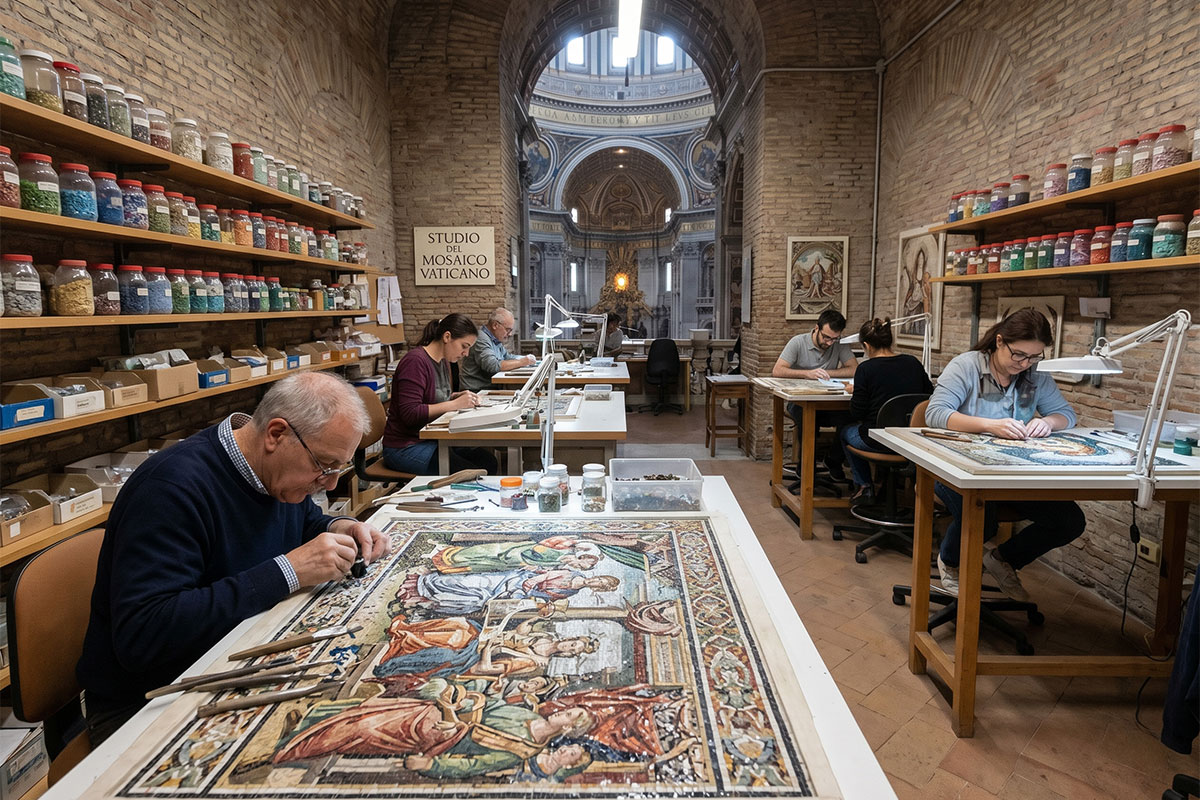
- Mosaic Brilliance: The new lighting specifically targets the domes and spandrels, revealing details in the Mosaic Studio works that were previously lost in the gloom of the upper reaches.
- Depth Perception: By illuminating the architectural ribs and arches, the lighting emphasizes the three-dimensional grandeur of the nave, allowing the eye to travel all the way to the ceiling.
- Versatility: The system allows for different lighting scenarios depending on the liturgical calendar, shifting from solemn dimness for Good Friday to brilliant radiance for Easter Mass.
Practical Tips for Chasing the Light
To truly appreciate the "illumination strategy" of St. Peter's, the timing of your visit matters. The atmosphere inside the Basilica shifts dramatically depending on the weather and the hour. Early mornings often provide clear, piercing beams of light that cut through the incense and dust motes, creating a mystical atmosphere perfect for photography and quiet reflection. Late afternoons, particularly in autumn and winter, offer the golden glow that ignites Bernini’s Dove in the apse. Before you go, it is wise to check Plan Your Visit pages for opening hours to align your trip with the sun.
For those interested in the artistic treasures that require specific lighting to be fully appreciated, such as the jewels and liturgical objects, a stop at The Treasury Museum is essential. Here, controlled lighting allows you to see the sparkle of precious stones and the craftsmanship of centuries-old vestments. Since the Basilica can be crowded, securing Tickets & Tours in advance—especially for guided options that might explain these architectural nuances—is highly recommended.
Ultimately, the light in St. Peter's Basilica is not merely there to help you see; it is there to help you feel. It guides the pilgrim’s journey from the human world at the entrance to the divine presence at the altar. If you have more questions about accessibility or photography rules regarding flash (which interferes with the natural ambiance), the Frequently Asked Questions section is a great resource. As you walk through the nave, remember to look up and let the light lead the way.