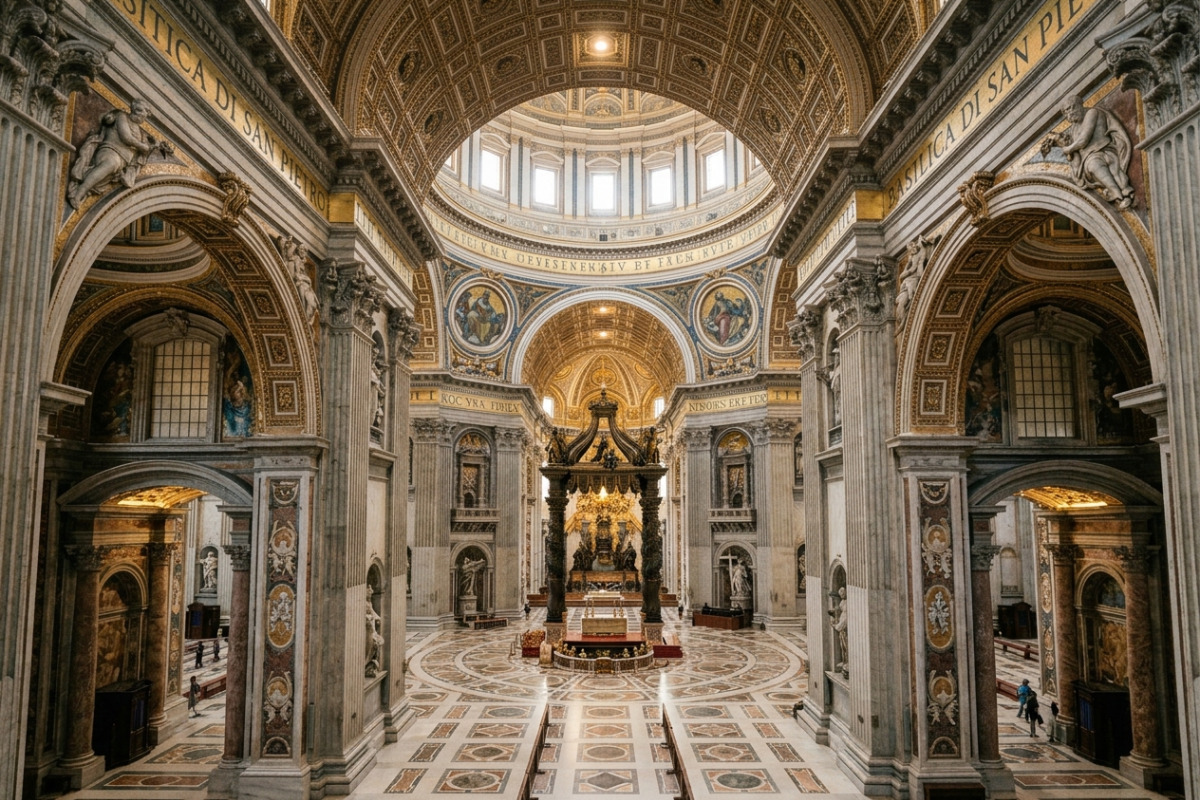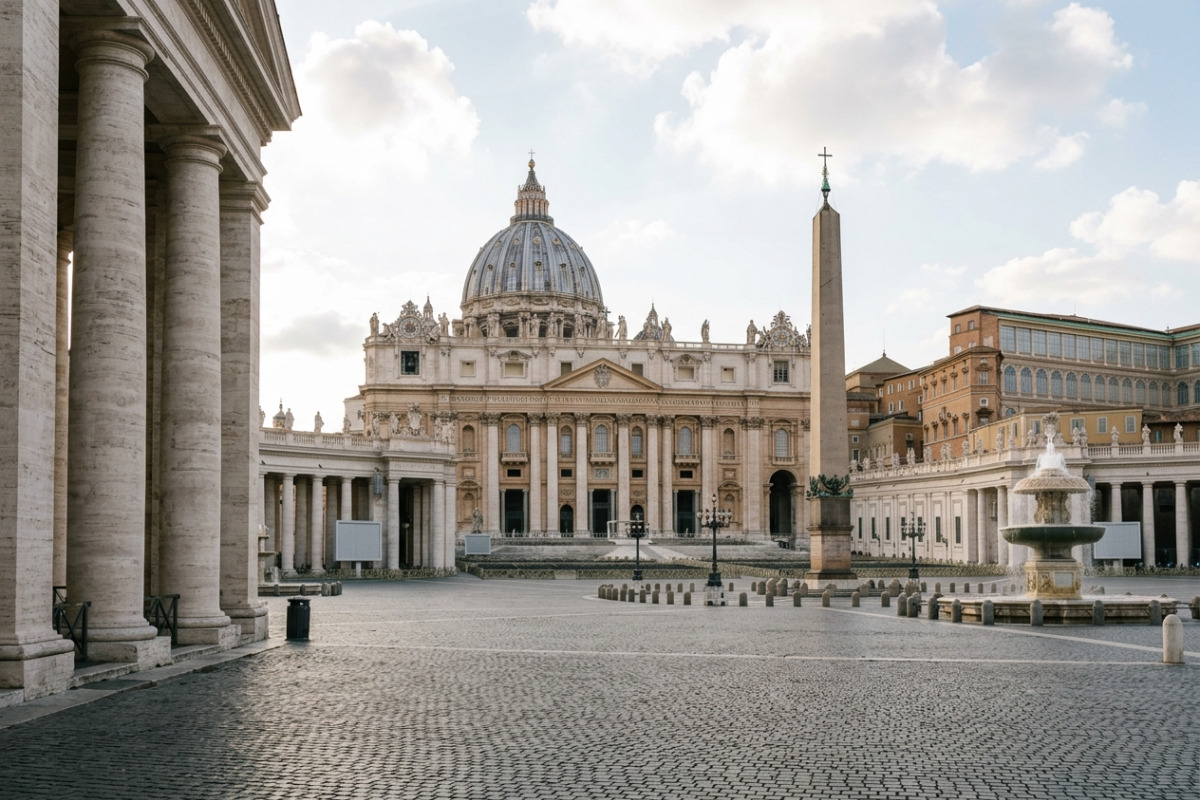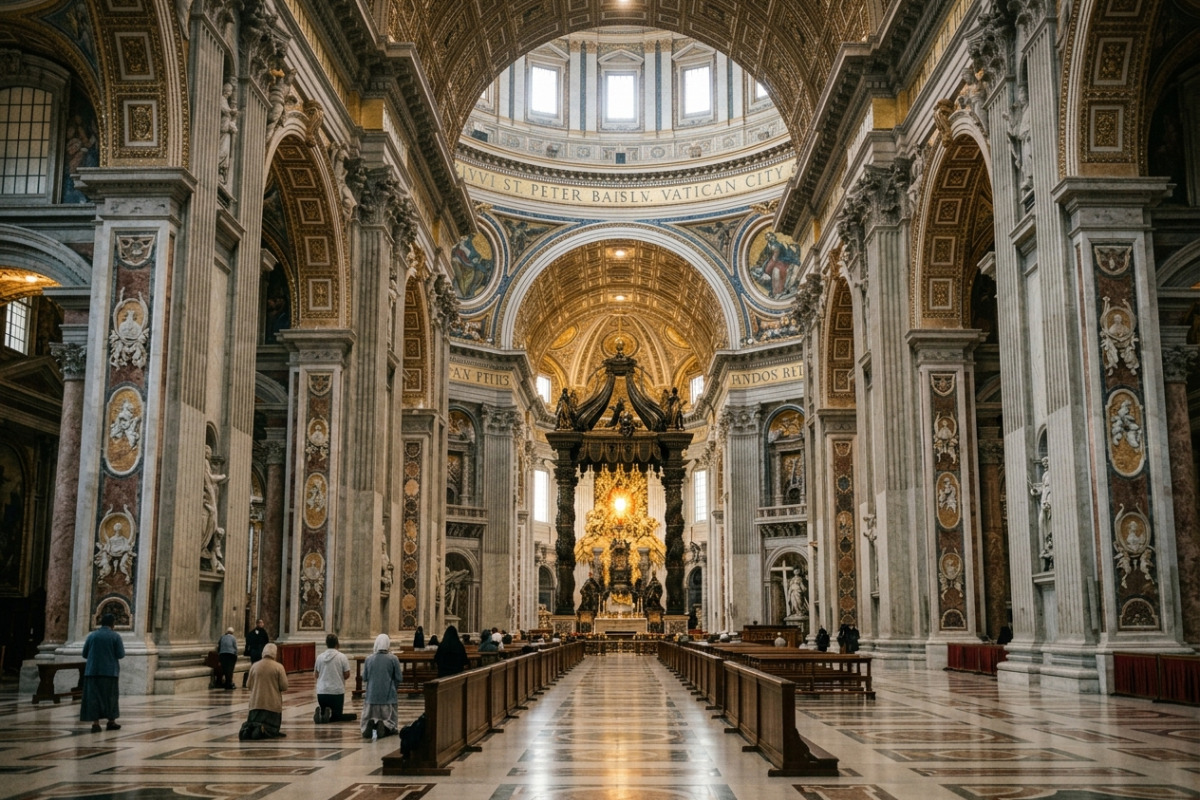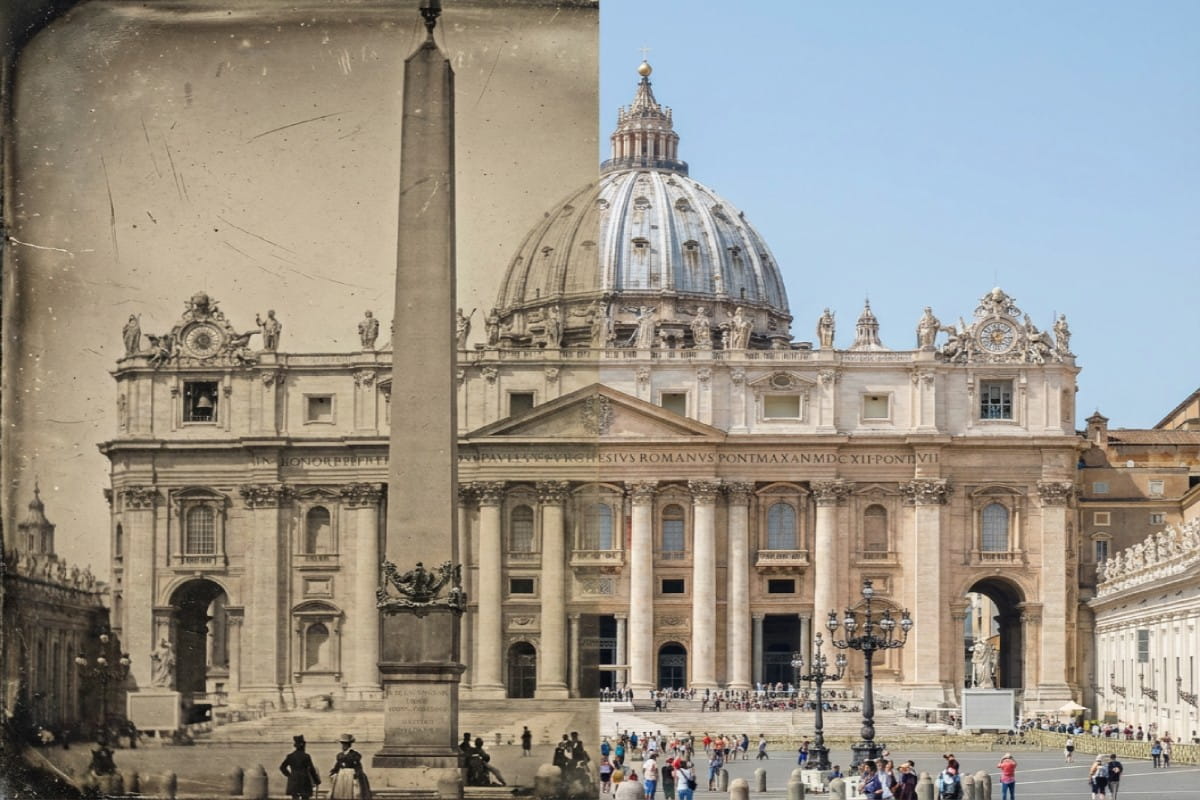
When you stand in the center of St. Peter's Square, surrounded by the embracing arms of the massive colonnades, you are not just looking at a church; you are witnessing a timeline of artistic genius carved in stone. St. Peter's Basilica is far more than a place of worship; it is the ultimate culmination of centuries of architectural evolution, political ambition, and spiritual devotion. As we step into 2026, the basilica remains a testament to human ingenuity, standing as firmly today as it did when its final stones were laid. Understanding its architecture requires peeling back the layers of history, moving from the dusty foundations of the Roman Empire to the soaring heights of the Renaissance and the dramatic flair of the Baroque era.
The structure we admire today is actually the second building to stand on this holy site. The story of its evolution is a dramatic narrative of conflicting visions, with some of history's greatest artists—Bramante, Raphael, Michelangelo, Maderno, and Bernini—each leaving an indelible mark on the skyline of Rome. To truly appreciate this wonder, one must explore the Basilica not just as a single entity, but as a living museum of architectural progression.
From Humble Beginnings: The Old St. Peter's Basilica
Long before the great dome dominated the Roman horizon, a different structure occupied this sacred ground. Commissioned by Emperor Constantine in the 4th century, the original St. Peter's Basilica was a marvel of its own time, though vastly different in style from what we see today. Constructed over the burial site of St. Peter, this early Christian basilica followed a traditional Roman architectural plan. It featured a long nave (the central part of a church, typically rectangular) with four aisles and a wooden roof, designed to accommodate thousands of pilgrims who traveled from across the known world.
For over a millennium, this structure stood as the center of Western Christianity. However, by the 15th century, the ravages of time had taken their toll. Walls were leaning, the foundation was crumbling, and the papacy faced a difficult decision: repair the ancient relic or build something entirely new that would reflect the power and glory of the Church during the Renaissance. Pope Julius II made the bold decision to demolish the old basilica, paving the way for the architectural odyssey that would follow. Today, while the old structure is gone, you can still feel the connection to the past by visiting The Necropolis, where the history of the site physically begins deep underground.
The Renaissance Vision: Bramante and the Greek Cross
The construction of the new basilica began in 1506 under the guidance of Donato Bramante. His vision was radically different from the longitudinal shape of the old church. Bramante proposed a Greek Cross plan—a centralized layout with four equal arms, topped by a massive central dome inspired by the Pantheon. This design was intended to symbolize perfection and harmony, key ideals of the High Renaissance. It was a mathematical and aesthetic challenge that set the tone for the decades of construction that would follow.
However, the project was plagued by delays and the deaths of successive architects. After Bramante, masters like Raphael and Antonio da Sangallo the Younger took over, often proposing alterations that shifted between the Greek Cross and the Latin Cross (a longer nave). It wasn't until Michelangelo Buonarroti took control in 1547, at the age of 72, that the project regained a unified direction. Michelangelo simplified Bramante’s complex design, strengthening the structural supports to carry the weight of what would become the most iconic feature of the Roman skyline.
Michelangelo’s Crowning Glory: The Dome
Michelangelo’s contribution to St. Peter's is arguably the most significant. He envisioned a dome that would float above the city, a beacon of faith visible from miles away. While he did not live to see it completed, his detailed designs ensured that his vision was realized by his successor, Giacomo della Porta. The double-shelled brick dome remains a marvel of engineering. Visitors who make the climb to the top are rewarded not just with views, but with a close-up look at the structural genius required to suspend such weight in the air. If you are planning a trip, ascending The Dome is an absolute necessity to understand the scale of this achievement.
The Baroque Transformation: Maderno and Bernini
As the 17th century approached, the architectural tastes and liturgical needs of the Church shifted. The Counter-Reformation called for churches that could hold larger congregations for processions, something the centralized Greek Cross plan struggled to offer. In 1603, Carlo Maderno was hired to extend the nave, effectively transforming Michelangelo’s Greek Cross into a Latin Cross. This decision changed the entire dynamic of the building, prioritizing functionality and grandeur. Maderno is also responsible for the basilica’s imposing façade (the principal front of a building), a wide travertine masterpiece that, while sometimes criticized for obscuring the dome from the square, is a triumph of Baroque classicism.
Once the structure was complete, the task of breathing life into the stone interior fell to Gian Lorenzo Bernini. Bernini’s influence is everywhere. He brought movement, drama, and emotion to the basilica, defining the Baroque style. His contributions include:
- The Baldachin: A massive, twisted bronze canopy that stands over the papal altar, marking the tomb of St. Peter below. It bridges the gap between the human scale of the congregation and the soaring height of the dome.
- The Cathedra Petri: An explosion of golden light and bronze sculpture in the apse, enshrining the symbolic throne of St. Peter.
- The Colonnade: Outside, Bernini designed the massive elliptical piazza with its four rows of Doric columns (a simple and sturdy style of classical Greek column), intended to represent the "maternal arms of Mother Church" embracing the faithful.
To fully appreciate the intricate details of Bernini's work, especially the central altar area, you should read more about The Altar of the Confessio before your visit.
Architectural Timeline of St. Peter's Basilica
The evolution of the basilica was a relay race of genius. Here is a breakdown of who contributed what to this architectural giant:
| Architect | Period | Key Contribution |
| Donato Bramante | 1506–1514 | Original Greek Cross plan; central piers. |
| Raphael | 1514–1520 | Proposed extending the nave (Latin Cross). |
| Michelangelo | 1547–1564 | Returned to Greek Cross; designed the main Dome. |
| Carlo Maderno | 1603–1629 | Extended the nave (Latin Cross); designed the Façade. |
| Gian Lorenzo Bernini | 1629–1680 | St. Peter's Square, the Baldachin, and interior decoration. |
Exploring the Artistic Details
While the structure itself is the main event, the integration of art into the architecture is seamless. As you walk through the aisles, you will notice that what appear to be paintings are often intricate mosaics. The light reflecting off these surfaces creates a divine atmosphere. You can learn about the craftsmanship behind these works at The Mosaic Studio. Furthermore, just to the right of the entrance, sits one of the most famous sculptures in the world, Michelangelo's Pietà. Sculpted when he was just 24, it is a perfect example of Renaissance harmony and is housed in a chapel that fits perfectly within the basilica's massive scale.
Beneath the artistic grandeur of the main floor lies a quieter, more somber architectural layer. The Vatican Grottoes contain the tombs of popes and royals, nestled between the floor of the current basilica and the level of the ancient Constantinian church. It is a physical architectural timeline where you can see the foundations of the pillars that hold up the church above.
Planning Your Architectural Pilgrimage
Visiting St. Peter's Basilica is a journey that requires some planning, especially if you want to appreciate the nuances of its design without being rushed. The sheer size of the building—covering nearly 23,000 square meters—can be overwhelming. To ensure you don't miss the critical architectural elements, it is highly recommended to use the Audio Guide App, which provides detailed commentary on the history and style of each section.
Lines can be long, particularly for the dome climb and the treasury. Booking Tickets & Tours in advance is the best way to secure your entry and potentially skip the long queues. Before you go, make sure to check the Plan Your Visit page for the latest dress codes and opening hours, as these are strictly enforced. Whether you are an architecture student or simply a traveler in awe of beauty, St. Peter's offers an unparalleled look at the evolution of Western art and engineering.