When we step into the vast, echoing expanse of a Roman church, our eyes are immediately drawn to the interplay of light and shadow. This dramatic tension, which defines the Baroque era, owes its existence largely to one rebellious, troubled, and undeniably brilliant master: Michelangelo Merisi da Caravaggio. While the Renaissance sought perfect harmony and idealized beauty, Caravaggio introduced a raw, theatrical realism that changed the course of art history forever. His influence rippled through Rome, eventually shaping the aesthetic sensibilities that define the interior of the world's most significant church. To truly understand the visual language of the Vatican, one must first understand the revolution of light ignited by Caravaggio.
The transition from the Mannerist style to the Baroque was violent and abrupt, much like Caravaggio's own life. He stripped away the artificiality of previous generations, replacing it with emotional intensity and physical immediacy. For travelers planning to Plan Your Visit to Rome, understanding this artistic shift provides a deeper lens through which to view the sacred masterpieces of the city. It is not merely about looking at a painting or sculpture; it is about feeling the spiritual weight and human struggle depicted within them.
The Master of Shadows: Deconstructing Caravaggio’s Style
Caravaggio’s most significant contribution to art is the technique known as chiaroscuro, or more specifically, tenebrism. This method involves the use of extreme contrasts between light and dark. In his canvases, the background is often swallowed by an abyssal blackness, while the subjects are illuminated by a harsh, directional light—almost like a spotlight on a dark stage. This was not just an aesthetic choice; it was a theological one. The light in Caravaggio’s work often symbolizes the presence of the Divine entering the mundane world.
Furthermore, Caravaggio refused to idealize his subjects. He painted saints with dirty feet, torn clothes, and sunburned faces, using common laborers and prostitutes as models. This radical naturalism shocked the clergy but resonated deeply with the faithful. It brought the sacred stories down to earth, making them tangible and relatable. When you Explore the Basilica of St. Peter today, you can see how this desire to evoke a visceral emotional response became the hallmark of the Baroque style that dominates the interior.
Echoes of Caravaggio within St. Peter's Basilica
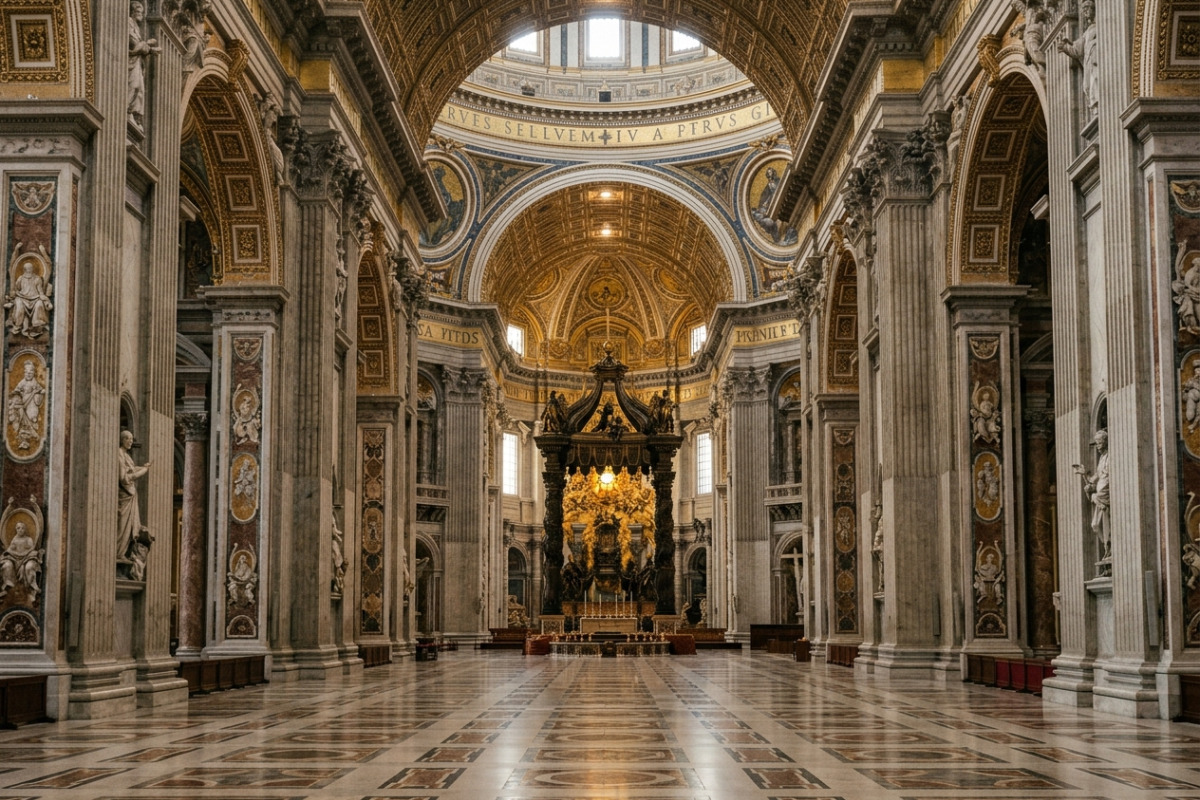
While Caravaggio does not have altarpieces currently displayed inside the main nave of St. Peter's Basilica (his major works are found in nearby Roman churches and the Vatican Museums' Pinacoteca), his spirit permeates the basilica’s design. The artists who decorated St. Peter's in the decades following Caravaggio's death were working in a world he had irrevocably changed. The dramatic lighting, the focus on emotional climax, and the theatricality of the space are all indebted to the Caravaggesque movement.
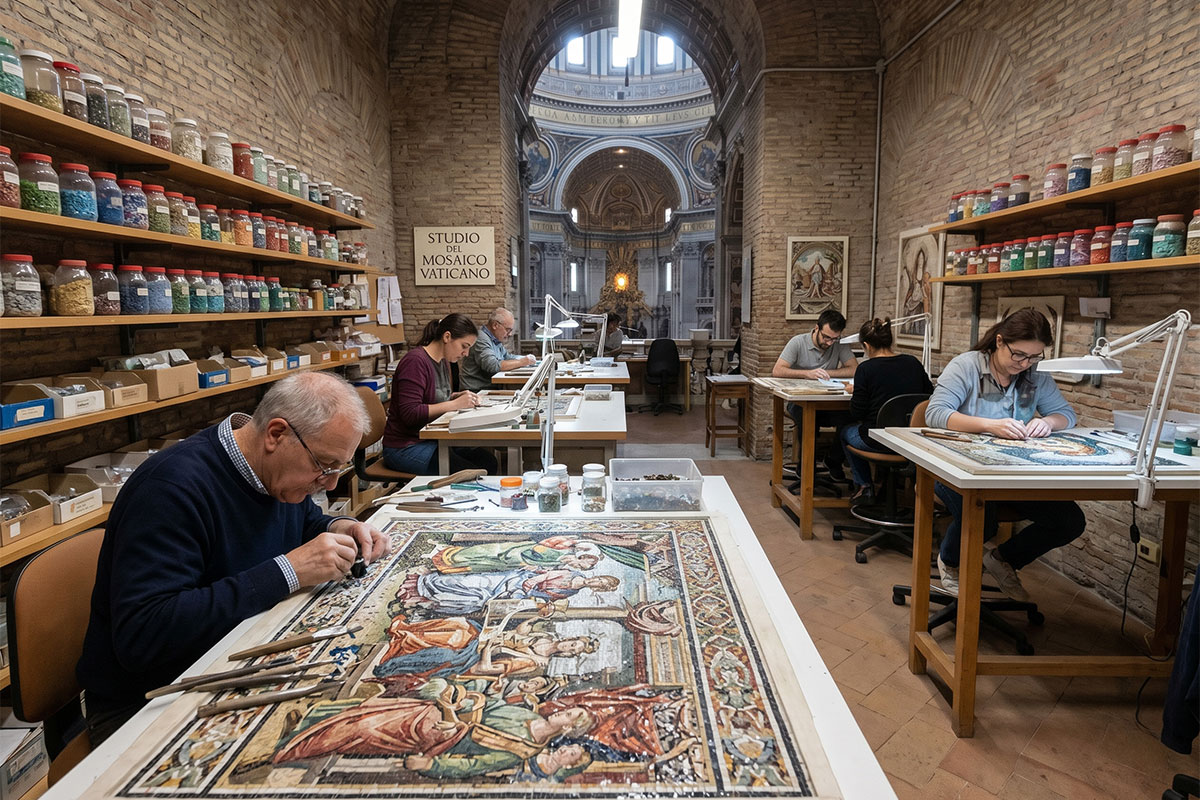
For instance, the massive mosaics that adorn the altars are often copies of Baroque paintings that utilized Caravaggio’s lighting techniques to create depth and volume. When viewing these masterpieces, notice how the figures seem to emerge from the shadows. To see the craftsmanship behind these works, many visitors find the The Mosaic Studio to be a fascinating detour, revealing how artisans translate painterly drama into stone and glass.
The Theatricality of Sculpture and Architecture
The influence of dramatic contrast extended beyond painting into sculpture and architecture. Gian Lorenzo Bernini, the architect who defined much of St. Peter's, was a sculptor who understood the power of light just as Caravaggio did. Bernini used natural light sources—windows and hidden openings—to illuminate his sculptures, creating a 'living' marble effect that mimics Caravaggio’s painted spotlight.
Consider the following parallels between Caravaggio’s canvas and the Basilica’s physical space:
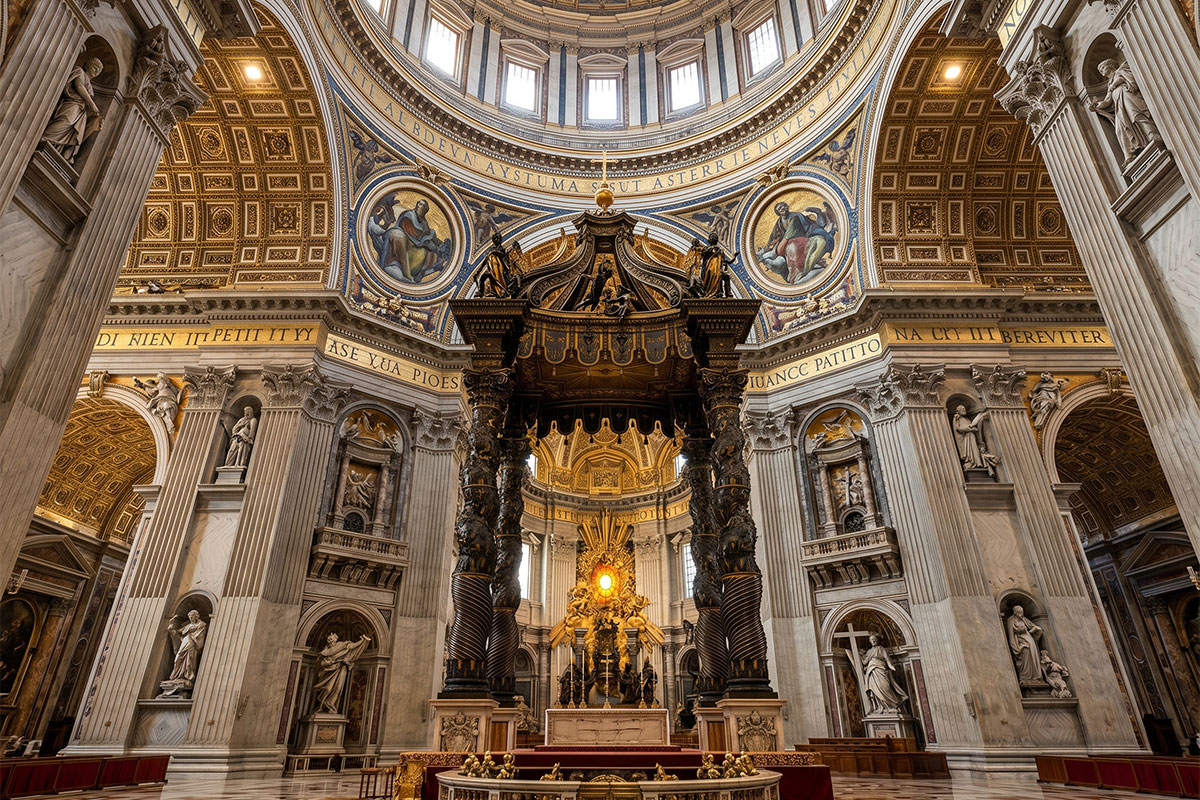
- The Single Light Source: Just as Caravaggio used a cellar light, the Basilica uses the lantern of The Dome to cast a divine glow onto the altar below.
- Frozen Action: Caravaggio captured the climax of a story (like Judith beheading Holofernes). Similarly, the statues in the Basilica often depict saints in moments of ecstasy or martyrdom, frozen in high drama.
- Emotional Realism: The faces of the statues in the Basilica are not blank; they twist with pain, joy, or awe, mirroring the psychological depth Caravaggio introduced.
Revolutionizing the Perception of Sacred Art
Before Caravaggio, sacred art was often distant and intellectual. After him, it became physical and emotional. This shift was crucial for the Catholic Church during the Counter-Reformation, as they sought to engage the hearts of the faithful. The art within St. Peter's Basilica was designed to overwhelm the senses and inspire awe, a tactic perfected by the Baroque masters who followed in Caravaggio's footsteps.
Even works that predate the full Baroque explosion, such as Michelangelo's Pietà, share a certain emotional gravity, but the Baroque era amplified this to a theatrical level. The intent was to make the viewer a participant in the miracle, not just an observer. This is evident when one stands before The Altar of the Confessio; the gold, the bronze, and the lamps create a scene of intense reverence that feels immediate and present.
Comparing Renaissance and Baroque Approaches
To better understand the shift in perception that occurred in the 17th century, it is helpful to compare the prevailing styles. The transition from the calm of the Renaissance to the storm of the Baroque is distinct.
| Feature | Renaissance Style | Caravaggesque Baroque |
| Lighting | Uniform, soft, and balanced illumination. | High contrast (Chiaroscuro), deep shadows, spotlight effect. |
| Composition | Symmetrical, stable, and triangular. | Asymmetrical, dynamic, and diagonal lines. |
| Emotion | Calm, restrained, and idealized. | Intense, raw, and psychologically complex. |
| Subject Matter | Divine perfection and beauty. | Realistic human struggle and gritty reality. |
Discovering the Legacy in the Shadows
To truly appreciate the depth of Baroque art, one must venture into the spaces that hold the history of the church. While the main basilica dazzles with gold and light, the areas beneath it offer a different perspective. The Vatican Grottoes contain the tombs of popes and kings, offering a solemn atmosphere that contrasts with the brightness above. For those interested in the ultimate journey into the past, The Necropolis takes you deep underground to the very roots of the Vatican, a journey from darkness into light that parallels the Baroque journey of the soul.
Additionally, The Treasury Museum houses liturgical objects and ornaments that display the intricate craftsmanship of the era. Here, you can see how the dramatic style influenced even the smallest religious artifacts, turning chalices and crucifixes into miniature works of dramatic art.
Practical Tips for the Art Lover
When visiting St. Peter's Basilica to seek out these artistic influences, timing is everything. The natural light changes throughout the day, altering how the sculptures and mosaics are perceived. Early morning often provides a softer, more ethereal light, while the afternoon sun can create sharp, dramatic shadows reminiscent of a Caravaggio painting. Utilizing the Audio Guide App is highly recommended, as it provides specific details about the artists and the history behind the masterpieces, ensuring you don't miss the subtle connections between the architecture and the art history of Rome.
For a seamless experience, especially during high season, it is wise to secure Tickets & Tours in advance. Guided tours can offer specific insights into the Baroque elements of the Basilica that the casual observer might miss. If you have specific concerns about accessibility or dress codes, the Frequently Asked Questions page is an excellent resource to consult before your arrival.
Caravaggio may have been a controversial figure in his time, but his vision of a world defined by the conflict between light and dark reshaped the Vatican's artistic landscape. By bringing the divine into the realm of the human, he paved the way for the breathtaking grandeur that defines St. Peter's Basilica today.
Caravaggio's Enduring Influence: A Modern Perspective
Caravaggio's impact extends far beyond the Baroque period. His dramatic use of light and shadow continues to inspire artists, filmmakers, and photographers today. The cinematic lighting techniques seen in film noir, horror, and even modern superhero movies owe a debt to Caravaggio's pioneering vision. His unflinching realism and focus on human emotion resonate with contemporary audiences seeking authenticity and depth. From the stark contrasts in fashion photography to the emotionally charged scenes in video games, Caravaggio's legacy lives on, demonstrating the timeless power of his artistic revolution.