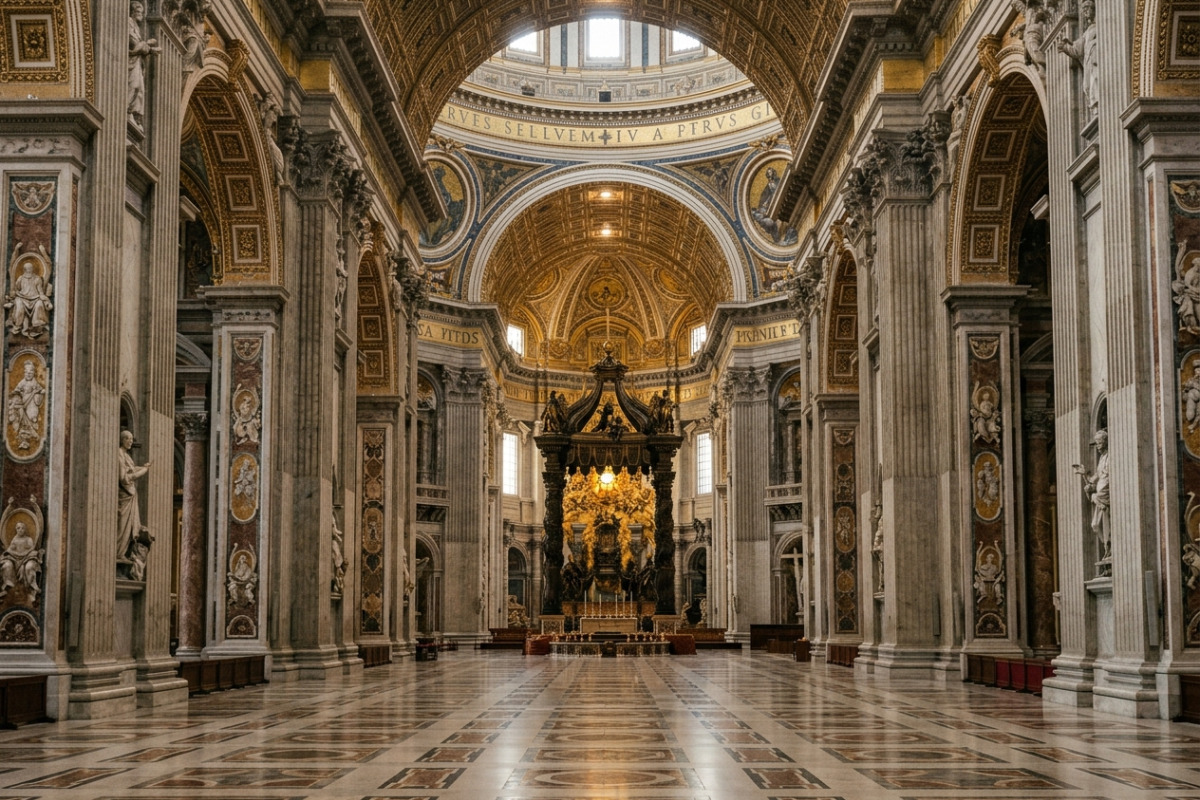
When you step through the massive bronze doors into the nave of St. Peter's Basilica, your eyes are immediately drawn upward to the golden light filtering through the windows and the vibrant colors adorning the walls. For many visitors, the immediate assumption is that they are surrounded by centuries-old frescoes and oil paintings, masterpieces of the Renaissance and Baroque eras. However, this is perhaps the greatest optical illusion in art history. Almost every colorful image you see on the walls, altars, and inside the dome is not a painting at all, but a meticulously crafted mosaic composed of millions of tiny pieces of glass and stone.
The sheer scale of this artistic endeavor is difficult to comprehend until you stand directly beneath these works. Covering over 10,000 square meters, the mosaics of St. Peter's represent one of the largest and most complex collections of mosaic art in the world. As we explore the basilica in 2026, the vibrancy of these colors remains as intense as the day they were set, a testament to the foresight of the architects who chose stone over paint to withstand the test of time and humidity.
The Great Illusion: Why Mosaics Instead of Paint?
The decision to decorate the interior of St. Peter's Basilica primarily with mosaics was not merely an aesthetic choice; it was a practical necessity driven by the environment. In the early years of the new basilica, officials noticed that the humidity inside the vast structure was causing oil paintings to deteriorate rapidly. The damp air, combined with the smoke from thousands of candles, threatened to destroy the masterpieces commissioned for the altars. To preserve the imagery for eternity, the Vatican made a strategic shift in the late 16th century to replace paintings with mosaics.
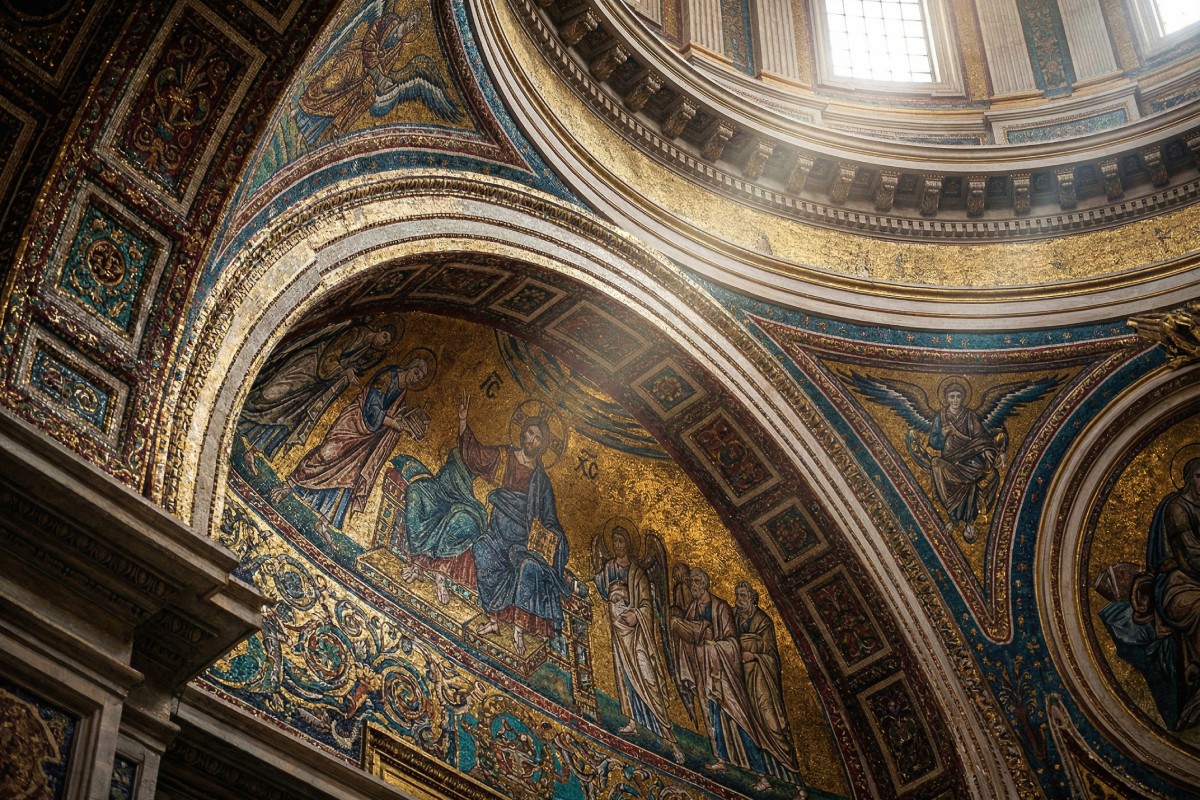
This transition required a new level of technical mastery. The goal was to replicate the fluidity, shading, and emotional depth of oil paintings using rigid pieces of tesserae. If you look closely at the altarpieces, or better yet, use the Audio Guide App to locate specific details, you will see that what looks like a brushstroke is actually a collection of uneven, non-reflective enamels known as smalti filati. These distinct tiles allowed artists to blend colors seamlessly, creating an image that, from a distance, is indistinguishable from a painting on canvas.
The creation of these mosaics was a painstaking process. First, artists would create detailed preparatory drawings, often full-scale cartoons, to guide the mosaicists. These cartoons were then transferred to the wall in sections. The mosaicists would then carefully select and arrange the tesserae, setting them into a bed of wet cement. The angle and placement of each tiny piece were crucial for capturing the light and creating the desired effect. This process could take months, even years, for a single mosaic.
The Crown Jewel: Mosaics of the Dome
While the altarpieces are impressive, the true zenith of mosaic art in the basilica is found in the soaring heights of Michelangelo's dome. As you gaze upward, you are looking at a representation of the celestial realm, designed to draw the viewer's spirit toward heaven. The iconography here is divided into concentric circles, featuring busts of popes, angels, cherubim, and Christ the Redeemer. To fully appreciate the scale of these figures, one must ascend to the cupola. Those who choose to visit The Dome can walk along the interior gallery, where the terrifyingly large size of the mosaic pieces becomes apparent.
From the basilica floor, the figures look life-sized, but up close, they are colossal. The pen in St. Luke's hand, for example, is over two meters long. The rough texture of the mosaics in the dome is intentional; the angled surfaces catch the light from the lantern and windows, making the gold background shimmer and dance. This interplay of light and stone creates a dynamic, living atmosphere that changes throughout the day as the sun moves across the Roman sky.
The Vatican Mosaic Studio
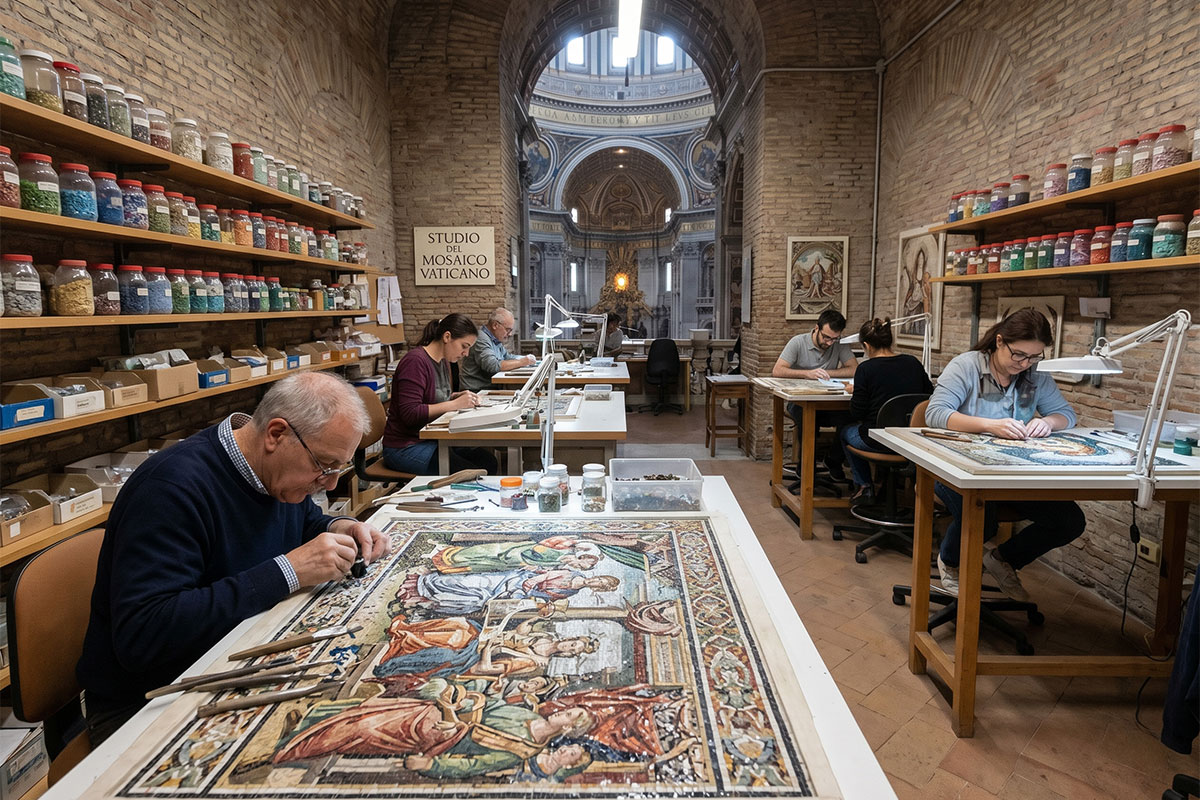
Such a massive undertaking required a dedicated workforce. In 1727, the Vatican established the Studio del Mosaico, a workshop that still exists today. The artisans here, often working for the Reverenda Fabbrica di San Pietro, developed thousands of distinct color shades to match the palettes of great painters like Raphael and Guido Reni. Today, you can learn more about this enduring tradition by visiting The Mosaic Studio, where master craftsmen continue to restore old works and create new ones for popes to gift to foreign dignitaries.
The Studio del Mosaico not only creates new mosaics but also plays a vital role in preserving the existing ones. The restoration process is incredibly delicate, requiring specialized tools and techniques to clean, repair, and replace damaged tesserae. The studio's archives contain a vast collection of historical documents, drawings, and samples of tesserae, providing invaluable resources for their work.
Notable Masterpieces to Locate
With so much art surrounding you, it can be overwhelming to know where to focus your attention. While you should take time to explore the Basilica at your own pace, there are specific mosaic altarpieces that represent the pinnacle of this art form. These works are copies of famous paintings, translated into stone with such precision that they often surpass the originals in durability and vibrancy.
| Mosaic Title | Location | Original Painter | Significance |
| The Transfiguration | Left Aisle | Raphael | Considered the most beautiful mosaic in the basilica, it took nine years to complete and replicates Raphael's final masterpiece. |
| The Baptism of Jesus | First Chapel, Left | Carlo Maratta | A stunning example of water depiction in mosaic, showing the baptism in the River Jordan. |
| The Archangel Michael | Right Aisle | Guido Reni | Depicts the Archangel subduing Satan; notable for the vibrant blues and the dynamic movement of the silk robes. |
| The Navicella | Atrium (Entrance) | Giotto | While heavily restored, this ancient mosaic depicts the ship of the Church during a storm, linking the old basilica to the new. |
The Altar of the Confessio and Bernini's Influence
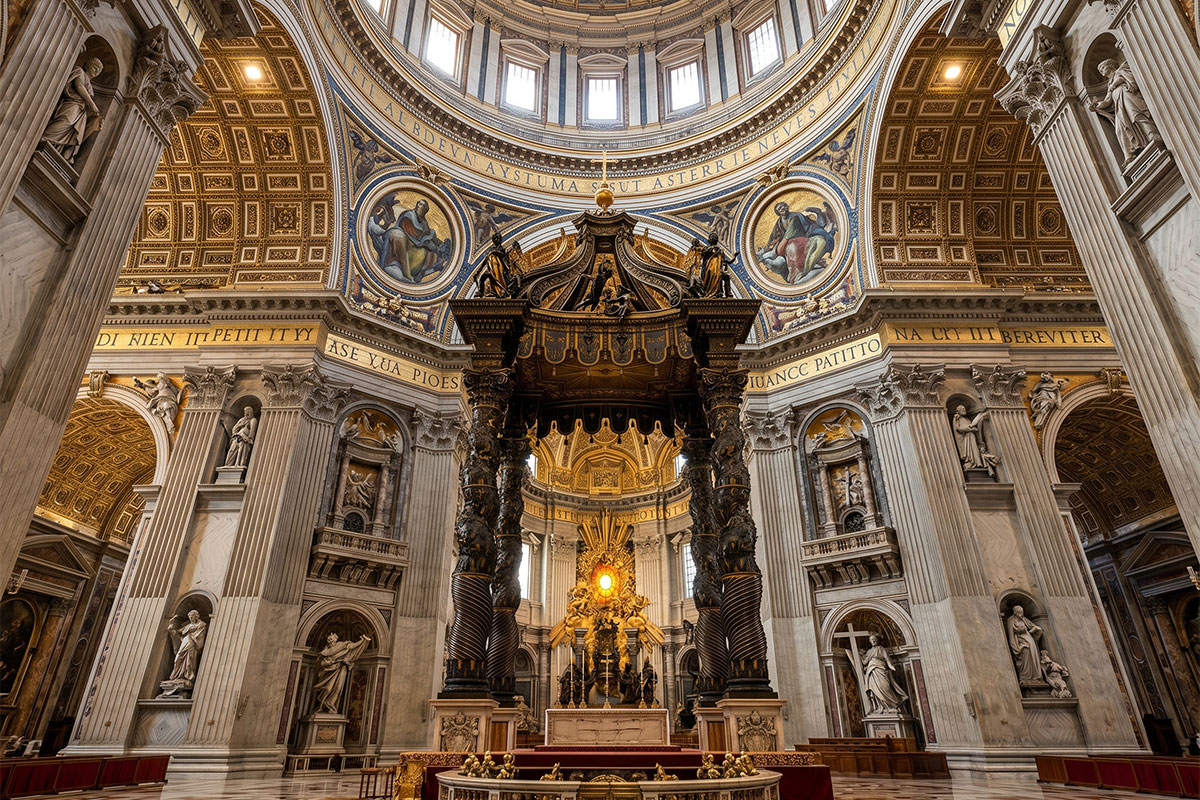
The mosaics are not limited to the walls; they also define the sacred spaces near the high altar. Above The Altar of the Confessio, the interior of the dome opens up, but the spandrels (the triangular spaces between the arches) feature colossal mosaic medallions of the four Evangelists. These are crucial for understanding the theological message of the building: the Word of God spreading to the four corners of the earth.
It is worth noting the contrast between the mosaics and the sculptural elements. Just steps away from the vibrant mosaic of the Gregorian Chapel, you find the somber, white marble of Michelangelo's Pietà. The interplay between the cold, pure marble and the warm, glittering gold of the mosaics creates a visual balance that defines the basilica's interior atmosphere. This harmony is part of what makes the space feel so transcendent.
Practical Tips for Viewing the Mosaics
To get the most out of your viewing experience, preparation is key. The details in the mosaics, especially those high up in the dome or the ceiling of the aisles, can be difficult to see with the naked eye. Here are a few tips for art lovers:
- Bring Binoculars: This is the best insider tip. A small pair of binoculars will reveal the individual tiles (tesserae) and the gaps between them, breaking the illusion of the "painting" and revealing the craftsmanship.
- Time Your Visit: The natural light is best in the late morning. As beams of sunlight cut through the nave, they illuminate the gold leaf in the mosaics, making them glow. Check Plan Your Visit for current opening hours.
- Take a Guided Tour: The history of the transition from fresco to mosaic is complex. Booking through Tickets & Tours ensures you have a guide who can point out the subtle differences and the history behind the Studio del Mosaico.
- Look for Texture: Unlike the smooth marble floors, the wall mosaics are slightly uneven. If you are close enough (without touching), try to observe how the light reflects off the surface at different angles.
Beyond the Main Floor
The artistic journey doesn't end in the main nave. For those interested in the origins of the basilica and earlier artistic styles, a visit to The Vatican Grottoes offers a look at fragments of mosaics from the original 4th-century basilica. Furthermore, The Treasury Museum houses smaller, incredibly intricate micro-mosaics that demonstrate the versatility of this medium on a miniature scale.
Even The Necropolis, located deep beneath the basilica, contains early Christian artistic expressions, providing a historical baseline for the grandeur you see above. The evolution from simple floor patterns in ancient Rome to the golden glories of the Renaissance dome is a timeline written in stone and glass.
St. Peter's Basilica is more than just a church; it is a gallery of eternal art. The mosaics serve as a bridge between the human and the divine, created by artisans who knew they were building something that would outlast them by centuries. As you walk through these hallowed halls, remember that you are witnessing a "painting" that will never fade, a testament to human devotion and ingenuity.