When we think of the Vatican, images of incense, ancient rituals, and spiritual devotion often come to mind first. However, beyond the spiritual veil lies one of the world's oldest and most influential political entities. The Papacy is not merely a religious institution; it is a unique player in the arena of global politics, wielding a distinct form of power that transcends borders, armies, and economic markets. For centuries, the Pope has acted as a mediator, a moral compass, and occasionally a kingmaker, shaping the course of history from the heart of Rome.
Understanding this intersection of religion and politics requires looking at the Holy See not just as the headquarters of the Catholic Church, but as a sovereign subject of international law. This dual nature allows the Papacy to engage in diplomatic relations with nations regardless of their religious makeup. As we navigate the complex geopolitical landscape of 2026, the voice of the Vatican remains a potent force, advocating for peace, human rights, and environmental stewardship in ways that secular governments often cannot. For example, Pope Francis's consistent calls for a ceasefire in the ongoing conflicts and his advocacy for equitable vaccine distribution during the COVID-19 pandemic demonstrate the Papacy's continued relevance on the world stage.
The Dual Sovereignty: Spiritual Leader and Head of State
To comprehend the Pope's political reach, one must distinguish between two entities that are often confused: Vatican City and the Holy See. Vatican City is the physical territory—the smallest state in the world—while the Holy See is the juridical personification of the Papacy, dating back to early Christianity. It is the Holy See that maintains diplomatic relations with over 180 countries, holds a permanent observer status at the United Nations, and signs treaties known as concordats.
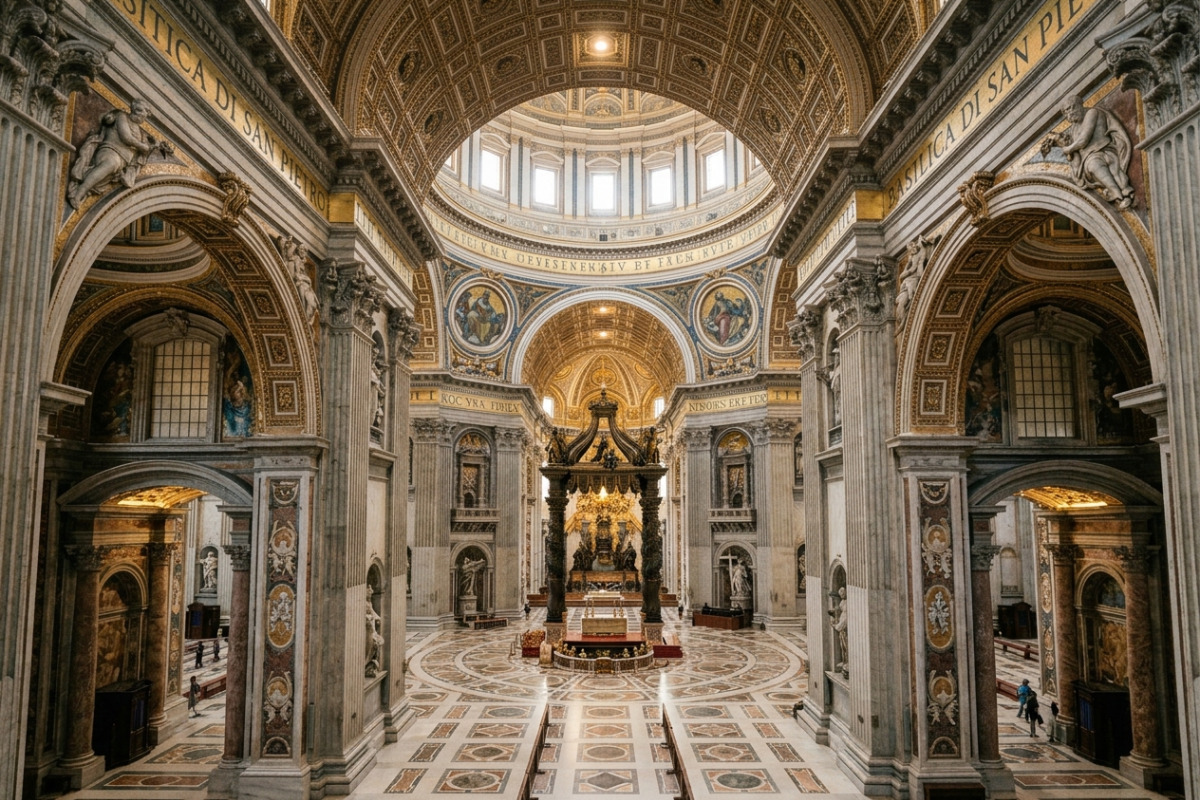
This structure grants the Pope a unique platform. He is a head of state, yet his "constituency" is over a billion Catholics scattered across the globe. This global reach provides an unmatched intelligence network and a soft power capability that rivals superpowers. When you Explore the Basilica and its surroundings, you are walking through the physical manifestation of this sovereignty, where art and architecture have long been used to project both divine and temporal authority.
Historical Power Dynamics: The Evolution of Influence
The political role of the Papacy has undergone a dramatic transformation over the millennia. In the medieval era, Popes were temporal monarchs who commanded armies, crowned emperors, and held vast territories known as the Papal States. They were the ultimate arbiters of European politics.
- The Medieval Arbiter: Popes could excommunicate kings, effectively delegitimizing their rule and freeing subjects from their oaths of loyalty.
- The Renaissance Prince: During this period, the Papacy was deeply involved in Italian power struggles. Art was a major tool of political messaging. The construction of St. Peter's was a statement of unshakeable power. Masterpieces like Michelangelo's Pietà were commissioned not just for devotion, but to cement Rome's status as the cultural and political capital of the world.
- The Loss of Temporal Power: The unification of Italy in the 19th century stripped the Pope of his territories, leading to the "Roman Question," which was finally resolved with the Lateran Treaty of 1929, creating the modern Vatican City State.
Today, visitors can witness the legacy of these eras. The grandeur of The Dome, designed by Michelangelo, still dominates the Roman skyline, symbolizing a power that has outlasted nearly every empire in history.
Modern Diplomacy and Soft Power
In the modern era, lacking military might, the Papacy relies on "soft power"—the ability to attract and co-opt rather than coerce. This influence is exerted through moral persuasion and diplomatic neutrality. Because the Vatican has no territorial ambitions or commercial interests to protect, it is often viewed as an honest broker in international disputes.
Key Areas of Diplomatic Intervention
| Area of Influence | Description | Historical Context |
| Conflict Resolution | Mediating between hostile nations to prevent war. | Pope John Paul II's pivotal role in the fall of Communism in Eastern Europe; Pope Francis's mediation between the US and Cuba. |
| Human Rights | Advocating for religious freedom and the dignity of the person. | The Vatican's consistent stance against capital punishment and human trafficking. |
| Environmental Advocacy | Framing climate change as a moral crisis. | The encyclical Laudato Si', which influenced the Paris Agreement. |
This diplomatic work is often conducted quietly. Nuncios (Papal ambassadors) work behind the scenes in capitals around the world. For those interested in the deep history of the popes who steered these diplomatic ships, a visit to The Vatican Grottoes offers a somber reflection on the continuity of this leadership.
Addressing Global Social Issues
In recent decades, the Papacy has increasingly focused on social justice, effectively becoming a "global conscience." The Pope addresses issues that transcend borders, such as migration, poverty, and climate change. By framing these not as political policy debates but as moral imperatives, the Papacy forces secular leaders to engage with these topics on an ethical level.
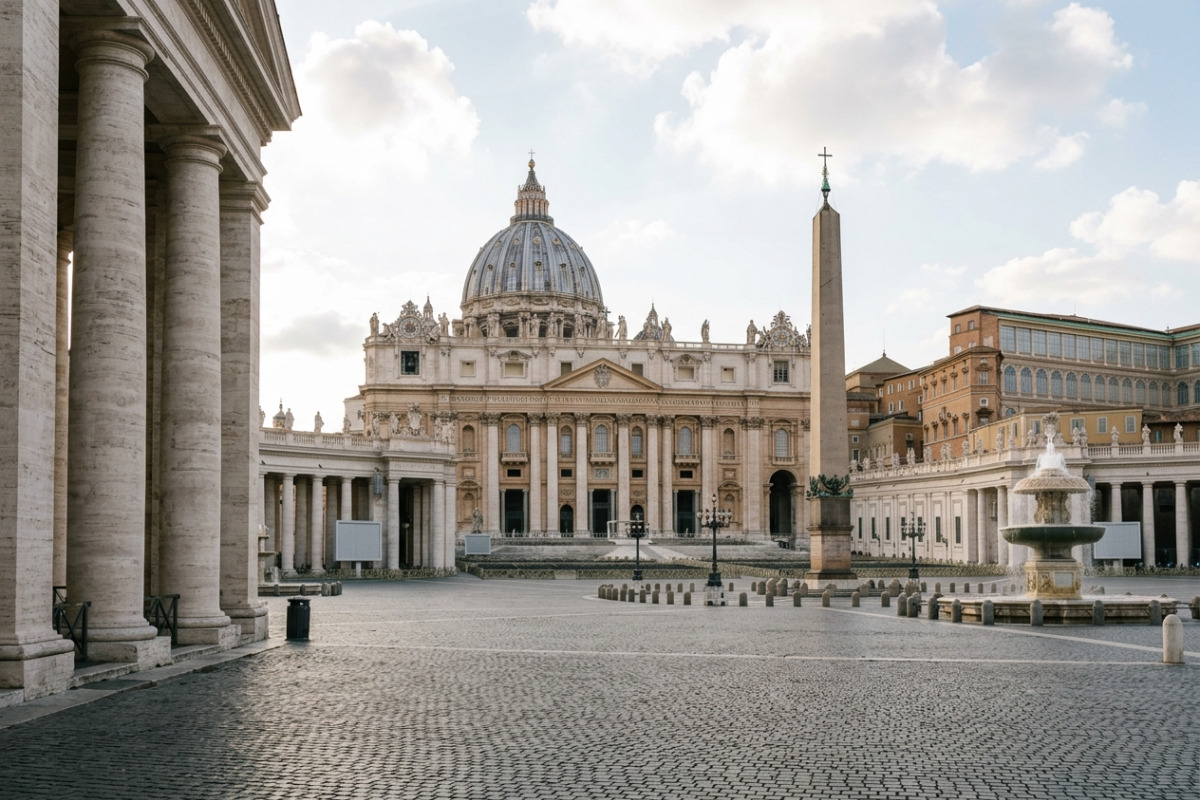
For instance, the Vatican's emphasis on the plight of refugees challenges nationalistic policies in Europe and the Americas. This advocacy is rooted in the theological concept of universal brotherhood, symbolically represented by the architecture of St. Peter's Square, where the colonnades reach out like open arms to embrace the world. To fully appreciate the scale of this symbolism, we recommend using the Audio Guide App during your visit, which explains the architectural intent behind Bernini's design. Consider the visual impact of the square during major papal addresses, often broadcast globally, reinforcing the message of unity and compassion.
The Basilica as a Stage for Global Politics
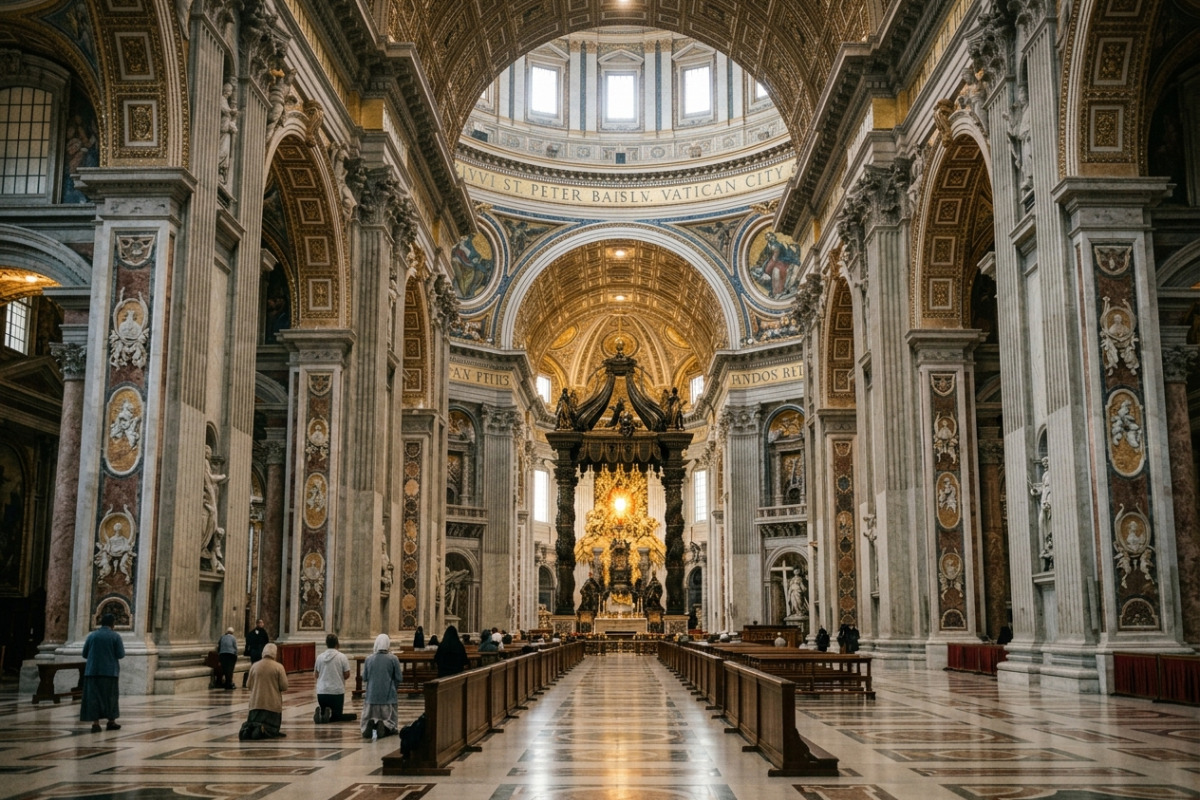
St. Peter's Basilica is not just a church; it is the stage upon which the Papacy performs its global role. Major announcements, canonizations, and diplomatic receptions happen here. The visual impact of these events is calculated. When world leaders visit the Pope, they are brought through halls filled with centuries of art and history, designed to humble and impress.
Even the hidden corners of the Vatican tell a political story. The Treasury Museum contains gifts from kings and queens, tangible evidence of centuries of diplomatic alliances. Meanwhile, The Necropolis beneath the Basilica grounds the institution in the apostolic tradition of St. Peter, validating the Pope's claim to spiritual primacy which underpins his political influence.
The Role of Art in Diplomacy
The Vatican has long understood the power of beauty. The Mosaic Studio continues to produce works that are often given as diplomatic gifts to heads of state. These aren't just souvenirs; they are symbols of Roman craftsmanship and the enduring nature of the Church. Similarly, the spiritual gravity of The Altar of the Confessio reminds visitors of the martyrdom and sacrifice that form the foundation of the institution.
Conclusion: An Enduring Relevance
The role of the Papacy in global politics is a testament to the endurance of soft power in a hard power world. While the Pope commands no battalions, his words can move markets, shift public opinion, and bring adversaries to the negotiating table. As the world faces complex challenges in 2026 and beyond, the view from the Vatican remains a crucial perspective in the tapestry of international relations.
For those wishing to witness the heart of this unique global power, seeing it in person is essential. You can Tickets & Tours to ensure you have access to the most significant areas. Before you go, be sure to Plan Your Visit carefully to navigate the crowds and dress codes. If you have specific questions about logistics, the Frequently Asked Questions page is an excellent resource.