When you step into the Vatican Museums, the anticipation builds with every corridor you traverse, leading to one of the most significant artistic achievements in human history. Standing beneath the vaulted ceiling of the Sistine Chapel is an experience that transcends mere sightseeing; it is a direct encounter with the divine through the medium of paint and plaster. While millions of visitors flock here every year, few truly grasp the immense physical struggle and the hidden narratives woven into these frescoes. As we navigate through January 2026, the allure of Michelangelo’s work remains as potent as ever, continuing to whisper secrets of the Renaissance to those willing to listen closely.
To fully appreciate the Sistine Chapel, one must look beyond the colors and see the man behind the brush. Michelangelo Buonarroti did not consider himself a painter; he was a sculptor, a man of marble and stone. The story of how he created this masterpiece is not just one of artistic inspiration, but of political maneuvering, intense rivalry, and sheer physical endurance. His work here is inextricably linked to the architectural grandeur of the neighboring basilica, creating a dual legacy that defines the Vatican City today. Before you secure your tickets for this journey, let us peel back the layers of history to reveal the secrets hidden in the plaster.
The Reluctant Painter: A Sculptor on Scaffolding
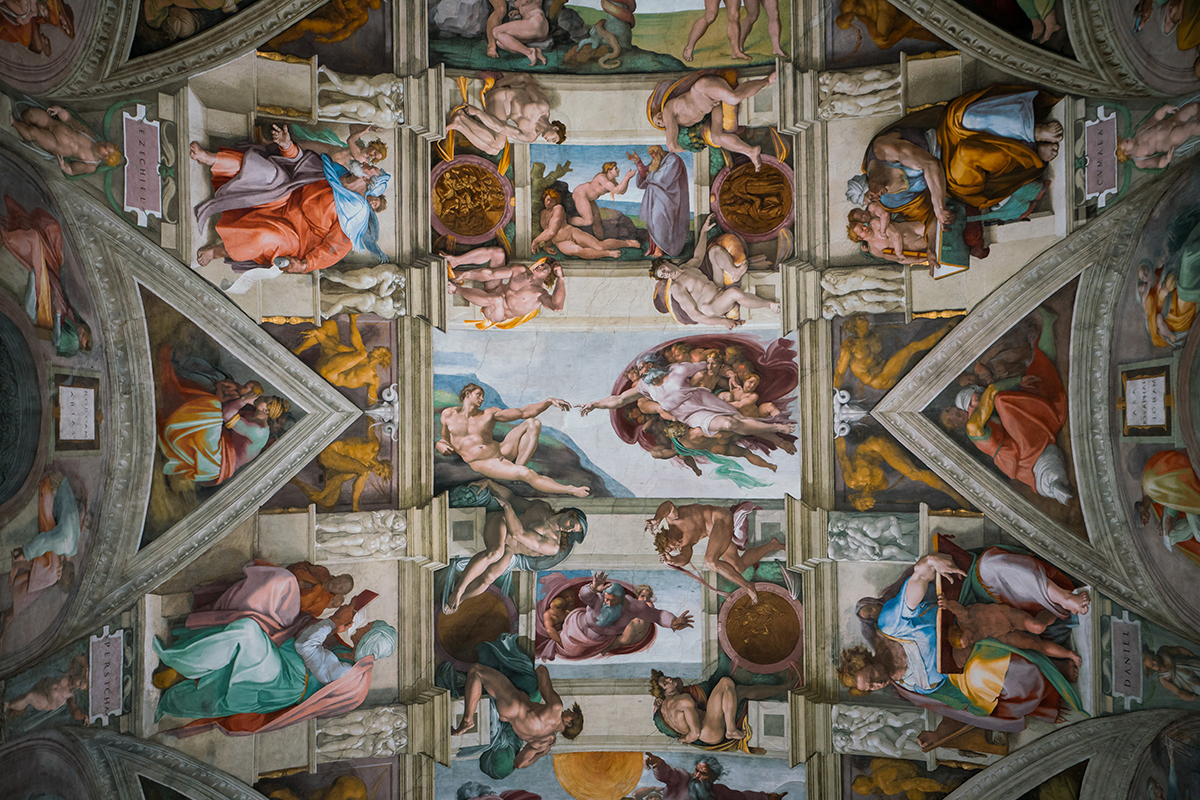
It is one of history's great ironies that the world's most famous painting was created by a man who protested that he was not a painter. In 1508, Pope Julius II commissioned Michelangelo to paint the chapel's ceiling. Michelangelo suspected a plot by his rivals—including the architect Bramante and the young painter Raphael—to set him up for failure. He believed they wanted to distract him from his true passion: sculpting the Pope's monumental tomb. Despite his initial refusal and complaints that "painting is not my art," the Pope insisted, and Michelangelo was forced to ascend the scaffolding.
Contrary to the popular myth that he painted lying on his back, Michelangelo actually painted standing up, with his head tilted back at an uncomfortable angle for hours on end. This grueling posture caused him severe physical distress, leading to back spasms, neck pain, and vision problems from paint dripping into his eyes. He even wrote a poem about his misery, describing his "beard turned up to heaven" and his "breast like a harpy's." Yet, this physical suffering translated into an artistic intensity that is palpable in every figure on the ceiling. The tension in the muscles of the painted figures mirrors the tension in the artist's own body as he worked.
Mastering the Technique of Buon Fresco
The technique used in the Sistine Chapel is known as buon fresco, a method that requires speed, precision, and an understanding of chemistry. Michelangelo had to apply water-based pigments directly onto wet lime plaster. As the plaster dried, a chemical reaction occurred, fusing the pigment with the wall surface, making the painting an integral part of the structure. This meant he had to work in small sections called giornata (a day's work), and mistakes could not be simply painted over; the entire section of plaster had to be chipped away and restarted.
The pigments themselves were a story of artistry and resourcefulness. Sourcing the right colors was crucial, with ultramarine blue, derived from the semi-precious stone lapis lazuli, being one of the most expensive and prized. The vibrant reds, yellows, and greens were obtained from various minerals and organic sources, each requiring careful preparation and application. The luminosity we see today is a testament to Michelangelo's understanding of how these pigments would interact with the lime plaster over time. [Buraya Buon Fresco tekniğini gösteren bir görsel eklenebilir.]
The challenges were not just artistic but environmental. Early in the project, the ceiling began to grow mold because the lime was too wet. Michelangelo tried to quit again, telling the Pope, "I told you I was not a painter." The Pope sent architects to fix the ventilation, and Michelangelo continued. This mastery of fresco is what allows us to see the vibrant colors today, centuries later. For those wishing to understand the intricate details of these techniques while viewing them, using the official Audio Guide App provides an immersive commentary that highlights these technical nuances.
A Tale of Two Masterpieces: The Ceiling and The Last Judgment
The Sistine Chapel contains two distinct phases of Michelangelo's life, separated by over two decades. The ceiling (1508–1512) represents the High Renaissance's optimism and the glory of Creation. In contrast, The Last Judgment (1536–1541) on the altar wall reflects a more turbulent era marked by the Reformation and the Sack of Rome. The difference in style and mood is striking when observed side-by-side.
| Feature | The Ceiling Frescoes | The Last Judgment |
| Time Period | 1508 – 1512 | 1536 – 1541 |
| Artist's Age | 33 – 37 years old | 61 – 66 years old |
| Primary Theme | Genesis, Creation, and Prophecy | Judgment, Salvation, and Damnation |
| Artistic Style | Idealized beauty, classical proportions | Muscular exaggeration, chaotic motion |
| Background | Architectural framework (painted) | Sky blue (Lapis Lazuli), no borders |
Hidden Symbols and Personal Revenge
Michelangelo was known for his sharp wit and temper, and he left permanent reminders of both in The Last Judgment. When the Papal Master of Ceremonies, Biagio da Cesena, criticized the nudity in the fresco as suitable for a tavern rather than a chapel, Michelangelo exacted a painter's revenge. He depicted Cesena in Hell as Minos, judge of the underworld, with donkey ears (symbolizing foolishness) and a snake biting his genitals. When Cesena complained to the Pope, the Pontiff reportedly joked that his jurisdiction did not extend to Hell, so the portrait had to stay.
Perhaps the most poignant secret is Michelangelo's self-portrait. In the scene where St. Bartholomew holds his own flayed skin (a symbol of his martyrdom), the face on the sagging skin is not the saint's, but Michelangelo's own. It is a grotesque, melancholy depiction of an artist who felt flayed by life's demands and his own spiritual anxieties. This level of personal expression was revolutionary for its time and adds a layer of psychological depth to the religious narrative. [Buraya St. Bartholomew'un flayed derisini tuttuğu sahnenin bir görseli eklenebilir.]
The Connection to St. Peter's Basilica
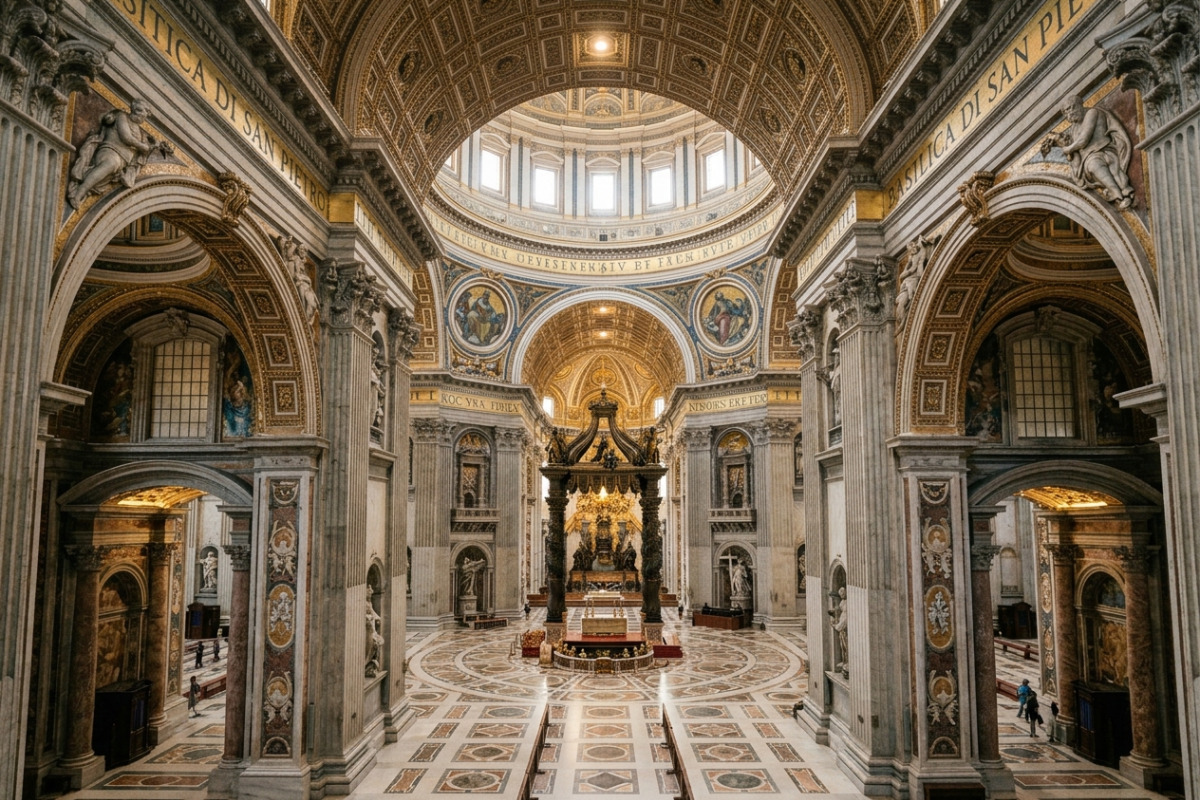
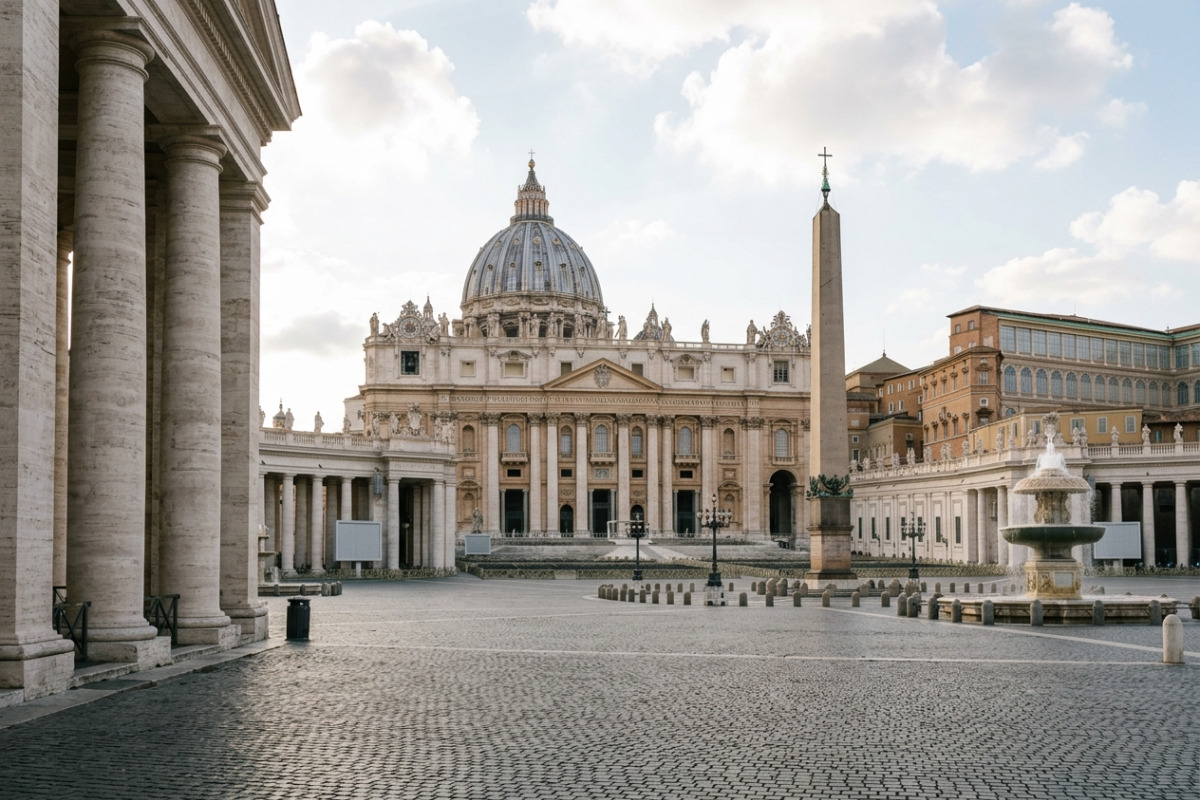
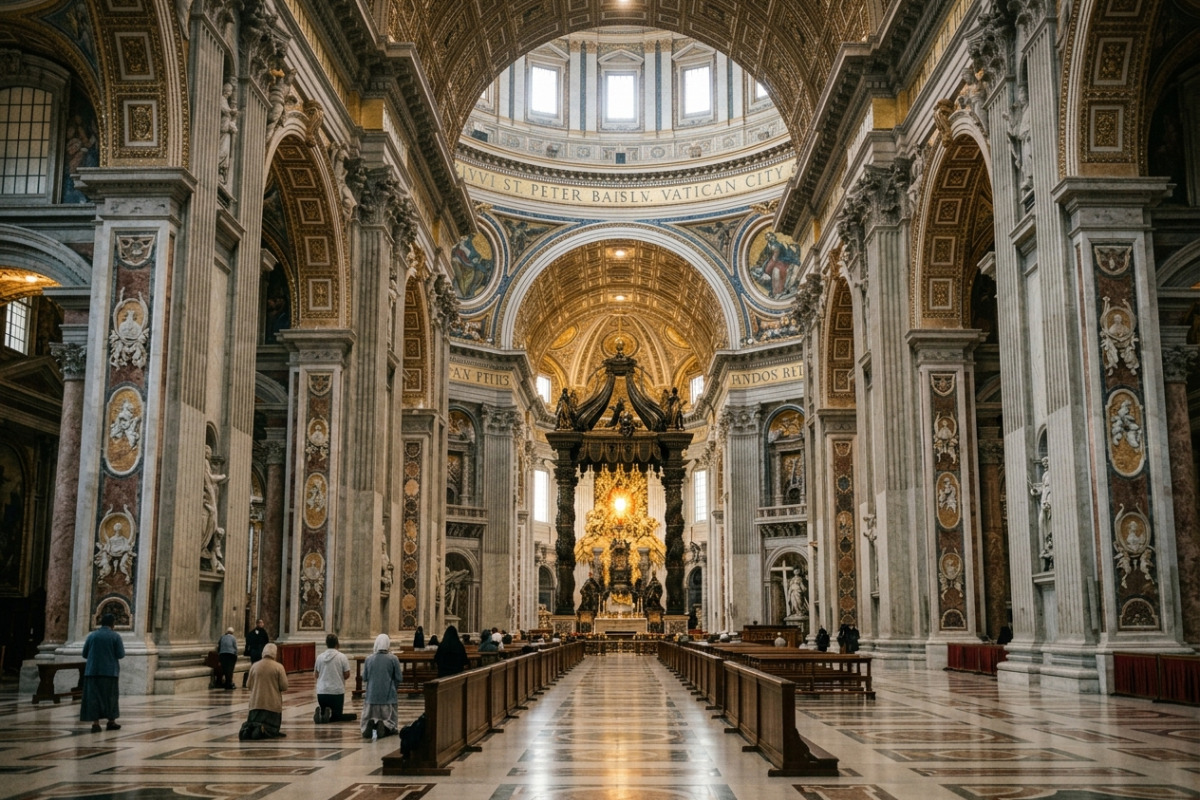
While the Sistine Chapel showcases Michelangelo the painter, a short walk away lies the testament to his genius as an architect and sculptor. To truly understand his impact on the Vatican, one must explore the Basilica of St. Peter. In his later years, Michelangelo was appointed the chief architect of the new basilica. He designed the massive dome that defines the Roman skyline today, a feat of engineering that rivals the artistic triumph of the Chapel ceiling. For a breathtaking perspective, visitors can climb to The Dome and see the structural brilliance up close.
Inside the Basilica, immediately to the right of the entrance, stands another of his masterpieces: Michelangelo's Pietà. Sculpted when he was only 24 years old, it is the only work he ever signed. The delicate marble folds of Mary's robes and the serene expression on her face offer a stark contrast to the muscular power of the Sistine figures. Seeing the Pietà and the Sistine Chapel on the same trip provides a complete picture of an artist who could manipulate both stone and color to evoke deep emotional responses. [Buraya Pieta heykelinin bir görseli eklenebilir.]
Beyond the Pietà, consider Michelangelo's other architectural contributions to St. Peter's. He simplified Bramante's original complex plan, focusing on a more centralized design and reinforcing the structure to support the massive dome. His vision was to create a space that drew the eye upwards, towards the heavens, reflecting the spiritual aspirations of the Church. While he didn't live to see its completion, his designs were largely followed, leaving an indelible mark on the Basilica's character.
Beneath the Surface: The Vatican's Deeper History
The artistic journey does not end with what is visible at eye level. The grandeur of the frescoes and the Basilica rests upon layers of history that go deep underground. Beneath the artistic triumphs of the Renaissance lies the Necropolis, an ancient city of the dead where St. Peter himself is believed to be buried. This connection between the art above and the sacred history below is palpable, especially near The Altar of the Confessio, which marks the heart of the sanctuary.
For those interested in the lineage of the papacy that commissioned these works, a visit to The Vatican Grottoes is essential. Here, amidst the tombs of popes and royals, one gets a sense of the continuity of history that allowed artists like Michelangelo to thrive. The wealth that funded these masterpieces is further showcased in The Treasury Museum, containing liturgical ornaments and statues that complement the visual feast of the Chapel.
Planning Your Visit to the Masterpiece
Visiting the Sistine Chapel and St. Peter's Basilica requires some strategy to avoid the crowds and fully absorb the experience. Since the Chapel is part of the Vatican Museums, it is the finale of a long route through corridors filled with other treasures. It is highly recommended to plan your visit well in advance. Early morning or late afternoon slots often provide a slightly quieter atmosphere, allowing for the contemplation these works deserve.
Remember that the Sistine Chapel is a sacred place; silence is enforced, and photography is strictly prohibited. This rule, while frustrating to some, actually enhances the experience. Without the distraction of screens, you are forced to look up with your own eyes, just as Michelangelo looked up to paint it. Whether you are admiring the intricate tile work of The Mosaic Studio or standing beneath the Creation of Adam, you are walking through the physical manifestation of a genius that changed the world forever.