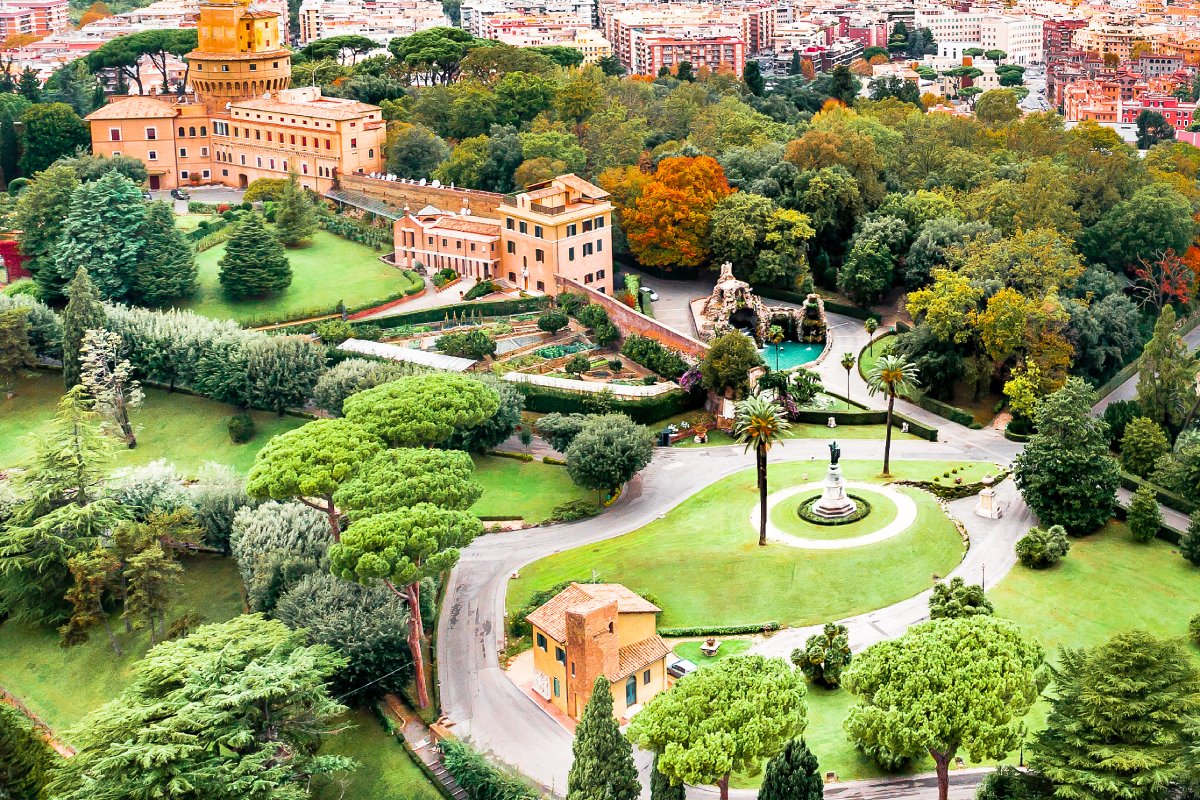
When you step into the Vatican City, the overwhelming grandeur of St. Peter's Square and the bustle of pilgrims often take center stage. However, hidden behind the high walls lies a verdant secret that occupies nearly half of the entire city-state: the Vatican Gardens. Far removed from the crowds queuing for the museums, this exclusive enclave offers a profound silence and a sensory experience that contrasts sharply with the stone and marble of the Basilica. It is here, among centuries-old trees and manicured lawns, that Popes have sought solace and meditation for generations.
Visiting these gardens is not merely a walk through a park; it is a journey through history, art, and spirituality. As you plan your Roman holiday, understanding the significance of this green heart is essential. While many travelers focus immediately on securing their Tickets & Tours for the main attractions, reserving time for the gardens reveals a more intimate side of the Vatican, one where nature and faith intertwine seamlessly.
A Journey Through Time: The History of the Green Oasis
The origins of the Vatican Gardens date back to medieval times, specifically to 1279, when Pope Nicholas III moved his residence back to the Vatican from the Lateran Palace. He enclosed this area with walls to create an orchard, a lawn, and a garden. What began as a practical space for growing medicinal plants and vegetables for the Papal household slowly transformed into a place of leisure and artistic expression.
During the Renaissance, the landscape underwent a dramatic evolution. Bramante, the celebrated architect, designed the Belvedere Courtyard, connecting the Vatican Palace with the Villa Belvedere. Over the centuries, successive Popes added their own touches, commissioning fountains, statues, and exotic flora. Today, as you walk the paths, you are treading on layers of history that have been carefully preserved. It is a living museum that complements the treasures found in The Treasury Museum, offering a biological counterpoint to the gold and silver artifacts stored indoors.
Design and Landscape: A Symphony of Styles
The Vatican Gardens are unique because they do not adhere to a single landscape philosophy. Instead, they are a harmonious blend of three distinct gardening styles, representing different eras and aesthetic values.
- Italian Gardens: Characterized by formal geometry, low hedges, and Renaissance order. This style reflects the idea of humanity imposing order on nature, creating a structured and symmetrical beauty.
- French Gardens: Inspired by the baroque grandeur of Versailles, these areas feature classic statues, water games, and vibrant floral arabesques that dazzle the eye.
- English Gardens: Introduced later, these sections mimic a more natural, untamed landscape with winding paths, artificial ruins, and dense groves of trees, encouraging wandering and discovery. These gardens, often the most surprising to visitors, offer a romantic and picturesque escape. Think hidden grottoes, meandering streams, and carefully placed follies that evoke a sense of history and mystery. The English Gardens provide a deliberate contrast to the formality of the Italian and French styles, inviting contemplation and a more intimate connection with nature.
Scattered throughout these diverse landscapes are architectural marvels and artistic features. You will encounter the spectacular Eagle Fountain and the Fountain of the Galleon. From various vantage points, the towering profile of The Dome of St. Peter’s Basilica rises above the treetops, offering a breathtaking perspective that few visitors get to see—Michelangelo’s masterpiece framed by swaying stone pines and cypresses.
A Spiritual Sanctuary for the Papacy
Beyond their botanical beauty, the gardens hold immense spiritual significance. For centuries, this has been the private retreat of the Pontiffs—a place to pray, walk, and reflect away from the burdens of their office. The presence of Marian shrines throughout the grounds turns a simple stroll into a pilgrimage.
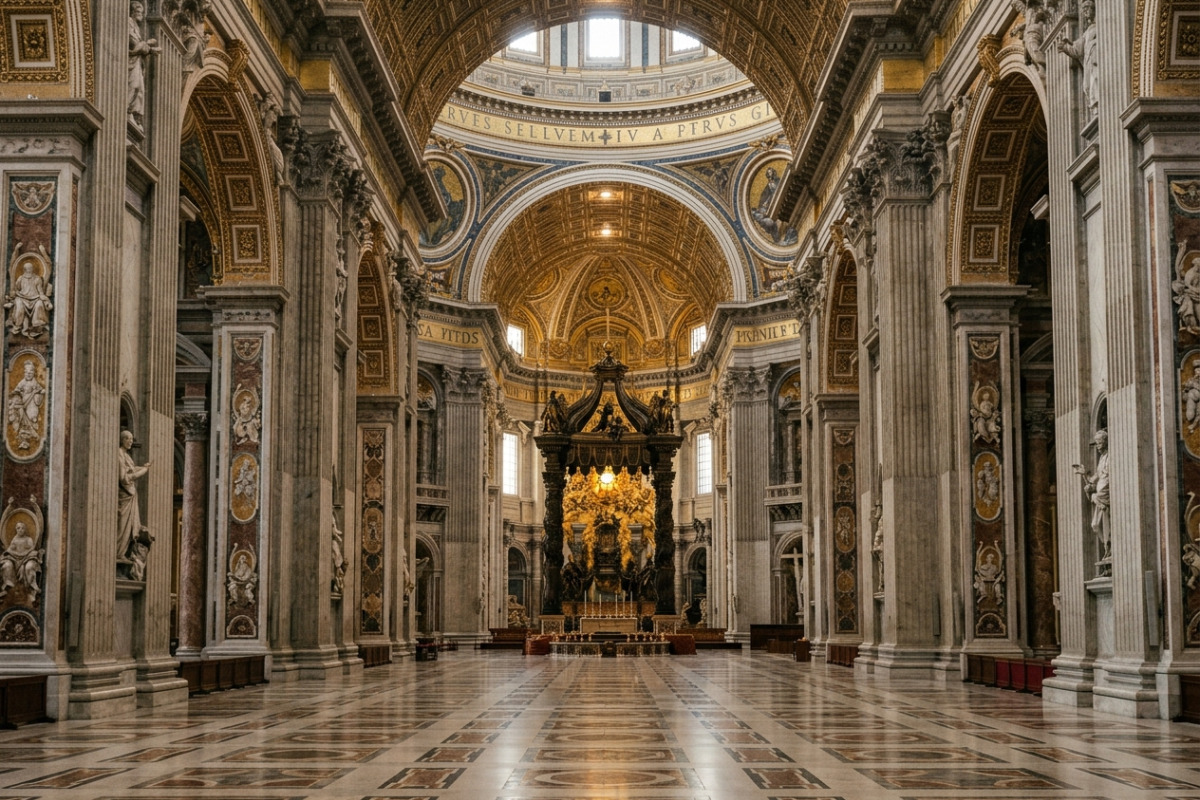
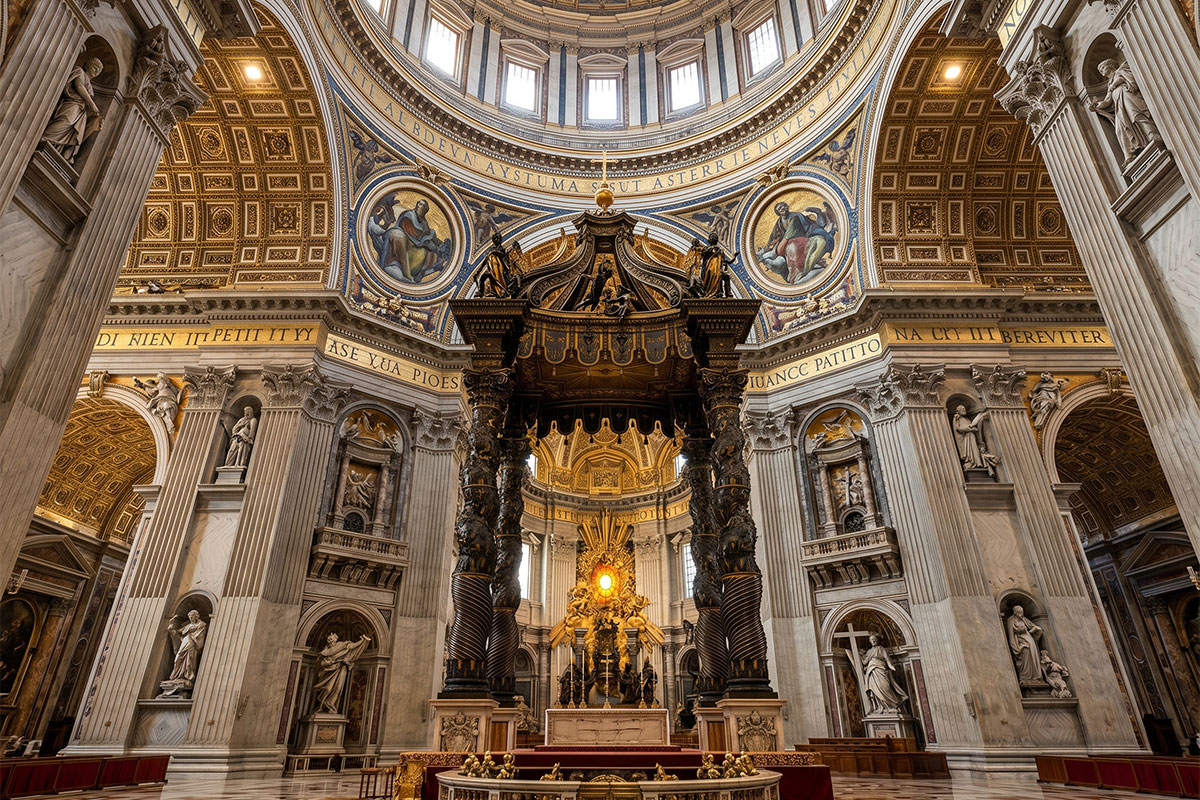
One of the most touching areas is the replica of the Grotto of Lourdes. Built in the early 20th century, it allows the Pope and visitors to pray to Our Lady of Lourdes within the Vatican walls. The sense of peace here is palpable. It offers a different kind of spiritual depth compared to the solemn atmosphere of The Necropolis or the reverence found at The Altar of the Confessio inside the Basilica. While the interiors of the church proclaim the glory of God through gold and marble, the gardens whisper it through the rustling of leaves and the song of birds.
Notable Landmarks Within the Gardens
| Landmark | Description | Significance |
| Governor's Palace | A majestic building housing the administrative offices of the Vatican City State. | The seat of the temporal government of the Vatican. |
| Vatican Radio | The transmission center established by Guglielmo Marconi. | Connects the Holy See with the world via broadcasts. |
| St. John's Tower | A restored medieval tower on the ancient Leonine Wall. | Often used to house distinguished guests of the Pope. |
| The Heliport | A modern addition tucked away in the greenery. | Used by the Pope for short pastoral trips. |
Practical Tips for Your Visit
Unlike St. Peter's Square, the Vatican Gardens are not open for free public wandering. Access is strictly regulated to preserve the tranquility and the ecosystem. To explore this area, you must book a guided tour. These tours are highly sought after, so it is advisable to Plan Your Visit well in advance. Tours are available in several formats: bus tours offer a comprehensive overview, while walking tours allow for a more intimate experience. Consider booking a combined tour that includes access to both the Vatican Museums and the Gardens for a full day of exploration. Booking well in advance, particularly during peak season (spring and fall), is crucial, as tours often sell out weeks or even months ahead of time. You can book directly through the Vatican Museums website or through authorized tour operators.
When preparing for your visit, remember that the dress code applies here just as it does in the Basilica. Shoulders and knees must be covered. It is also worth noting that a visit to the gardens is often combined with museum access. To fully appreciate the context of what you are seeing—both outside and inside the Basilica—downloading the Audio Guide App is a brilliant idea. It provides rich storytelling that enhances the visual experience.
Completing the Experience
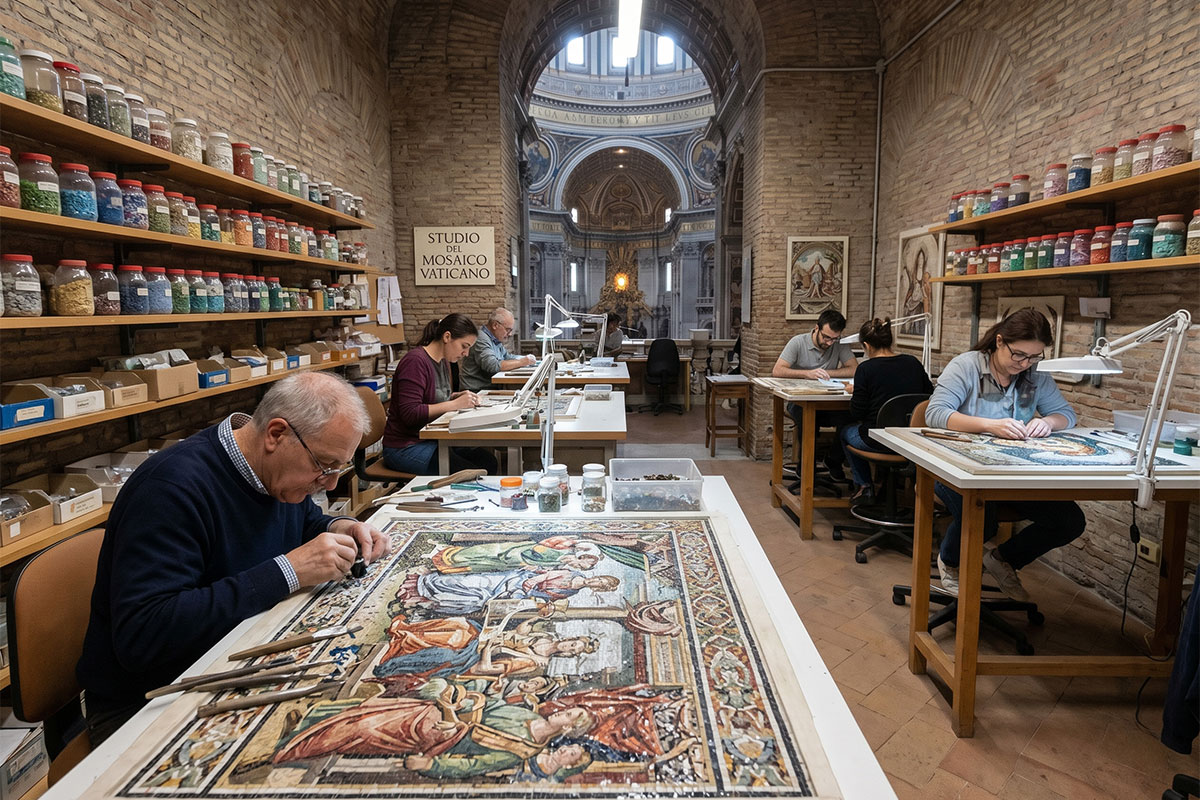
After immersing yourself in the fresh air and greenery, the transition back to the artistic density of the Vatican is refreshing. Many visitors choose to see the gardens in the morning and then explore the interiors. Make sure to visit Michelangelo's Pietà and perhaps stop by The Mosaic Studio to understand the craftsmanship behind the Basilica's decoration.
The Vatican Gardens offer a rare chance to see the Holy See from the inside out. It is a sanctuary where art, nature, and faith exist in perfect balance. Whether you are a pilgrim seeking a quiet corner for prayer or a traveler looking for a unique view of Rome, the gardens provide a memory of peace that lasts long after you have left the Eternal City.