Walking through the massive bronze doors of St. Peter's Basilica is an experience that transcends mere tourism; it is a step into the heart of history, art, and spirituality. As we move through January 2026, the Basilica remains one of the most visited landmarks on Earth, yet many visitors find themselves overwhelmed by its sheer scale and the abundance of artistic treasures. With over 20,000 square meters of space filled with Renaissance and Baroque masterpieces, knowing exactly where to look ensures you don't miss the profound stories hidden in the marble and gold. Whether you are a pilgrim, an art lover, or a curious traveler, navigating this vast interior requires a bit of insight to truly appreciate the genius surrounding you.
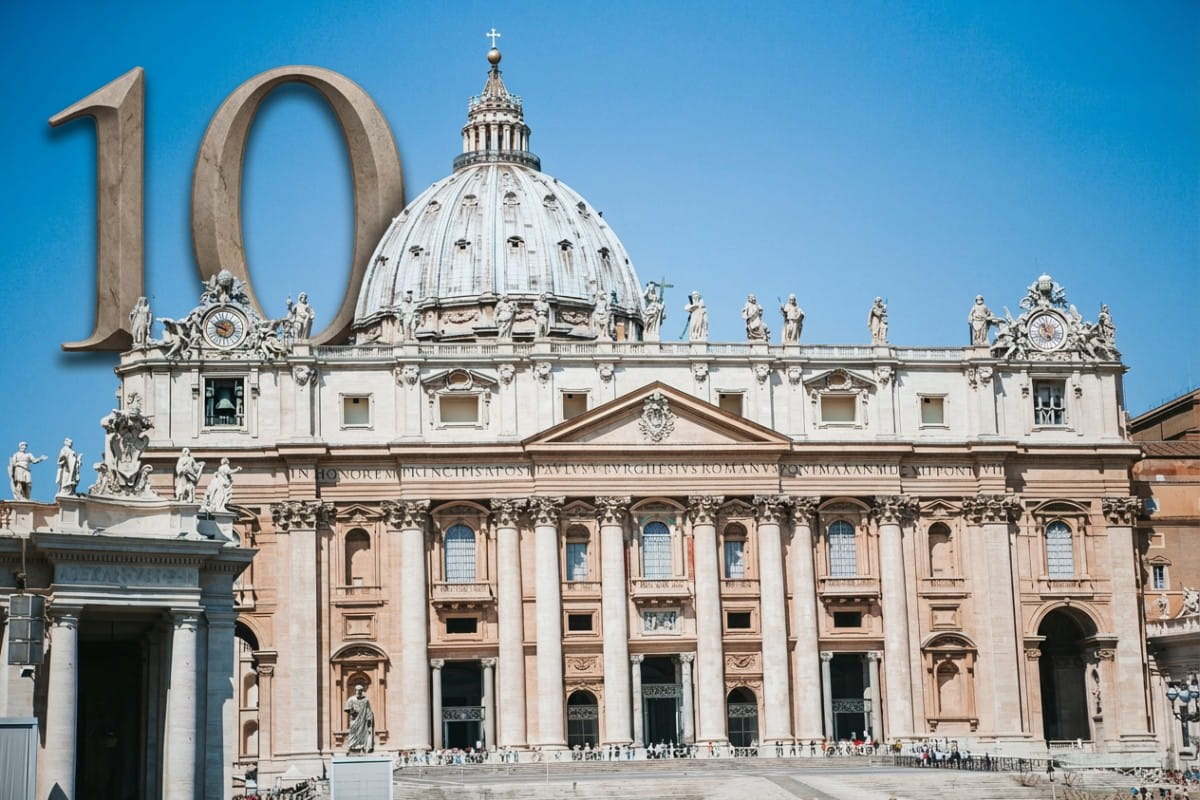
To help you make the most of your journey through the Vatican, we have curated a list of the essential sights that define this architectural wonder. While you can certainly explore the Basilica at your own pace, focusing on these specific masterpieces will provide a deeper understanding of the church's significance. From the soaring heights of the cupola to the sacred silence of the underground tombs, here are the top 10 highlights inside St. Peter's Basilica that deserve your undivided attention.
1. Michelangelo's Pietà
Immediately to your right as you enter the Basilica, you will encounter one of the most emotive sculptures ever created: Michelangelo's Pietà. Sculpted when the artist was only 24 years old, this masterpiece depicts the Virgin Mary cradling the lifeless body of Jesus. Unlike other depictions of this scene, Michelangelo chose to portray Mary with a youthful, serene face, symbolizing her incorruptible purity. The way the marble transforms into the soft folds of Mary's dress and the lifeless weight of Christ's body is nothing short of miraculous, showcasing a level of detail that redefined Renaissance sculpture.
It is important to note that this is the only work Michelangelo ever signed. If you look closely at the sash running across Mary's chest, you can see his signature carved into the stone. Today, the sculpture is protected behind bulletproof glass, but its emotional impact remains undiminished. It serves as a perfect starting point for your visit, setting a tone of reverence and awe before you venture further into the nave.
2. Bernini's Baldachin
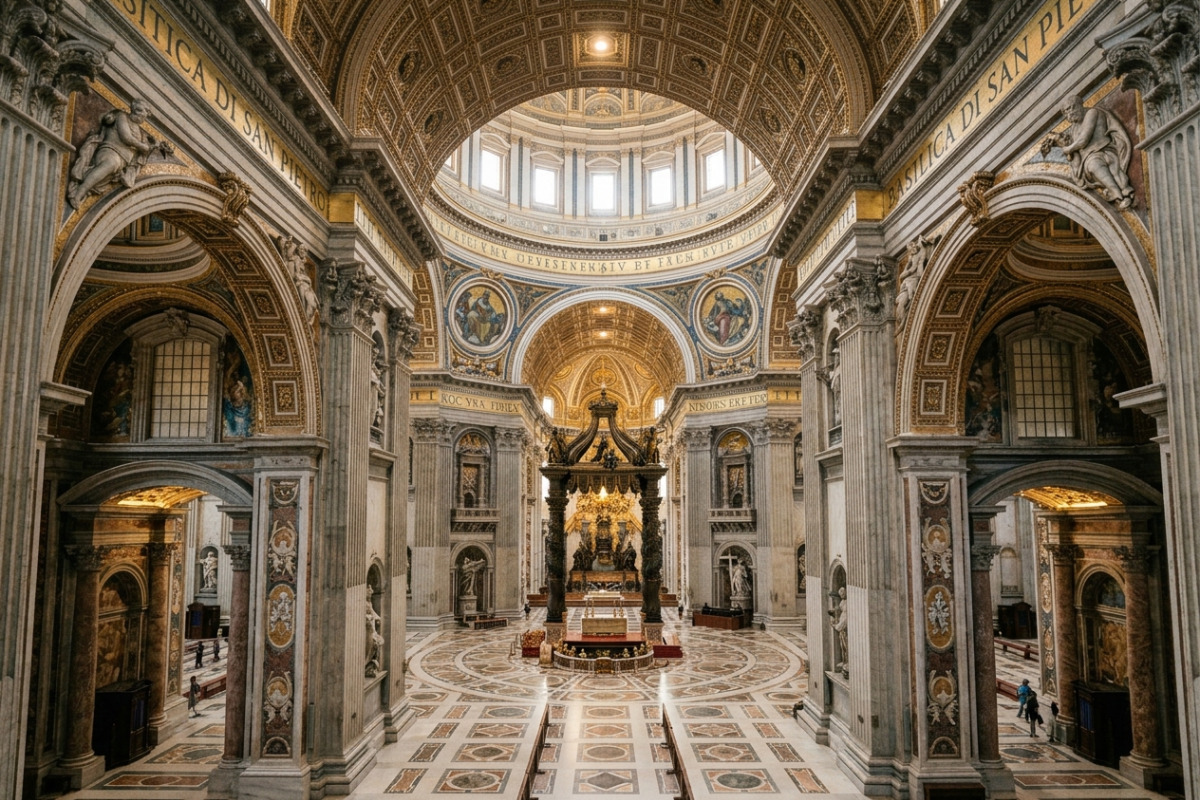
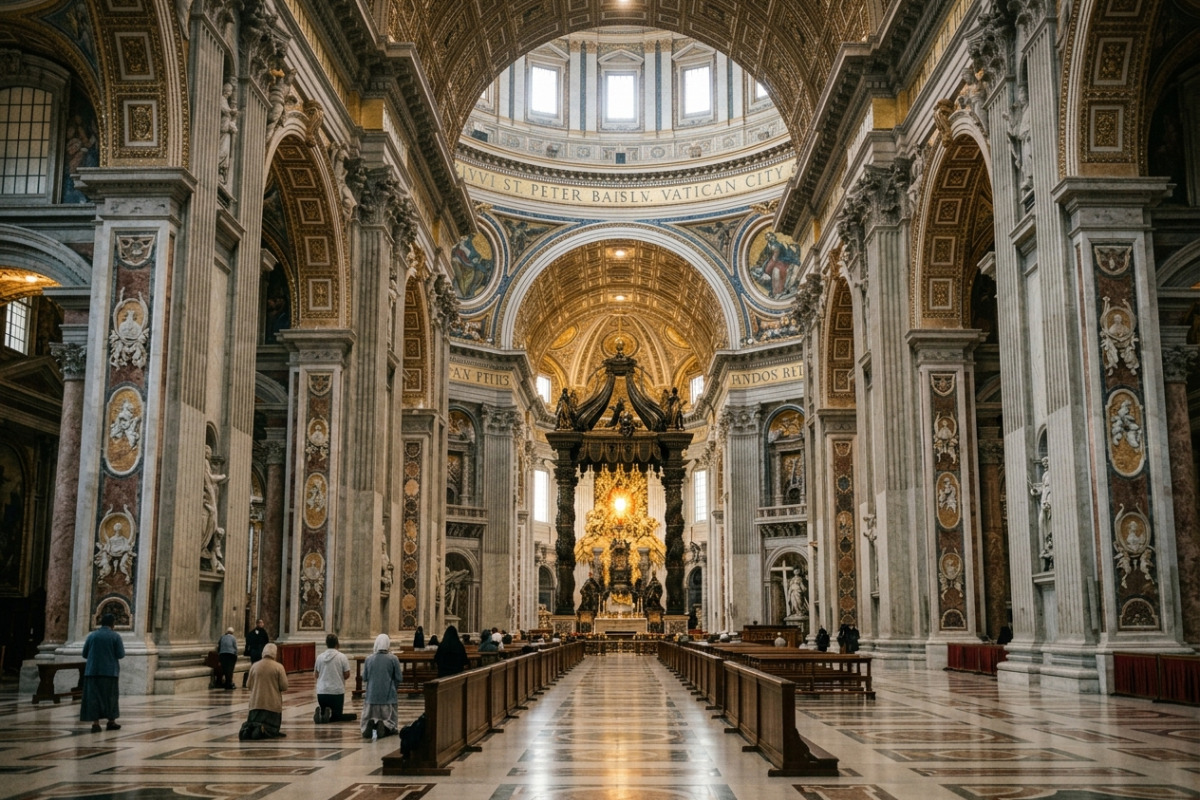
Standing beneath the massive dome is the focal point of the Basilica's interior: the colossal bronze canopy known as the Baldachin. Designed by Gian Lorenzo Bernini, this Baroque masterpiece stands nearly 30 meters tall and marks the location of the Papal Altar. The twisted columns, decorated with olive branches and bees (the heraldic symbols of the Barberini family, to which Pope Urban VIII belonged), draw the eye upward toward the heavens. The bronze used to cast this structure was famously stripped from the portico of the Pantheon, a controversial move at the time that bridged ancient Rome with the papal present.
The Baldachin is not just a decorative element; it serves a crucial architectural purpose by mediating the vast scale of the church, acting as a visual bridge between the human scale of the congregation and the soaring height of the dome above. Directly beneath this structure lies the most sacred spot in the Basilica, connecting the altar to the tomb of St. Peter deep underground.
3. The Dome (Cupola)
For those willing to make the ascent, the Dome offers a dual experience: a closer look at the interior mosaics and a panoramic view of Rome. Designed by Michelangelo and completed by Giacomo della Porta, the dome is an engineering marvel of the Renaissance. As you climb, you can stop at the interior gallery, which allows you to gaze down at the Baldachin from above and see the intricate mosaics of the ceiling up close. The sheer size of the letters in the inscription circling the dome becomes apparent from this vantage point; what looks small from the floor is actually two meters high.
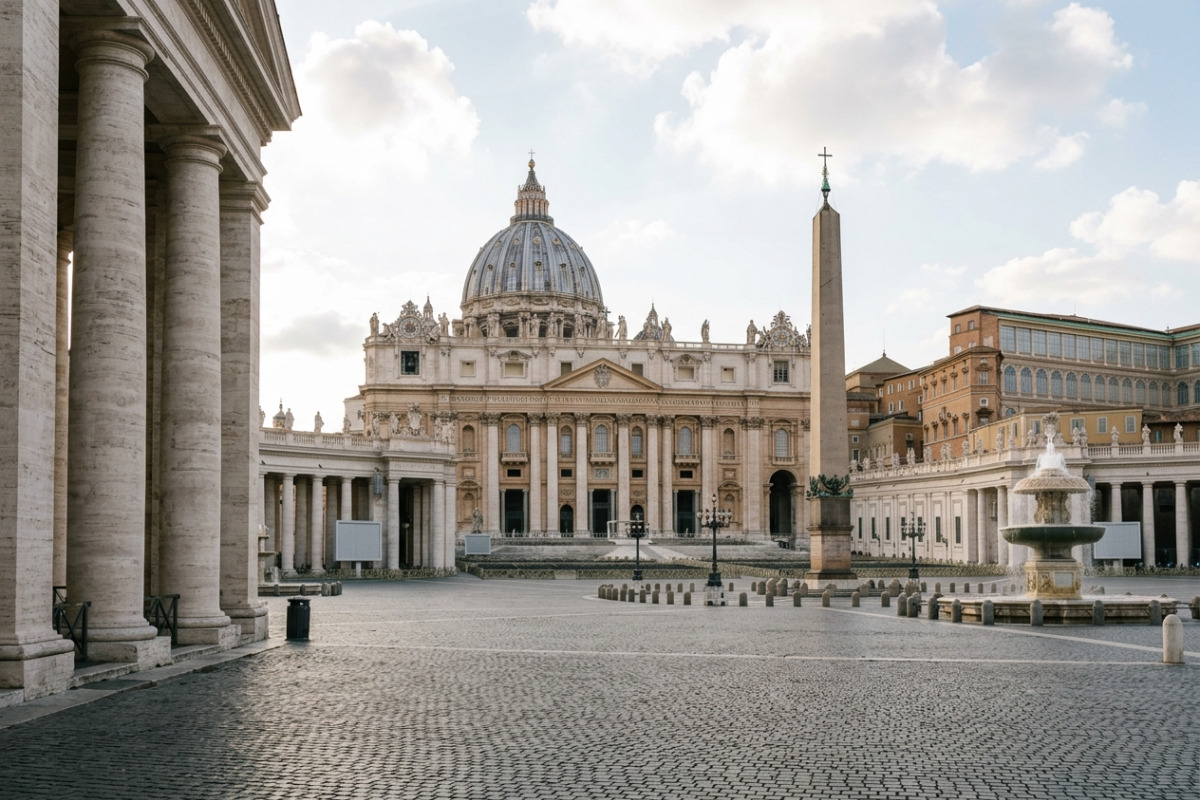
Continuing the climb to the exterior lantern rewards you with one of the best views in Europe. St. Peter's Square spreads out below in its perfect elliptical shape, and the entire city of Rome stretches to the horizon. It is a physical effort to reach the top, but the perspective it offers on the Vatican's layout and the city's geography is unparalleled.
4. The Statue of St. Peter Enthroned
Walking down the nave toward the altar, you will find the bronze statue of St. Peter Enthroned on the right side. Attributed to Arnolfo di Cambio and dating back to the 13th century, this statue portrays the Apostle giving a blessing while holding the keys to the Kingdom of Heaven. It is one of the few ancient statues that has remained in the Basilica through centuries of reconstruction and renovation.
A touching tradition associated with this statue is the act of touching or kissing St. Peter's right foot. Millions of pilgrims over the centuries have participated in this ritual, wearing the bronze toes down to a smooth, featureless surface. It is a tangible connection to the millions of faithful who have stood in that exact spot before you, seeking a moment of connection with the saint.
5. The Chair of St. Peter (Cathedra Petri)
In the apse at the far end of the Basilica, framed by the columns of the Baldachin, sits another of Bernini's triumphs: the Cathedra Petri. This monumental gilded bronze throne encloses the wooden chair traditionally believed to have been used by St. Peter himself. The sculpture is a riot of Baroque energy, featuring four Doctors of the Church supporting the chair, which seems to float effortlessly in the air.
Above the chair, an alabaster window depicting the Holy Spirit as a dove illuminates the entire composition with a golden glow, especially during the afternoon sun. The interplay of light, gold, and bronze creates a theatrical and spiritual effect that represents the authority of the Papacy. It is a visual conclusion to the journey through the nave, drawing the visitor's eye to the very back of the church.
6. The Altar of the Confessio
Located directly in front of the High Altar and sunken below the floor level is The Altar of the Confessio. This horseshoe-shaped area is adorned with perpetually burning oil lamps that cast a warm, reverent glow. The term "Confessio" refers to the confession of faith by St. Peter, which ultimately led to his martyrdom. This space is the spiritual heart of the Basilica because it marks the vertical axis directly above St. Peter's tomb.
While visitors generally cannot enter the Confessio itself, you can lean over the marble balustrade to view the Niche of the Pallia, where a silver casket contains fabrics (pallia) given to new archbishops. The proximity to the Apostle's resting place makes this one of the most prayerful and significant areas within the entire Vatican complex.
7. The Vatican Grottoes
Beneath the main floor of the Basilica lies a vast underground crypt known as The Vatican Grottoes. This level contains the tombs of dozens of Popes, as well as royalties and dignitaries from history. The atmosphere here is starkly different from the grandeur above; it is quieter, simpler, and more somber. Walking through the Grottoes offers a journey through the history of the Catholic Church, with sarcophagi ranging from early Christian designs to modern papal tombs.
The Grottoes also contain architectural fragments from the original 4th-century basilica built by Emperor Constantine. Seeing these ancient stones helps visitors appreciate the layers of history that exist here, reminding us that the current Renaissance building stands upon a foundation that is over 1,600 years old.
8. The Treasury Museum
Often overlooked by visitors rushing to see the main altar, The Treasury Museum is a hidden gem located near the sacristy. This collection houses an incredible array of liturgical objects, including jeweled chalices, intricate vestments, and papal tiaras used in centuries past. It offers a glimpse into the immense wealth and artistic patronage of the Vatican throughout history.
Among the highlights in the Treasury are the Monument to Sixtus IV by Antonio del Pollaiolo and the Crux Vaticana, a cross studded with precious gems that dates back to the 6th century. For those interested in the decorative arts and the history of papal ceremonies, the small entrance fee to this section is well worth the investment.
9. The Necropolis (The Scavi)
For a truly exclusive experience, deep beneath the Grottoes lies The Necropolis, or the "Scavi." This is an ancient Roman burial ground that was excavated in the 20th century, revealing a street of mausoleums and, ultimately, the grave of St. Peter. Unlike the rest of the Basilica, this area can only be visited via a special request and a guided tour, which must be booked months in advance.
The tour takes you down to the bedrock of Vatican Hill, walking through narrow ancient streets that were buried by Constantine to build the first church. The climax of the tour is the viewing of the graffiti wall and the simple earth grave identified as that of the Apostle Peter. It is an archaeological and spiritual adventure that contrasts sharply with the polished marble of the church above.
10. The Mosaic Studio
As you admire the artwork inside the Basilica, you might be surprised to learn that almost none of the "paintings" you see are actually paintings. They are intricate mosaics created to withstand the test of time. The Mosaic Studio (Studio del Mosaico) is responsible for maintaining these works and creating new ones for the Vatican. While the studio itself is a separate visit, understanding this craft changes how you view the interior of the Basilica.
When you stand before the Altar of the Transfiguration, for example, look closely at Raphael's famous image. It is a mosaic copy, composed of thousands of tiny tesserae. The skill required to match the colors and brushstrokes of the original oil paintings is astounding. Recognizing this technical feat adds a new layer of appreciation to every wall and dome you inspect during your visit.
Other Notable Features
While the top 10 highlights offer a comprehensive overview, St. Peter's Basilica is filled with countless other works of art and architectural details worth noting. Consider taking a moment to admire the Chapel of the Choir, known for its stunning mosaics and choral performances. The Chapel of the Blessed Sacrament, designed by Bernini, is another beautiful space dedicated to Eucharistic adoration. Don't overlook the various papal monuments and tombs scattered throughout the Basilica, each telling a story of the Church's history.
Quick Guide to Highlights
| Highlight | Artist / Era | Location |
| The Pietà | Michelangelo (Renaissance) | Right Nave, near entrance |
| Baldachin | Bernini (Baroque) | Central Altar |
| St. Peter's Statue | Arnolfo di Cambio (Medieval) | Right side of the Nave |
| Cathedra Petri | Bernini (Baroque) | Apse (Far end) |
| The Grottoes | Various (4th - 21st Century) | Underground Level 1 |
Planning Your Visit Efficiently
To see all these highlights without stress, proper planning is essential. The queues for St. Peter's can be long, so checking Tickets & Tours options in advance can save you valuable time. While entry to the main floor of the Basilica is generally free, sections like the Dome and Treasury require tickets. As of January 2026, Dome tickets are approximately €10 for the stairs-only option and €12 for the elevator and stairs combination. Treasury Museum entry is around €5. Please note that these prices are subject to change. Additionally, using the official Audio Guide App can provide the historical context needed to fully appreciate the details mentioned above.
St. Peter's Basilica is generally open from 7:00 AM to 7:00 PM from April to September, and from 7:00 AM to 6:30 PM from October to March. However, these hours can vary, especially during papal events or holidays, so it's best to check the official website for the most up-to-date information.
Before you head to Vatican City, be sure to review the Plan Your Visit page for dress code requirements—shoulders and knees must be covered—and current opening hours. If you have specific concerns about accessibility or logistics, the Frequently Asked Questions section is an excellent resource to ensure a smooth experience. Taking the time to prepare allows you to focus on the spiritual and artistic beauty of the Basilica, rather than the logistics of the day.